Start With the Steps That Protect Your Driveway Investment
Concrete driveway installation starts with a site review that identifies the proposed layout, intended vehicle use, drainage direction, access, and existing conditions. From there, the work may include removal of an existing surface or excavation where needed, followed by decisions about base preparation, forms, and reinforcement.
The installation sequence continues with placement, finishing, jointing, curing, and protection. Reopening guidance should reflect the specific mix, weather, site conditions, and anticipated vehicle loads, and the job concludes with a final walkthrough to review the completed surface and care instructions. For general technical background, the National Ready Mixed Concrete Association’s CIP 14 guidance on finishing concrete flatwork and CIP 11 guidance on curing concrete describe placement, finishing, curing, and protection considerations. These resources support the process overview but do not replace project-specific design, specifications, or contractor instructions.
JCD Concrete Inc. is owner-operated by John DomBek and brings more than 40 years of concrete experience to residential and commercial concrete work.
What to Confirm Before Work Starts
Before work begins, confirm the planned driveway layout, intended use, and site access so the project team can prepare for equipment, ready-mix delivery, and work around the property. Review any existing concrete, including the areas that may be removed and any limits that affect the approved scope.
Discuss known drainage concerns, expected finish details, utility coordination, and the work included or excluded in the written scope. Review any property-specific requirements or approvals already identified before scheduling. This early review helps ensure that the installation plan reflects the actual property and agreed project requirements.
Site Review, Layout, and Existing Conditions
A site review confirms the proposed layout, intended use, access for equipment and ready-mix trucks, and utility coordination before work begins. It also considers how the finished surface should relate to the garage, street, walkways, surrounding grade, existing concrete, vegetation, drainage paths, and visible ground conditions.
For a driveway concrete installation, dimensions, thickness, loading requirements, and structural details are project-specific. They are determined from the planned layout, intended use, ground conditions, and approved scope.
Existing Concrete, Removal, and Excavation
Where an existing driveway is present, removal may be included when the actual site conditions and approved scope call for it. The site review also identifies access considerations and existing conditions that may affect the preparation plan.
Excavation and preparation depend on the planned finished elevation, actual ground conditions, and approved scope. If unsuitable material, soft areas, roots, or washouts are found, the preparation scope may need to address those conditions before concrete placement.
Base Work for the Approved Scope
After any needed removal or excavation, the crew prepares and grades the supporting area for the actual project and approved scope.
The preparation plan establishes the needed base or subgrade work, grade, and transitions to adjacent surfaces. Materials, depths, and methods are selected for the actual project conditions rather than assumed from a standard checklist.
Forms and layout are then established, and reinforcement is installed where appropriate for the project. Before placement, the crew verifies that the prepared area, grade, forms, and any planned reinforcement are ready.
Forms, Reinforcement, and Drainage Planning
Once the supporting area is prepared and graded, forms and layout establish the planned driveway boundaries, elevation, and drainage approach. The layout is reviewed before concrete arrives to confirm that the site is ready for placement under the approved project plan.
Reinforcement Where Appropriate
Reinforcement may be included when the project design, site conditions, and intended use call for it. The reinforcement approach is determined for the individual project rather than assumed for every driveway.
- Layout and intended use: The review confirms where the driveway will go and how it is expected to be used.
- Access and existing conditions: Equipment access, utility coordination, drainage, nearby surfaces, and ground conditions inform the preparation plan.
- Readiness before placement: The crew confirms that the prepared area, forms, layout, and any project-specific reinforcement are ready before concrete is placed.
Drainage and Final Grade
The grading plan considers the property’s existing elevations, driveway layout, and applicable project requirements. That evaluation establishes the intended drainage approach before the concrete is placed.
Any additional drainage measures or subgrade work are determined by the actual property and applicable project requirements.
Placement, Finishing, Joints, Curing, and Protection
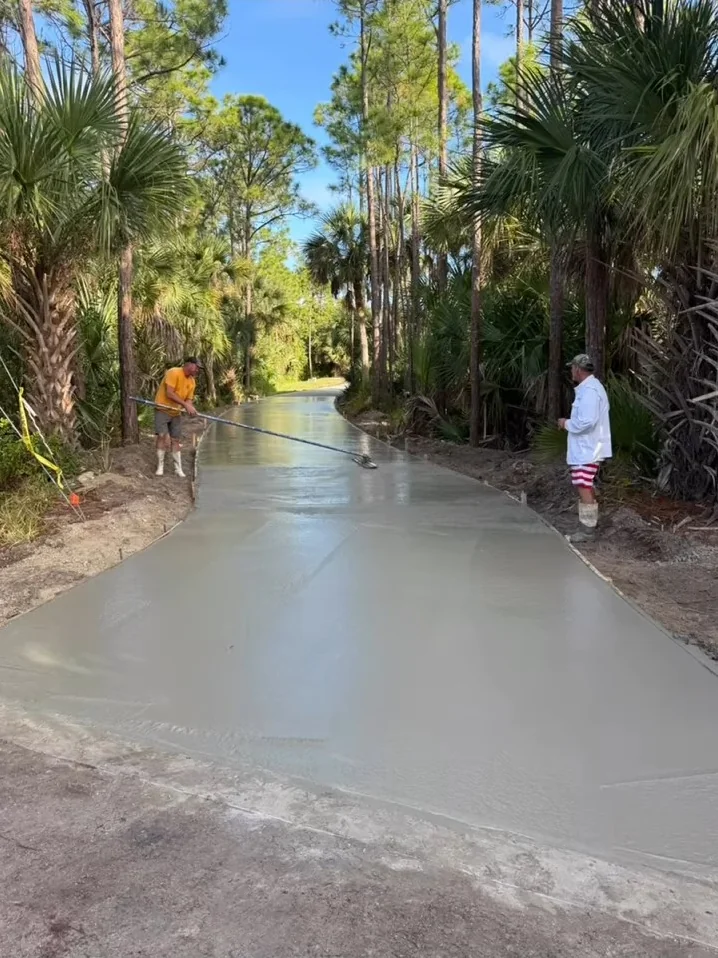
Once the base, forms, and any planned reinforcement are ready, concrete is placed in the prepared area. The work may include consolidation or leveling as appropriate to the project before the surface is finished.
Placement and Finishing
After concrete is placed, the crew uses the leveling or consolidation steps that suit the work, then completes the finish chosen for that driveway. JCD uses 5000 PSI concrete as its residential standard, but strength is only one consideration within the full installation plan. Preparation, drainage, reinforcement where appropriate, joint planning, curing, and the approved project scope also shape the completed work. Finish details are selected for the property’s conditions and the intended result.
Joints, Curing, and Protection
The driveway layout, intended use, and approved plan guide the joint strategy rather than a one-size-fits-all pattern. Once the surface work is complete, the appropriate curing and protection measures are chosen for the concrete, weather, and job conditions.
Curing and protection begin after placement. Reopening or use guidance depends on the actual materials, conditions, specifications, curing plan, and contractor instructions.
Final Walkthrough and Closeout
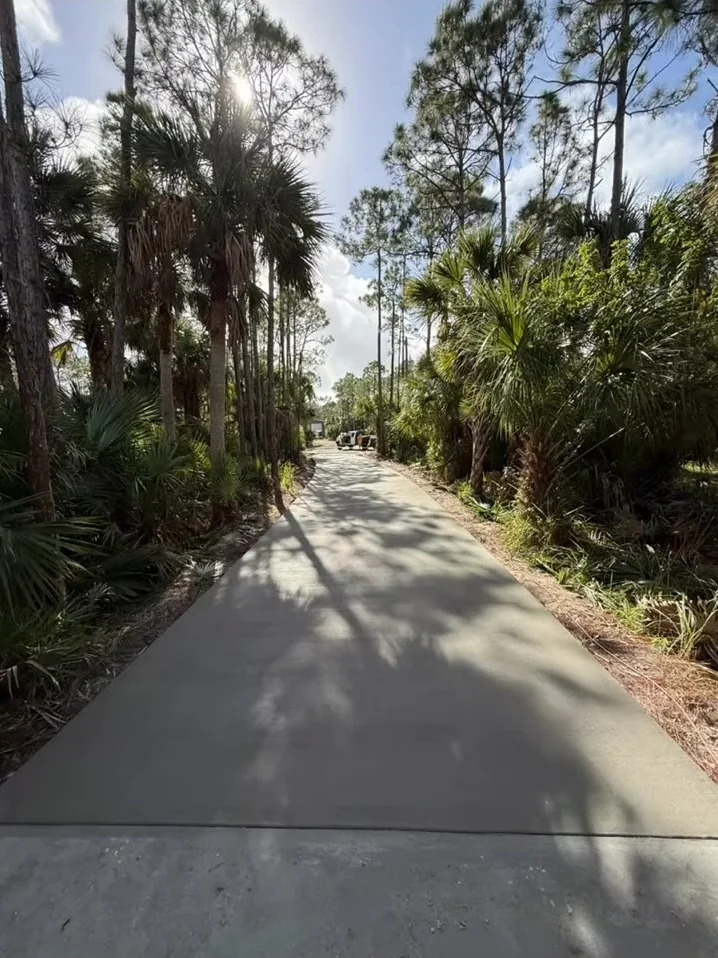
During the final walkthrough, homeowners can confirm that the completed work matches the agreed scope, finish, joint plan, and transitions or interfaces with adjacent surfaces. The closeout review also covers site cleanup and the completed driveway’s overall condition.
At handoff, the homeowner should receive the care directions that apply to the newly finished driveway, including how the surface should be protected while it develops. The appropriate time to resume regular use is confirmed from the project’s concrete mix, weather exposure, job specifications, and site conditions rather than a standard timetable.
Homeowners can use the closeout conversation to ask about routine cleaning, drainage observations, site-specific care, and any documented follow-up information.
Frequently Asked Questions About the Process
What happens during the initial site review?
The site review looks at the proposed layout, intended vehicle use, access for equipment, existing surfaces, drainage direction, and ground conditions. Those details guide the preparation and installation plan.
How is driveway use guidance determined?
Curing and protection begin after placement. Reopening or use guidance depends on the actual materials, conditions, specifications, curing plan, and contractor instructions.
What is covered in the final walkthrough?
The final walkthrough reviews the completed surface, joints, transitions, curing protection, and the project-specific guidance for returning the driveway to use.
Conclusion
Concrete driveway installation follows a clear sequence: site review, layout and access planning, removal or excavation where applicable, preparation and grading, forms and reinforcement where appropriate, placement, finishing, joints, curing, protection, reopening guidance, and a final walkthrough.
For a project-specific review and free estimate, explore JCD’s Concrete Driveways service or contact JCD Concrete Inc.. Owner-operated by John DomBek, JCD brings more than 40 years of concrete experience to residential and commercial concrete work.