If you’re considering a new driveway in Brevard County, the type of concrete used can make a significant difference in long-term performance. Many homeowners don’t realize that not all concrete mixes are the same. Understanding the difference between standard and high-strength options is key to making the right decision.
Comparing 5000 PSI vs. Standard Driveway Mixes
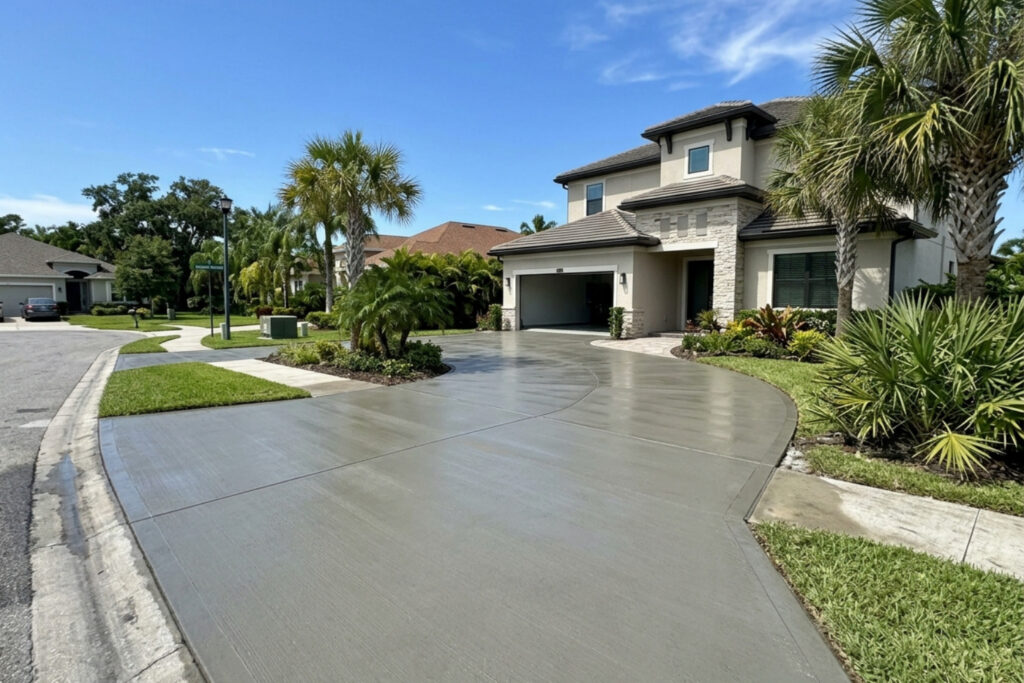
When we talk about “PSI,” we are referring to pounds per square inch—a measure of the compressive strength the concrete can handle. In our experience working across Melbourne, Palm Bay, and Titusville, the standard mix for a residential driveway is typically 3000 to 3500 PSI. While this is sufficient for a couple of passenger cars, a 5000 PSI concrete driveway in Brevard County represents a higher-strength option designed for improved durability and long-term performance.
The difference isn’t just a number; it’s in the recipe. A 5000 PSI mix contains a higher cement-to-aggregate ratio and often utilizes specialized additives that create a denser, more moisture-resistant finished surface. For homeowners looking at Concrete Driveways, choosing a high-strength mix means you are starting with a material designed to withstand more pressure before showing signs of distress. We often incorporate contractor-grade fiber reinforcement into these pours to add an extra layer of internal support, helping the slab hold together under the shifting conditions of our local environment.
Advantages of High-Strength Mixes
One of the most immediate benefits of a 5000 PSI mix is its consistency. Because the mix is richer in cement, it tends to be more “creamy” during the pour, allowing for a more uniform finish. From a practical standpoint, this density also translates to superior moisture resistance. In a state where heavy afternoon downpours are the norm, having a dense slab helps prevent water from migrating deep into the concrete, which is a primary cause of internal degradation over time. This is one of the key reasons we use 5000 PSI concrete for residential driveways rather than lower-strength mixes commonly used in the area. You can see examples of these high-density finishes in our Gallery.
Performance in Coastal Environments
Living near the Atlantic means your driveway is constantly exposed to salt air and high humidity. Standard concrete is naturally porous, but high-strength mixes have a tighter surface structure. This makes a high-strength concrete driveway more resilient against the corrosive effects of salt spray, which can otherwise lead to “dusting” or surface scaling on lower-quality slabs. At JCD Concrete Inc., we’ve spent decades learning how different mixes react to the specific humidity levels in places like Satellite Beach and Cocoa Beach, which you can read more about on our About Us page.
Why Choose a 5000 PSI Concrete Driveway in Brevard County?
Brevard County presents a unique set of challenges for any slab. Much of our land, from Mims to Micco, is built on sandy soil. Sand is excellent for drainage, but it is known for shifting and settling, especially during heavy seasonal rainfall. When the soil underneath a driveway moves, a standard 3000 PSI slab may lack the flexural strength to handle minor soil movement without immediate cracking. A 5000 PSI concrete driveway in Brevard County provides a stronger, more stable structure that handles soil erosion concerns effectively. If you are considering a new project in the area, our guide on Concrete Driveway Melbourne Fl covers these local soil challenges in more depth.
Benefits for RV and Boat Owners
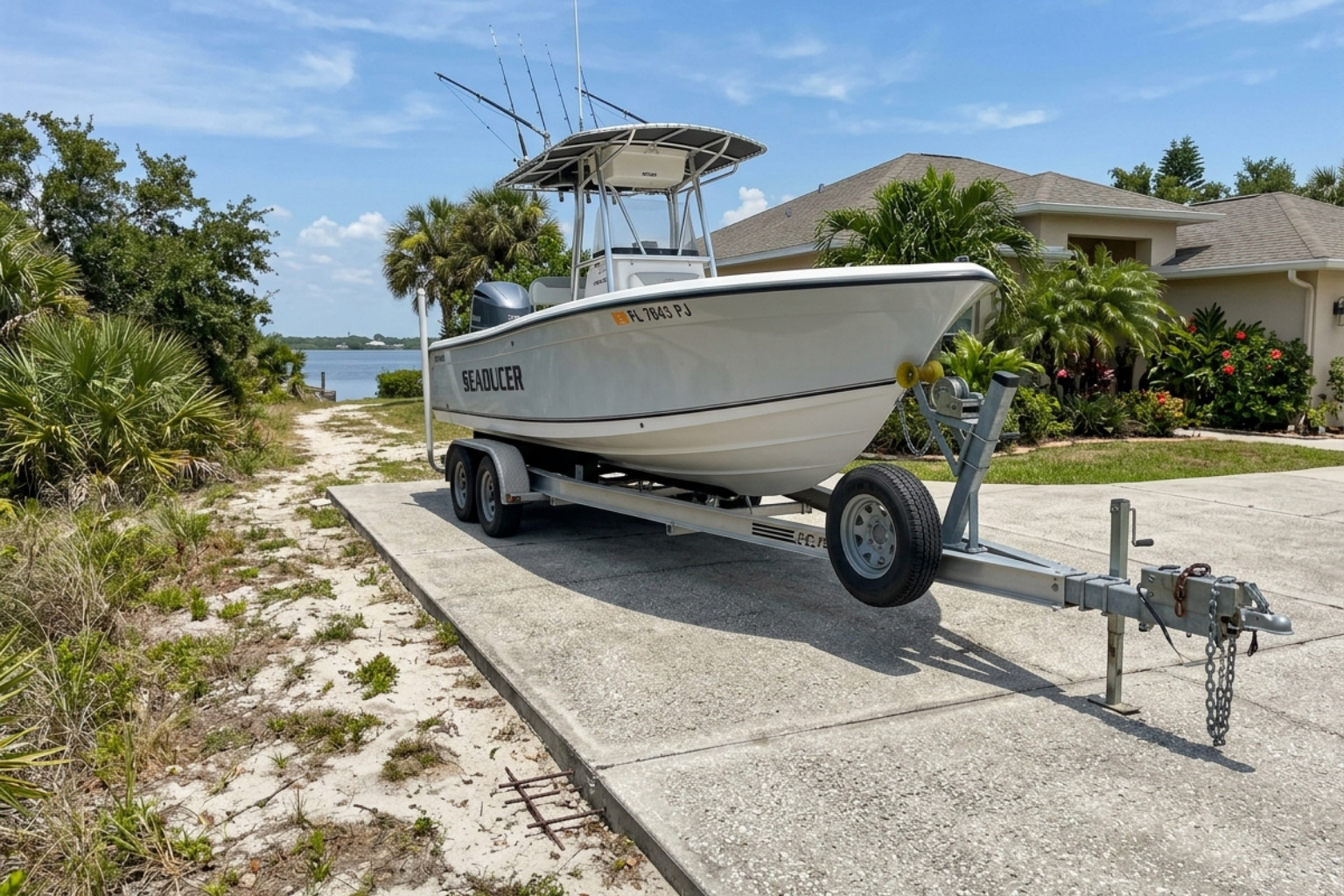
The Space Coast area is home to many residents with large boats or heavy RVs. A standard 4-inch, 3000 PSI slab is not designed to support that kind of concentrated, long-term weight. Over time, heavy tires can cause rutting or localized cracking. By stepping up to a 5000 PSI mix, you ensure better weight distribution across the slab. This protects the surface from the structural failure that often occurs when heavy loads are placed on residential-grade concrete. You can see how we handle these heavy-duty projects in Our Work section.
Long-term Durability in the Florida Climate
Florida heat is relentless. High temperatures can cause concrete to expand, and while we use control joints to manage this, the inherent strength of the material plays a significant role in its service life. A high-strength concrete driveway is less likely to develop the small spiderweb cracks that eventually turn into major issues. This leads to lower maintenance needs over the decades, as the surface remains smoother and more resistant to the elements. For those dealing with an old, failing slab, a Concrete Driveway Replacement using 5000 PSI concrete often results in a surface that serves the property for many years without the need for major intervention.
Professional Installation of a 5000 PSI Driveway
_compressed.webp?alt=media&token=6478255a-501e-4a77-bc6b-7464a9ae1e0b "Professional JCD Concrete crew grading a driveway site in Palm Bay FL - 5000 PSI concrete driveway Brevard County")
The material is only one part of a successful project; the installation is where the real value is created. Because 5000 PSI concrete can be less forgiving during installation due to its higher strength and mix design, it requires a crew that knows exactly how to handle it. It starts with subgrade compaction. We use heavy machinery to ensure the sandy Brevard soil is packed tight, removing air pockets that could cause the driveway to settle later. Proper form setting is equally critical to ensure that water drains away from your home foundation and toward the street or drainage swales as required by local Services standards.
Pouring and Finishing Techniques
For a 5000 PSI driveway in Brevard County, we almost always recommend a professional broom finish. While decorative options exist, a broom finish provides the necessary traction for wet Florida days. The timing of the finish is vital. Finishing too early can weaken the surface, while finishing too late means the concrete is too hard to texture properly. Additionally, we use strategic control joints, typically cut shortly after the pour to control where cracking occurs.
The Curing Process in Florida Heat
Curing is a chemical reaction, not just drying. In the high heat of a West Melbourne summer, the water in the mix can evaporate too quickly, which starves the chemical process and leaves you with a weak slab. We manage this hydration process by carefully timing our pours, often starting in the early morning hours, and occasionally using curing compounds to seal in the moisture. This ensures the driveway reaches its full 5000 PSI potential.
Cost and Permitting for High-Strength Concrete in Brevard
While we avoid rigid pricing because every lot in Cocoa or Rockledge is different, it is fair to say that 5000 PSI concrete is a premium product. The higher cement content and the skill required to finish it mean the initial investment is higher than a standard 3000 PSI pour. However, when you factor in the extended lifespan and the reduced need for repairs, the long-term value is clear.
Local Building Regulations
Whether you are in Indian Harbour Beach or Malabar, you cannot simply pour a driveway without a permit. Installation requires adherence to local Brevard County permitting regulations and various municipal rules regarding:
- Setbacks: How close the concrete can be to your property line.
- Right-of-Way: The portion of the driveway (apron) that connects to the city or county road often has different thickness and reinforcement requirements.
- Drainage: You cannot move your rainwater onto a neighbor’s property; the grading must follow approved plans.
Factors Influencing Total Investment
Several factors will impact the final cost of your high-strength concrete driveway. The total square footage and the thickness of the slab are the primary drivers. If we have to demolish an old, cracked driveway first, that adds labor and disposal fees. Finally, many Brevard properties require culvert pipe replacement to ensure proper roadside drainage, a step that is essential for the integrity of your new driveway.
Maximizing the Performance of Your Driveway
_compressed.webp?alt=media&token=d40abc55-de5a-401a-93c0-7edc646cc4ba "Clean and sealed high-strength concrete driveway in a Viera neighborhood - 5000 PSI concrete driveway Brevard County")
Once your new driveway is poured, a little bit of care goes a long way. We recommend routine cleaning with a garden hose and a mild detergent to keep oils and tire marks from setting in. While 5000 PSI concrete is very dense, applying a high-quality sealer every few years can further protect the surface from salt air and UV damage.
Preventing Common Issues
Most driveway failures in our area are not due to the concrete itself, but rather what happens underneath it. Keeping an eye on erosion around the edges of your slab, especially after a hurricane or tropical storm, is vital. If you see soil washing away, fill those gaps immediately to prevent the slab from becoming hollow underneath. You can see examples of well-maintained projects in our Our Work gallery.
Why Concrete Outperforms Other Materials
In the sandy environment of Cape Canaveral and Merritt Island, pavers often struggle. Over time, the sand shifts, weeds grow through the cracks, and the pavers become uneven, creating tripping hazards. A high-strength concrete driveway provides a solid, monolithic surface that is less prone to shifting and eliminates the gaps where weeds typically grow, offering much better long-term value. For a truly durable, low-maintenance solution, Concrete Driveways remain a reliable choice.
Frequently Asked Questions about High-Strength Driveways
How long does a 5000 PSI driveway last in Florida?
While specific timeframes can vary, a high-strength slab installed by an experienced crew often performs well for several decades. Its resistance to the Florida heat and heavy rain gives it a significant advantage over standard residential mixes.
Is 5000 PSI concrete necessary for a standard car?
While a standard car may not require the highest strength levels, it is certainly beneficial. Even for standard vehicles, the increased resistance to cracking and surface wear makes it an excellent choice for homeowners who want a reliable long-term solution.
How soon can I drive my vehicle on new 5000 PSI concrete?
Even though 5000 PSI concrete gains strength faster than 3000 PSI mixes, we still recommend waiting at least 7 to 10 days before driving a standard vehicle on it. For heavy RVs or boats, we suggest waiting a full 28 days to allow the concrete to reach its maximum design strength.
Conclusion
At JCD Concrete Inc., we believe in doing the job right the first time. With over 40 years of experience as an owner-operated business, we’ve seen every soil condition and weather challenge Brevard County has to throw at us. We use only top-quality materials and provide exceptional service to every neighbor, from Titusville to Grant-Valkaria. If you’re ready to upgrade to a high-strength concrete driveway in Brevard County, we’re here to help.
Contact Us today for a free evaluation of your project. Let’s build something that lasts.