Concrete vs Pavers: Key Differences for Driveways and Patios
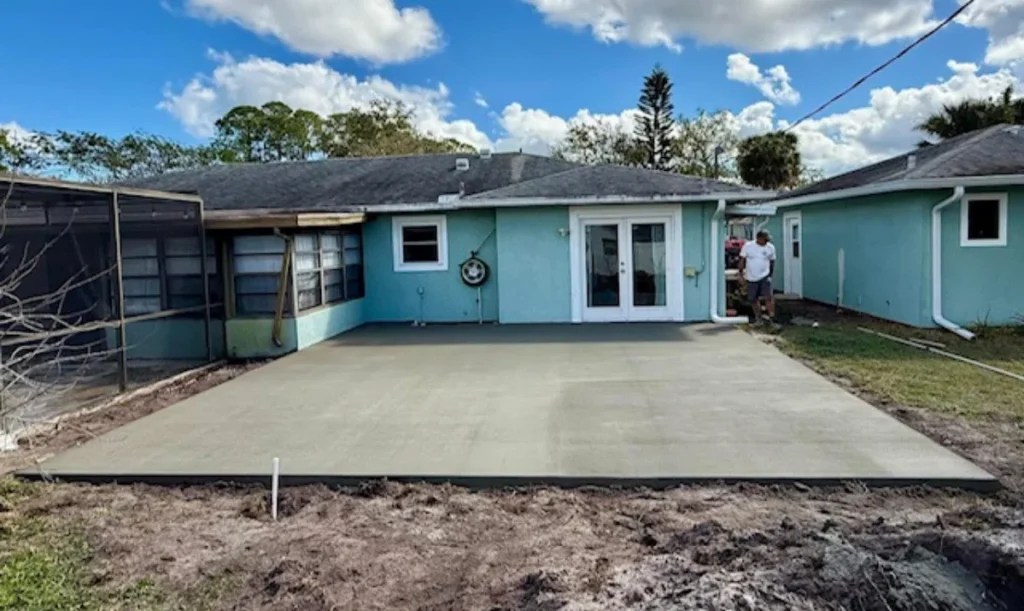
Choosing between concrete and pavers is a major decision for any Brevard County homeowner. Based on my decades of working with local soil, here is how they compare:
| Factor | Concrete | Pavers |
|---|---|---|
| Upfront cost | Generally lower | Generally higher |
| Maintenance | Minimal | Regular (weeds, shifting, re-sanding) |
| Driveway Suitability | Well-suited for heavy vehicles | More likely to shift under heavy loads depending on base stability |
| Florida Climate | Reliable with high-strength mix | Base erosion can occur over time |
| Repair | Sectional replacement | Individual unit replacement |
| Design | Stamped and colored options | Various patterns and colors |
| Expected Life | Decades of service | Varies by maintenance and base prep |
For most homeowners in our area, a high-strength concrete driveway is the practical choice. While pavers look nice initially, they often require more upkeep than people expect, especially with our sandy soil and heavy rain. I’m John DomBek, owner of JCD Concrete Inc. I’ve spent over 40 years installing driveways in Brevard County, and I’ve seen which materials hold up over time.
The main issue in Florida is not just the surface you see. It is what happens underneath after repeated rain, heat, and daily vehicle traffic. A concrete driveway acts as a continuous slab, so weight is spread across the surface more evenly. With pavers, the strength of the system depends on the condition of the base, the edge restraints, and the joint sand staying where it belongs. When those parts begin to wear down, the surface can start to move.
That is why homeowners often ask me about long-term upkeep instead of just appearance on day one. In my experience, concrete is usually the simpler material to own. It gives you a clean look, dependable support for normal residential use, and fewer maintenance tasks over the years. Pavers can still be a good fit for some decorative spaces, but for driveways and many patios in Brevard County, concrete tends to be the more durable and lower-maintenance option. This is one reason we use high-strength concrete for residential driveways instead of lower-strength mixes commonly used in the area.
If you want a broader overview of how these materials compare, it helps to understand how each performs in real residential conditions over time. The local difference, though, comes down to how the surface performs in our sandy soil, heavy summer rain, and year-round sun.
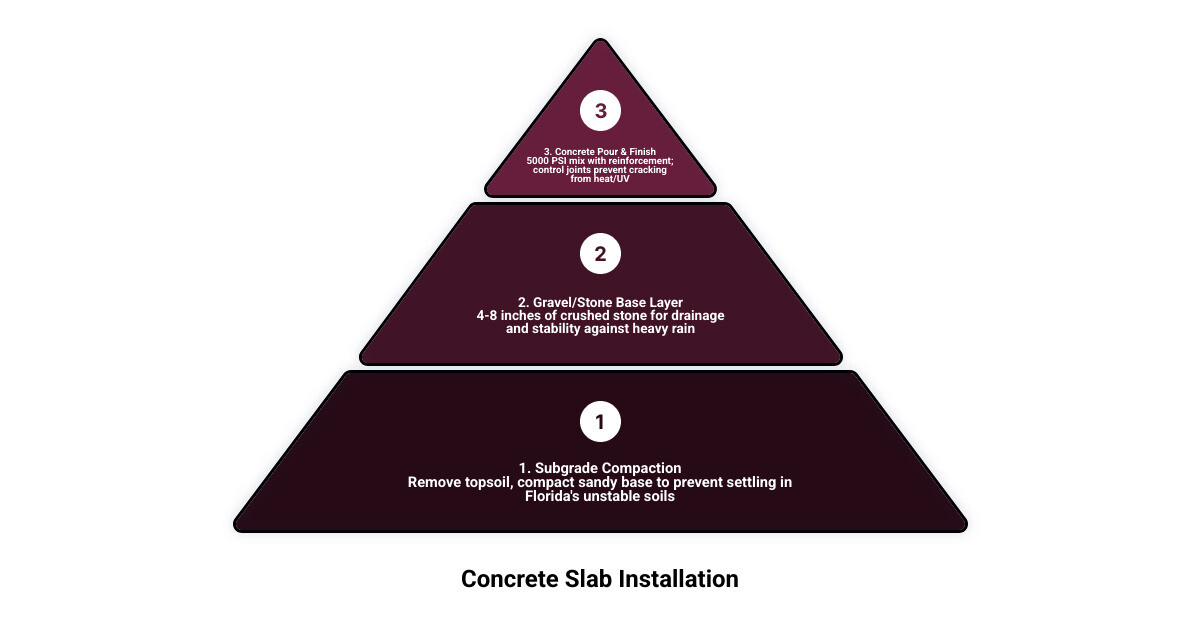
Concrete vs Pavers: Performance in the Florida Climate
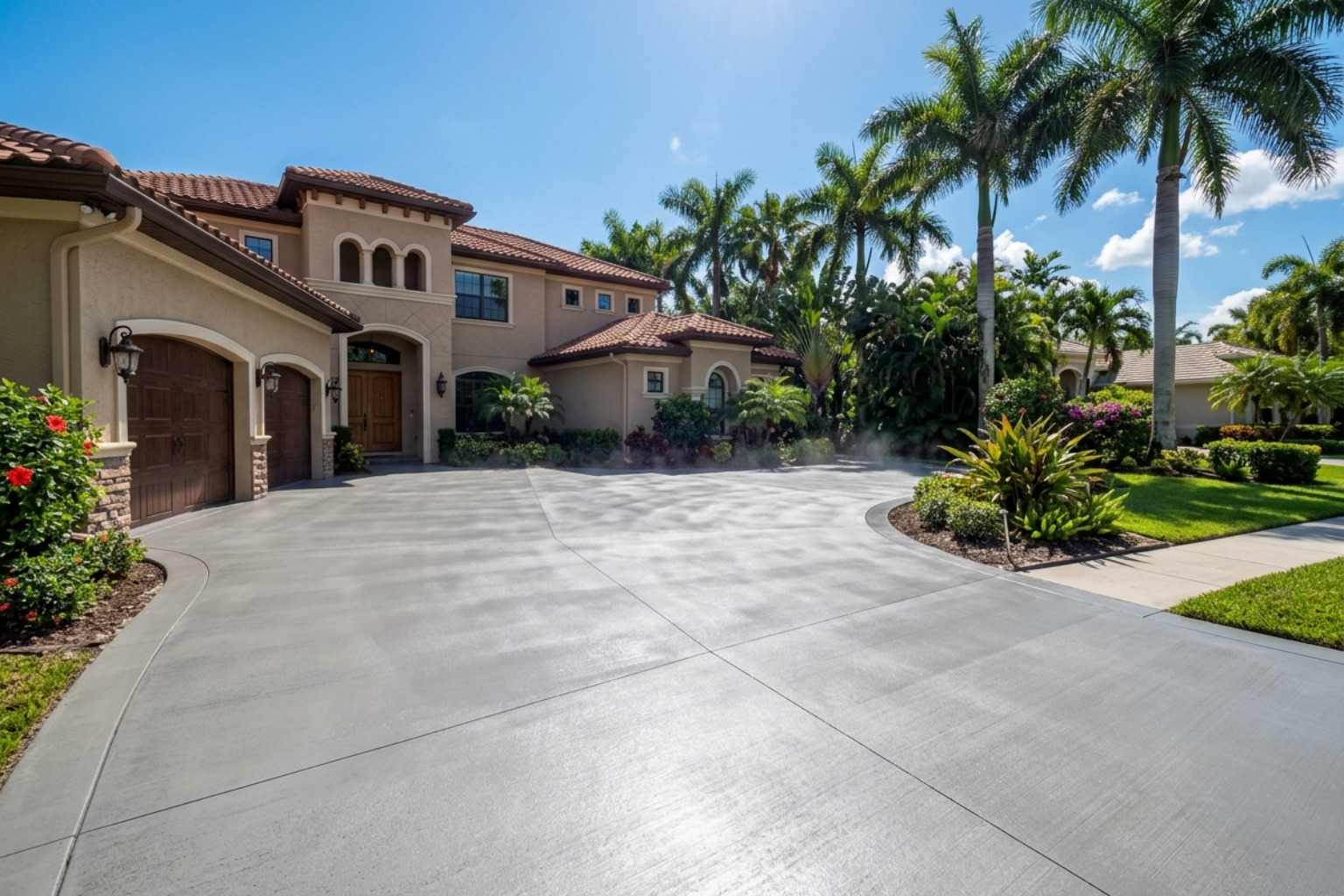
In places like Melbourne and Palm Bay, the ground is mostly sand. This means the foundation of your driveway is the most important part. Poured concrete creates a solid surface that spreads the weight of your vehicles across the ground.
Pavers are individual pieces. While they can move, that movement can be a problem in Florida. Heavy rains can wash away the sand base, causing the pavers to sink or create ruts where your tires sit. Even with good preparation, the modular nature of pavers makes them more likely to shift in our local soil conditions.
Another factor homeowners notice is drainage. In Brevard County, a driveway has to handle sudden downpours and long wet periods without losing support. If water starts moving through weak areas in a paver base, the problem often develops slowly and then becomes visible as uneven spots, low corners, or edge movement. With concrete, proper grading and a solid base help the slab shed water more predictably and reduce those maintenance concerns.
Durability and Maintenance
In my experience, the real difference shows up a few years after the job is done. We use 5000 PSI concrete for our driveways because it stands up better to the heat and moisture. Pavers often struggle with weeds and ants in the joints. Even with specialized sand, the Florida sun and rain eventually wear it down, meaning you have to re-sand the area every few years.
A solid concrete slab avoids many of these issues. We place control joints to help manage where the concrete may naturally crack, which helps the surface stay neater over time. Homeowners also like that routine care is straightforward. Most concrete driveways just need periodic cleaning, and some owners choose to seal the surface depending on the finish and amount of exposure.
For patios, appearance matters too, but the same climate issues still apply. Humidity, UV exposure, and repeated wet-dry cycles can all wear on a surface. That is why material choice should be based on how you plan to use the area, how much maintenance you want to take on, and how important long-term stability is to you. For those interested in reliable performance, more info about concrete driveways explains why a solid pour is often the best fit for Brevard County.
Cost Analysis: Initial Investment and Long-Term Value

A standard concrete driveway is usually more affordable than pavers. This is because concrete is placed efficiently by a professional crew, while pavers must be laid by hand one at a time. The extra labor and materials for a paver base can make the initial cost significantly higher.
I always tell my clients in Titusville and Rockledge to think about the long-term value.
- Concrete Value: A 5000 PSI concrete driveway can provide decades of service with routine maintenance. It keeps its clean look and helps with curb appeal because it is known for being low maintenance.
- Paver Value: Pavers can look high-end, but that value drops if they aren’t regularly maintained. Weeds or uneven stones can actually hurt the look of your property.
Another point to consider is the type of maintenance cost that shows up later. With pavers, the initial visual appeal can be offset by periodic re-sanding, weed treatment, ant control, resetting low spots, and replacing pieces that no longer match older sun-faded units. Those are not always large expenses all at once, but they can add up over time and require more regular attention.
Concrete is usually easier to budget for because the ownership side is simpler. Once the driveway or patio is installed correctly, most homeowners are dealing with basic cleaning and watching for normal wear. If the surface is designed for the property and poured on a properly prepared base, it tends to remain more uniform in both appearance and performance.
For homeowners comparing projects, the best approach is to weigh appearance, expected upkeep, and how the space will be used. A decorative patio has different priorities than a driveway that carries trucks, trailers, or daily family traffic. If you are planning a project, you can find more info about concrete patio cost in Brevard County Fl to help with your budgeting.
Practical Considerations for Driveways and Patios
Concrete is naturally lighter in color, so it stays cooler under the sun. This is a big plus for patios or pool decks in Cocoa Beach. We can also use different finishes, like a broom finish for slip resistance on driveways or textured finishes for wet areas.
Some people think concrete is plain, but we can use stamped patterns to get the look of stone or slate. This gives you the appearance of a modular system with the strength of a solid slab. It avoids the weed and shifting problems common with individual pavers.
For homeowners who are comparing finishes, it helps to think about how the space will be used every week, not just how it looks in a photo. Patios and pool areas need comfortable footing, a surface that is easy to clean, and a finish that works well in wet conditions. Driveways need to handle turning tires, parked vehicles, and regular exposure to water and sun. Concrete offers flexibility here because the finish can be chosen to match the use of the area.
Handling Heavy Vehicle Traffic
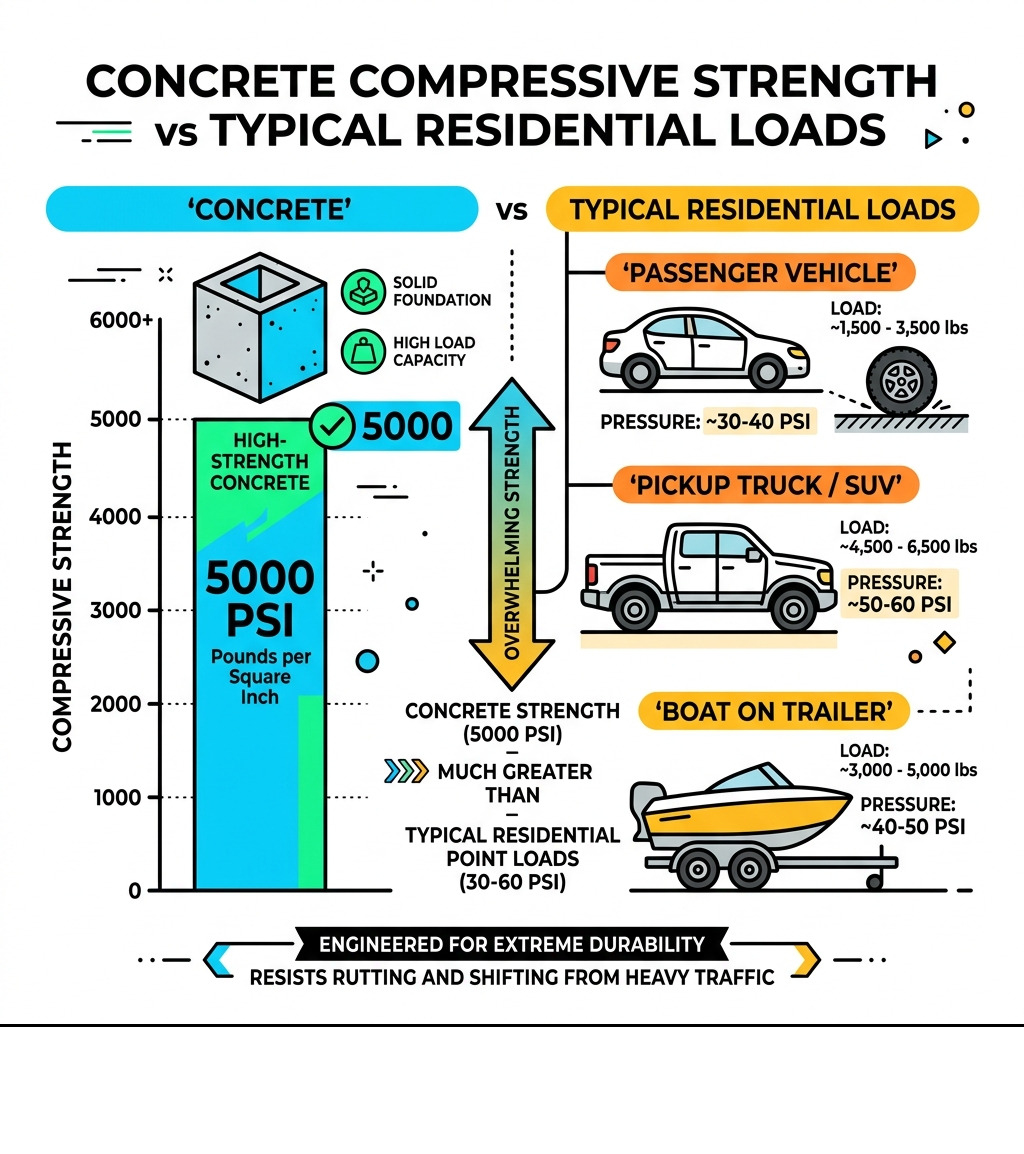
For driveways, concrete is typically the more reliable choice for most residential driveways. Driveways have to support the weight of heavy trucks and SUVs. In the Florida heat, the ground can soften, and paver systems can develop ruts over time, especially under heavier use. Once they shift, you have to pull them up and reset them to fix the problem.
A 5000 PSI concrete driveway in Brevard County is built to handle these loads. By using a stronger mix than the standard residential pour, we make sure the slab can support heavy vehicles without shifting. Whether you need a spot for a boat or a full driveway, more info about concrete pads and slabs shows why a solid foundation is a reliable option for heavy traffic.
It also matters how the driveway connects to the garage, sidewalk, or street. When individual units start moving, those transition points are often where homeowners first notice trouble. A slab with proper prep and planned joint placement tends to provide a more even surface, which is one reason many families prefer concrete for daily use.
If you want a general comparison of design and maintenance differences, it helps to look at how each option performs over time in real-world conditions.
Installation and Repair Realities
Installing a concrete driveway is usually a faster process. Once the ground is ready and the forms are set, the pour happens quickly. While you need to wait a short period for the concrete to harden before driving on it, the construction time on your property is short.
When it comes to repairs, some say pavers are easier because you can swap one stone. However, matching the color of a new paver to one that has been in the sun for years is very difficult. The new piece usually looks noticeably different.
With concrete, we focus on doing the job right the first time with proper ground prep and joints. If a section ever needs attention, we can replace that specific area. For homeowners in Viera or Merritt Island, a professional installation is an investment in a surface meant for long-term use. You can find more info about concrete sidewalks to see how we handle these structural projects.
What many homeowners do not see is that the quality of the finished surface depends heavily on the preparation stage. A good installation starts with evaluating the subgrade, addressing soft or unstable areas, planning drainage, and making sure the slab thickness and joint layout fit the intended use. Those details are especially important in Florida, where water movement and sandy soil can affect surface performance over time.
Repair expectations should be practical as well. No outdoor surface is completely maintenance-free, and every material can show wear eventually. The advantage of concrete is that it usually ages in a more uniform way and does not rely on hundreds of individual pieces staying locked together. For most residential driveways, that makes the surface simpler to maintain and easier to live with year after year.
Frequently Asked Questions
Which is better for Florida driveways, concrete or pavers?
In my experience, concrete is the better choice for most Florida driveways. It supports heavy vehicles without shifting and doesn’t require the constant weeding and re-sanding that pavers need in our climate.
Do pavers require more maintenance than concrete in Brevard County?
Yes. Pavers need regular cleaning, weed control, and new sand in the joints. Our heavy rain and humidity make weeds grow fast and wash sand away. Concrete usually just needs a wash and occasional sealing to stay in good shape.
How does 5000 PSI concrete compare to pavers for heavy loads?
While pavers are strong, the whole system depends on the sand underneath. 5000 PSI concrete is a denser, stronger mix than what is typically used in residential work. It provides a solid surface that is much better for supporting trucks, boats, or RVs on our sandy soil.
Conclusion
Choosing between concrete and pavers depends on what you want for your home. If you prefer a decorative look and are okay with handling regular maintenance like weeding, pavers are an option.
However, if you want a driveway or patio that is durable, stays cool, and requires very little work, high-strength concrete is the practical choice. At JCD Concrete Inc., we bring over 40 years of experience to every job in Brevard County. We use quality materials and understand local soil to make sure your project lasts.
Whether you are in Melbourne, Palm Bay, or nearby, we can help you build a durable driveway. For more info about our concrete services, contact us today to discuss your project.