Why Concrete Patios Are One of the Best Investments for Your Outdoor Space

Concrete patios are one of the most durable, low-maintenance, and versatile options available for Florida homeowners looking to expand their outdoor living space. Here’s a quick overview of what makes them worth considering:
- Durable: A well-built concrete patio can last decades with proper care, even in Florida’s demanding climate.
- Customizable: Stamped patterns, stained finishes, exposed aggregate, and decorative borders give you a wide range of looks.
- Cost-effective: Concrete typically costs less than pavers or natural stone, and holds its value over time.
- Low maintenance: Routine sealing and occasional pressure washing are usually all it takes.
- Weather-resistant: Properly installed concrete handles heavy rainfall, humidity, and UV exposure well.
Whether you want a simple broom-finished slab for outdoor dining or a stamped stone-look patio wrapped around a fire pit, concrete gives you flexibility that few other materials can match. It can be poured into almost any shape, customized with color and texture, and built to handle heavy outdoor furniture, grills, and even hot tubs.
Here in Brevard County, Florida, the outdoor living season runs nearly year-round. That means your patio gets real, daily use — and the material you choose has to hold up against tropical rain, sandy soil, and intense sun. Getting the foundation, drainage, and mix strength right from the start makes all the difference in how long your patio performs. A professionally installed outdoor living space can also improve long-term usability and curb appeal for Florida homeowners.
At JCD Concrete Inc., we have been building concrete patios and residential flatwork across Brevard County for over 40 years. In that time, we’ve seen what separates a concrete patio that looks great a decade later from one that cracks, settles, or fades within a few years.
Advantages of Choosing Concrete Patios
When we talk to homeowners in Melbourne, Palm Bay, and throughout Brevard County about upgrading their outdoor spaces, the conversation often comes down to durability, maintenance, and long-term value. Wood decks can deteriorate in Florida’s heat and humidity, while pavers may shift over time and require ongoing maintenance for weeds, sand joints, and uneven settling. Concrete patios provide a more stable, low-maintenance surface that holds up well against heavy rainfall, sandy soil conditions, and daily outdoor use common along the Space Coast.
One of the primary advantages of concrete is its sheer durability in high-traffic areas. Whether you are hosting a large summer barbecue in Cocoa Beach or moving heavy lounge chairs around your pool deck in Satellite Beach, concrete provides a stable surface that doesn’t “give” or wobble. Unlike individual pavers, which can trip guests if they settle unevenly, a professionally poured slab maintains its integrity.
Weather resistance is another critical factor here in Central Florida. We deal with intense tropical storms and high humidity that can warp wood and wash out the sand joints between bricks. Concrete is heavy and stays put. Furthermore, at JCD Concrete Inc., we emphasize the use of high-strength mixes. While 4000 PSI concrete is the common industry standard for residential work, we prefer the enhanced durability of 5000 PSI concrete. This extra strength provides increased stiffness and resistance to the elements, helping your patio hold up well over the long term in Florida conditions.
| Feature | Industry Standard (4000 PSI) | JCD Premium (5000 PSI) |
|---|---|---|
| Durability | Standard Residential | High-Performance |
| Surface Wear | Good | Superior |
| Moisture Resistance | Standard | Enhanced |
| Longevity | Standard Long-Term Residential Performance | Enhanced Long-Term Durability |
| Maintenance | Regular Sealing | Regular Sealing |
Popular Design Trends for Concrete Patios
The days of boring, grey rectangles are long gone. Modern concrete patios are all about high-end aesthetics. Stamped concrete has become a favorite for homeowners who want the look of expensive natural stone without the maintenance headaches.
- Ashlar Slate: This is a timeless pattern that mimics hand-cut stone. It looks fantastic on large patios in Viera or Rockledge, providing a textured, multi-colored surface that hides dirt well.
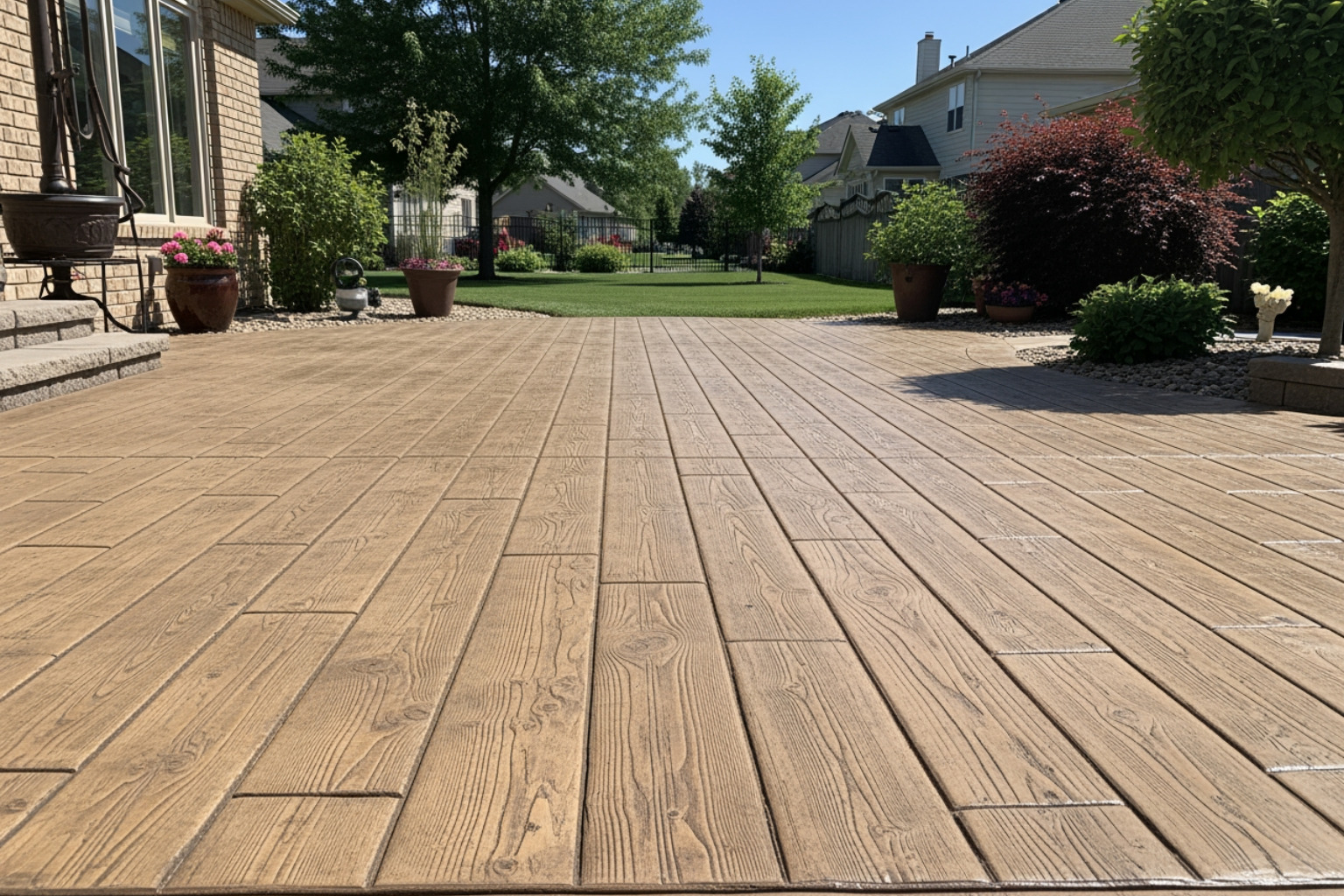
- Wood-Look Finishes: Wood-look stamped concrete has become increasingly popular among Florida homeowners. You get the warm, rustic appearance of a cedar or mahogany deck but with the fire resistance and durability of concrete. This is particularly popular for pool surrounds where real wood would splinter and rot.
- Integrated Features: We are seeing more requests for “all-in-one” backyard designs. This includes preparing slabs to handle the weight of integrated fire pits, heavy outdoor kitchens, or structural sitting walls. By planning these features during the initial pour, we ensure the slab has the necessary thickness and reinforcement to support heavier outdoor features when properly designed and reinforced.
Planning and Designing Your Custom Space
Success starts long before the concrete truck arrives. Planning the layout of your concrete patio requires thinking about how you’ll actually use the space. A common mistake is building too small. Once you add a dining table, a grill, and a couple of lounge chairs, a “standard” 10×10 patio feels cramped.
When designing for our clients in Merritt Island or Titusville, we suggest sketching out your furniture layout first. You want at least three feet of “traffic flow” space around dining sets so people can move comfortably. We also look at the weight requirements. If you’re planning a hot tub, which can weigh between 3,000 and 6,000 pounds when filled, the slab needs to be thicker—often 6 inches instead of the standard 4 inches—to provide the necessary strength and stiffness.
Addressing drainage is perhaps the most vital part of the planning phase in Brevard County. With our heavy seasonal rains, a patio must be pitched correctly—usually 1/8 to 1/4 inch per foot—to move water away from your home’s foundation. In areas like Melbourne Village or Malabar, where sandy soil is prevalent, we must also account for soil stability to prevent washout. You can learn more about our specific approach to these projects on our Concrete Patios service page.
Customizing Your Outdoor Living Area
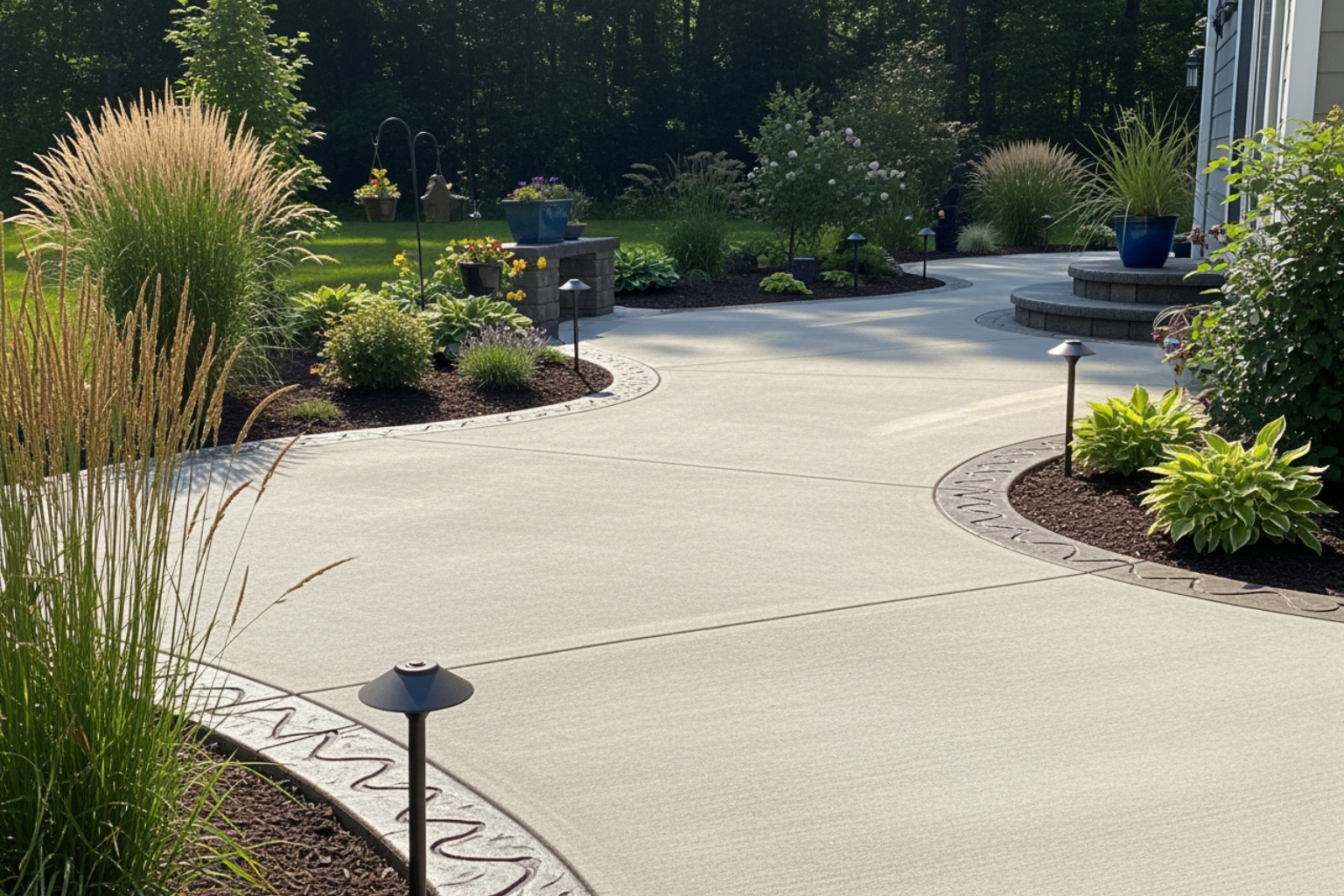
Customization allows your patio to blend seamlessly with your landscaping. Instead of sharp, industrial corners, we often recommend curved edges. These free-form designs create a more natural flow through the yard and can make a smaller space feel larger and more inviting.
Decorative borders are another way to elevate the look. You might choose a smooth, broom-finish center for traction and easy cleaning, surrounded by a darker, stamped “soldier course” border for a pop of contrast. We also help homeowners plan for the future by discussing lighting placement and the integration of structural sitting walls. These walls don’t just provide extra seating for guests; they define the perimeter of your outdoor “room,” making the space feel finished and private.
The Construction Process: From Site Prep to Finishing
Building a patio designed for long-term durability isn’t just about pouring concrete onto the ground. It’s a technical process that requires precision. In Florida, the sandy terrain presents unique challenges. If the ground isn’t prepared correctly, the slab will eventually settle or crack as the soil shifts.
- Site Preparation: We start by marking the area and excavating the sod and topsoil. We typically dig deep enough to allow for a 4-inch compacted gravel or crushed stone base. This base is what provides the drainage and stability needed to prevent the concrete from sinking into the sand.
- Forming and Reinforcement: We build the forms using sturdy lumber, ensuring the 3-4-5 squaring method is used for perfect angles. Reinforcement is key. While some use thin wire mesh, we prefer rebar grids or reinforcing fibers (or both) to ensure the slab has the strength and stiffness to handle Florida’s environment.
- The Pour: This is where the magic happens. We use high-strength 5000 PSI concrete for our premium installations, which offers better long-term performance than the 4000 PSI mixes often found in residential construction. We handle the logistics of the pour carefully, especially in the Florida heat, where concrete can set faster than expected.
- Finishing: Once the concrete is placed and screeded level, we use specialized tools like bull floats and edgers to create a smooth, professional surface. If you’ve chosen a decorative finish, this is when we apply color hardeners, release agents, and stamps.
For a deeper dive into the financial side of this process, you can explore our guide on Concrete Patio Installation Costs Brevard County Fl.
Professional Installation vs. DIY Risks
It is tempting to look at a bag of concrete and think, “I can do this myself.” However, a patio is a permanent addition to your property, and mistakes are very expensive to fix.
The physical labor involved in mixing and moving dozens (or hundreds) of bags of concrete is immense. Furthermore, finishing concrete is an art form. Achieving a perfectly level surface that also slopes exactly 1/8-inch per foot for drainage takes years of practice. In our sandy Brevard County soil, professional site preparation is the only way to prevent future washout or “spalling” (where the surface flakes off).
DIY projects often run into trouble with local code compliance or utility lines. Professional contractors handle the permitting and coordinate with the Sunshine 811 “Call Before You Dig” process, giving you peace of mind that the job is done right the first time.
Common Questions Regarding Outdoor Installations
How much does a concrete patio cost in 2026?
As we move through 2026, costs are influenced by the complexity of the design and the current price of raw materials. A basic broom-finish slab is the most economical, while intricate stamped and multi-colored designs sit at the higher end of the spectrum. Factors like site access also play a role; if we can’t get a truck close to the site and have to use power buggies or wheelbarrows, the labor costs will reflect that. For a more detailed breakdown tailored to our local area, check out our resource on Concrete Patio Cost Brevard County Fl.
Long-Term Maintenance for Concrete Patios
One of the best things about concrete patios is how little they ask of you. However, “low maintenance” doesn’t mean “no maintenance.”
- Sealing: We recommend resealing your patio every 2 to 3 years. This is especially important for stamped or stained concrete, as the sealer protects the color from UV fading and prevents moisture from seeping into the pores.
- Cleaning: A routine pressure washing (on a low setting) will remove dirt, bird droppings, and organic stains from local foliage like oak leaves or palm fronds.
- Organic Stains: If you live in a heavily wooded area like Grant-Valkaria or Malabar, don’t let wet leaves sit on the concrete for weeks, as the tannins can leave stubborn brown stains.
How does the Florida climate affect durability?
The Florida climate is beautiful, but it’s tough on building materials. Our heavy seasonal rainfall can lead to washout if the perimeter of the patio isn’t properly landscaped or if the subbase wasn’t compacted correctly.
Humidity also affects how concrete cures. If it’s too hot and dry, the surface can “crust” while the bottom is still wet, leading to map cracking. As local experts, we know exactly how to time our pours and which curing compounds to use to ensure the slab reaches its full 5000 PSI potential despite the heat. Finally, we always include saw-cut control joints. These aren’t just for decoration; they tell the concrete where to crack (because all concrete eventually wants to shrink), ensuring the cracks stay hidden in the joints rather than spider-webbing across your beautiful patio.
Conclusion
A well-designed concrete patio is more than just a place to put a grill; it’s an extension of your home and a backdrop for years of memories. Whether you are in Cape Canaveral, Indialantic, or West Melbourne, choosing a high-quality installation is the key to long-term satisfaction.
At JCD Concrete Inc., we bring over 40 years of local experience to every project. We understand the unique demands of Brevard County’s soil and weather, and we are committed to using high-strength 5000 PSI concrete to ensure your patio stands the test of time.
Ready to upgrade your backyard? Transform your backyard with JCD Concrete Inc. and let’s start designing a custom space you’ll love for decades.