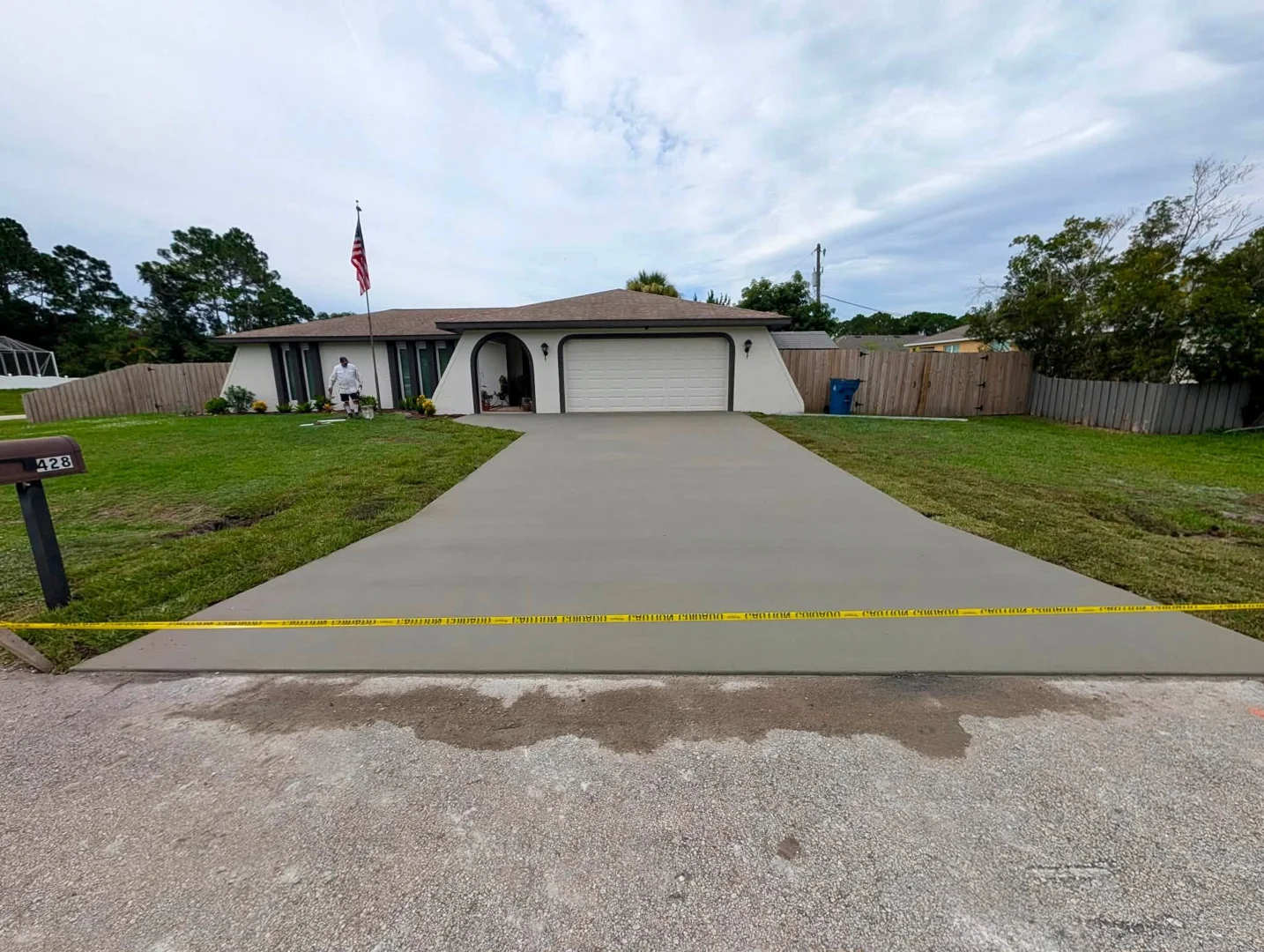
How to Vet Concrete Contractors in Your Area
When comparing concrete contractors in your area, focus on verifiable qualifications, relevant project experience, a clear written scope and the contractor’s ability to explain how the work will be planned for your property. Price matters, but it is difficult to compare estimates fairly until you understand what each contractor is actually proposing.
A useful hiring process includes verifying applicable credentials and insurance documentation, reviewing relevant completed work, comparing written scopes, asking how site conditions will be evaluated, and clarifying responsibilities before work begins.
JCD Concrete Inc. is owner-operated by John DomBek, who brings more than 40 years of concrete experience. This guide explains practical steps homeowners can use to evaluate a concrete contractor before signing an agreement.
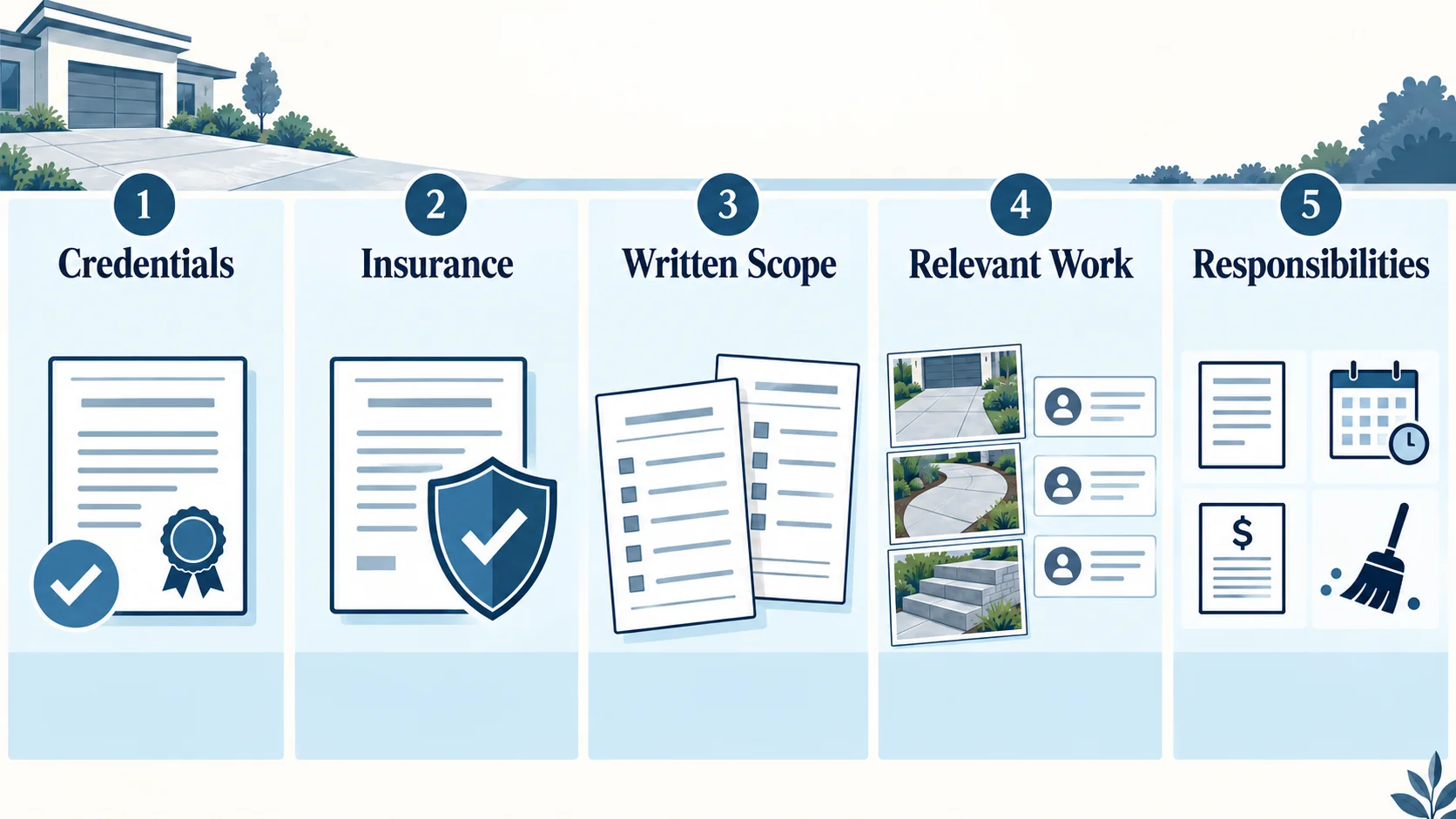
Verify Credentials and Relevant Experience
Before hiring a contractor, verify that the business has the credentials required for the type of work and jurisdiction involved. Do not rely only on a logo, advertisement or verbal statement.
Check the contractor’s current licensing or registration status through the appropriate government source. Ask for current insurance documentation and, when applicable, evidence of workers’ compensation coverage or an appropriate exemption.
Then look beyond credentials. Review recent work that is reasonably similar to your project, ask for references when useful, and pay attention to whether the contractor can explain the proposed scope in clear terms.
Compare Written Estimates by Scope, Not Just Price
Two estimates can show different totals because they include different work. Before deciding that one bid is higher or lower, compare the actual scope.
Depending on the project, an estimate may address existing-concrete removal, site preparation, dimensions, concrete specifications, reinforcement where appropriate, grading or drainage considerations, finish, joints, cleanup, permit responsibility and other project-specific items.
The goal is not to require every proposal to use an identical format. It is to understand what is included, what is excluded and where two contractors may be proposing materially different work.
If something important is unclear, ask for clarification in writing before comparing the final price.
Ask How the Contractor Will Evaluate Your Property
Concrete planning should reflect the actual property rather than a one-size-fits-all specification. Ask how the contractor will evaluate existing grades, drainage, access, the condition of the work area and the intended use of the new concrete.
In Brevard County, rainfall and drainage can be important project considerations, but the appropriate preparation and design depend on the individual site. A contractor should be able to explain the reasoning behind the proposed approach without promising that one material or technique eliminates cracking, settlement or maintenance.
JCD Concrete Inc. exclusively uses 5000 PSI concrete on residential projects, but concrete strength is only one part of performance. Site preparation, drainage, reinforcement where appropriate, placement, finishing, joints and curing also matter.
Review Relevant Projects and References
Completed-project examples can help you evaluate whether a contractor has experience with work similar to yours. Look for photos or references that are clearly attributable to that contractor rather than generic stock photography.
When reviewing examples, focus on relevance. A contractor’s experience with the type and scale of project you are considering may be more useful than simply counting how many photos or reviews appear online.
If references are available, useful questions include whether the contractor communicated clearly, followed the agreed scope and addressed questions or changes during the project.
Clarify Permits, Responsibilities and Schedule Before Work Begins
Permit requirements depend on the project and jurisdiction. Confirm whether a permit is required with the applicable building department and establish who is responsible for obtaining it before work begins.
In unincorporated Brevard County, the county identifies concrete driveways among exterior improvements for which a permit is required. Municipal requirements and other project types can differ, so homeowners should verify the requirements that apply to their property.
Also clarify the anticipated project sequence, payment terms, site access, cleanup responsibilities and how schedule changes will be communicated. Access to newly placed concrete should follow project-specific guidance rather than a universal walk-on or drive-on date.
Questions or Warning Signs Worth Investigating
A concern does not automatically mean a contractor is unqualified, but certain situations deserve additional questions before you commit.
Look more closely when:
- licensing or insurance information cannot be verified;
- the written scope is too vague to understand what is included;
- a price is dramatically different from other estimates but the contractor cannot explain the scope difference;
- the contractor pressures you to begin before responsibilities and payment terms are documented;
- permit responsibility is unclear where a permit may be required;
- the contractor promises that a particular PSI, reinforcement method or other single feature will prevent all cracking or settlement.
Ask for clarification rather than assuming that price alone determines quality.
Frequently Asked Questions
How can I verify a concrete contractor in Florida?
Check the contractor’s current license or registration status through the appropriate state or local licensing authority for the work being considered. Also ask for current insurance documentation and verify anything that is unclear before signing an agreement.
What should I compare between concrete estimates?
Compare the scope, not only the final price. Look at what each proposal includes for preparation, concrete specifications, reinforcement where appropriate, drainage or grading considerations, finish, cleanup, permit responsibility and other project-specific work.
Should I automatically choose the lowest concrete bid?
No single price tells you whether one proposal is better. A lower estimate may simply include a different scope. Ask the contractor to explain significant differences so you can compare the proposals on the same basis.
Who is responsible for concrete permits?
That depends on the jurisdiction, project and agreement. Verify whether a permit is required and document who will obtain it before work begins rather than assuming the responsibility is always the same.
What should I ask before hiring a concrete contractor?
Ask about applicable credentials, insurance documentation, relevant project experience, the written scope, site preparation and drainage considerations, permit responsibility, payment terms, cleanup and how project changes will be communicated.
Conclusion
When comparing concrete contractors in your area, focus on verifiable qualifications, relevant project experience, a clear written scope and the contractor’s ability to explain how the work will be planned for your property. Price is easier to evaluate once you understand exactly what each proposal includes.
JCD Concrete Inc. is owner-operated by John DomBek, who brings more than 40 years of concrete experience. If you are considering a concrete project in central and southern Brevard County or elsewhere on the Space Coast, learn more about JCD Concrete Inc. or contact us to request a free estimate.