Finding the Best Concrete Slab Contractor Near You
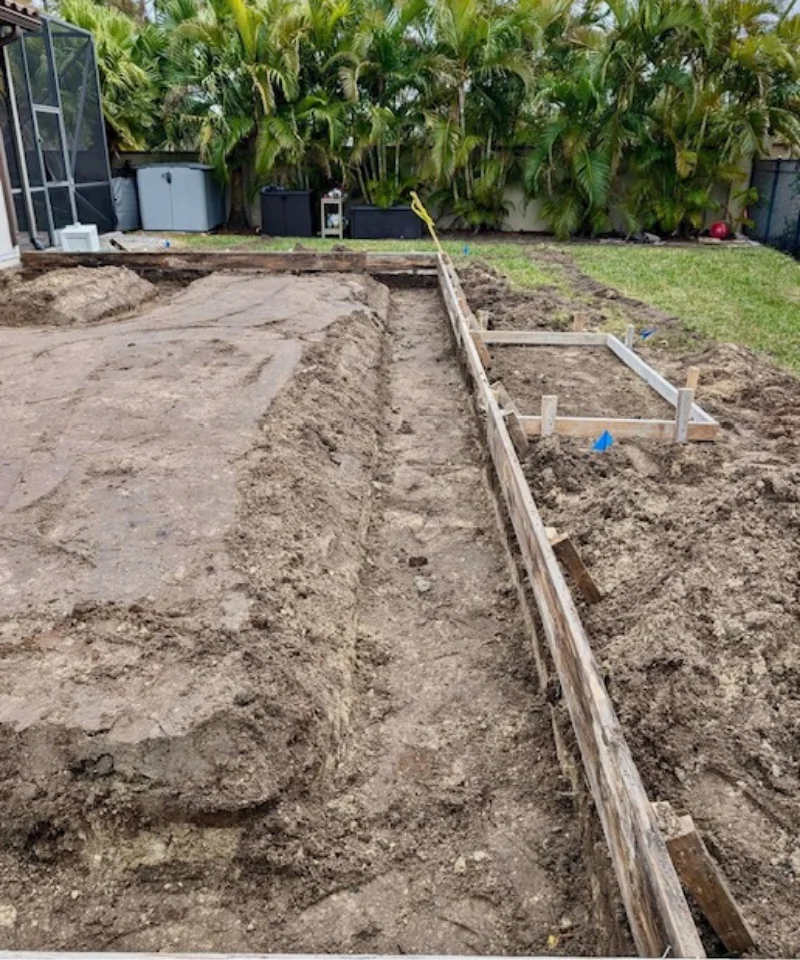
If you’re searching for concrete slab near me or a concrete slab contractor near you in Brevard County, FL, here are the most important things homeowners should know before starting a project.
- Concrete slabs are flat, poured foundations used for driveways, patios, garages, sheds, RV pads, equipment pads, sidewalks, and more.
- Slab thickness typically ranges from 4 inches for many light-use patios and walkways to 6 inches or more for driveways, garages, RV pads, and heavier-use slabs.
- In Florida, sandy soil, a high water table, and coastal conditions make proper base prep and drainage critical.
- Costs vary based on size, thickness, reinforcement, and site conditions.
- Always hire a licensed and insured local contractor with verified residential slab experience in your area.
Concrete slabs are one of the most common and practical improvements a Brevard County homeowner can make, but getting one right in Florida takes more than just showing up with a mixer. The Space Coast presents real challenges that you won’t find in other parts of the country. Sandy soil shifts. The water table sits high. Salt air attacks surfaces. Summer storms push water across yards fast. A slab poured without accounting for these conditions can crack, settle, or heave within just a few years.
That’s why the basics matter so much here: solid subgrade preparation, proper drainage planning, the right reinforcement, and a concrete mix strong enough to handle coastal exposure and everyday residential use over the long haul.
I’m John DomBek, owner of JCD Concrete Inc., and with over 40 years of hands-on experience pouring residential concrete slabs throughout Brevard County, I’ve seen what separates a slab that lasts from one that fails early. In this guide, I’ll walk you through how to choose the right contractor when you search for concrete slab near me and what to expect from a quality residential slab installation.
Common Types of Residential Concrete Slabs
At its simplest, a concrete slab is a flat, horizontal structural element poured from ready-mix concrete. While it sounds straightforward, no two slabs are created equal. The design behind a slab should match its intended purpose. A slab designed for a lightweight garden shed may not provide adequate support for a heavy motorhome or RV without additional thickness and reinforcement.
In our coastal Florida communities, from Titusville down to Micco, we design and install residential concrete slabs for a wide variety of homeowner needs.
Residential Applications
Homeowners frequently contact us when searching for concrete slab near me to expand their outdoor living spaces, improve access, or add functional storage. Some of the most common residential uses include:
- Patios and Outdoor Living Areas: A solid, level surface is the foundation of any great backyard. Poured concrete patios offer a seamless, low-maintenance alternative to individual pavers. Pavers can require more maintenance in sandy, wet conditions because joints may shift or allow weeds to develop over time.
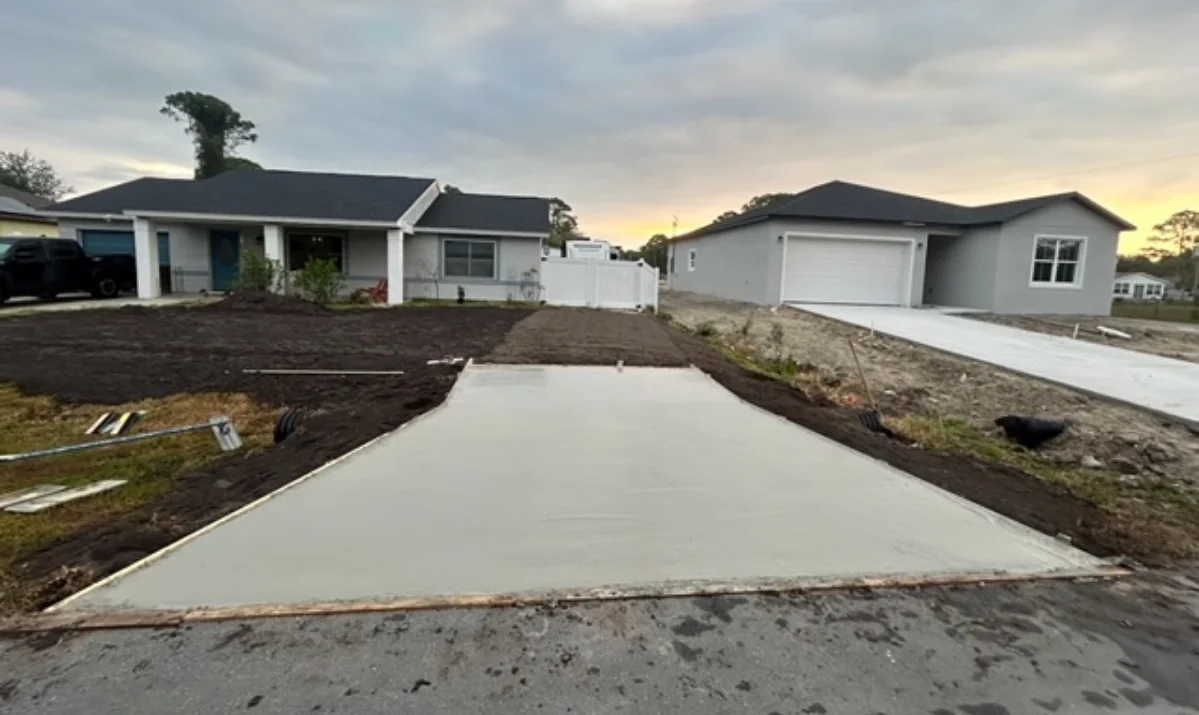
- Driveways and Extensions: Your driveway takes a beating from heavy vehicles, intense sun, and seasonal rain. We specialize in long-lasting concrete driveways that withstand high traffic and resist the washouts common to our sandy coastal soils.
- Shed and Workshop Foundations: Whether you are installing a pre-fabricated tool shed in Palm Bay or building a backyard workshop in Cocoa, a level concrete pad is essential. It keeps your structure off the damp ground, helping reduce moisture, rot, and termite concerns.
- RV Parking and Heavy Equipment Pads: With so many outdoor enthusiasts in Merritt Island and Viera, we regularly install reinforced concrete pads and slabs designed for the heavier, concentrated wheel loads of motorhomes, boats, trailers, and residential equipment.
- Hot Tub and Propane Tank Bases: A filled hot tub can weigh several thousand pounds, so slab thickness and reinforcement should depend on the tub size, loaded weight, manufacturer requirements, and site conditions. A dedicated, level concrete pad helps distribute that weight and protect your investment from cracking or tilting.
- Sidewalks and Walkways: Connecting your front driveway to your backyard patio requires durable, slip-resistant concrete sidewalks that can handle daily foot traffic and lawn equipment.
Residential Foundation and Equipment Pad Uses
Some residential slab projects also serve as foundations or support pads for garages, sheds, workshops, equipment, and similar structures. These projects require careful planning around load, drainage, reinforcement, setbacks, and local permitting requirements. From concrete foundations for approved residential structures to equipment pads for residential HVAC units, generators, and storage needs, the planning and execution must be handled with care.
Key Specifications for Florida Residential Slabs
Pouring a slab that stands the test of time in Florida requires a strong understanding of local conditions. Because our environment is highly unique, generic construction practices often fall short. We focus on practical material choices and structural details to help every residential slab we handle deliver long-term durability.
Slab Thickness Standards
The thickness of your slab is one of the first factors to consider. We determine the correct depth based on the expected load, project type, site conditions, and local requirements:
- 4-Inch Slabs: This is a common thickness for many pedestrian and light-duty applications, including backyard patios, garden walkways, and some shed pads. For heavier uses, the slab may need additional thickness, reinforcement, or base preparation.
- 6-Inch Slabs: For driveways, garage floors, RV parking pads, and heavier residential applications, we often increase the thickness to 6 inches. This extra depth can improve load support and help reduce flexing and cracking under the weight of passenger vehicles, trucks, trailers, and utility equipment.
Why JCD Uses 5000 PSI Concrete
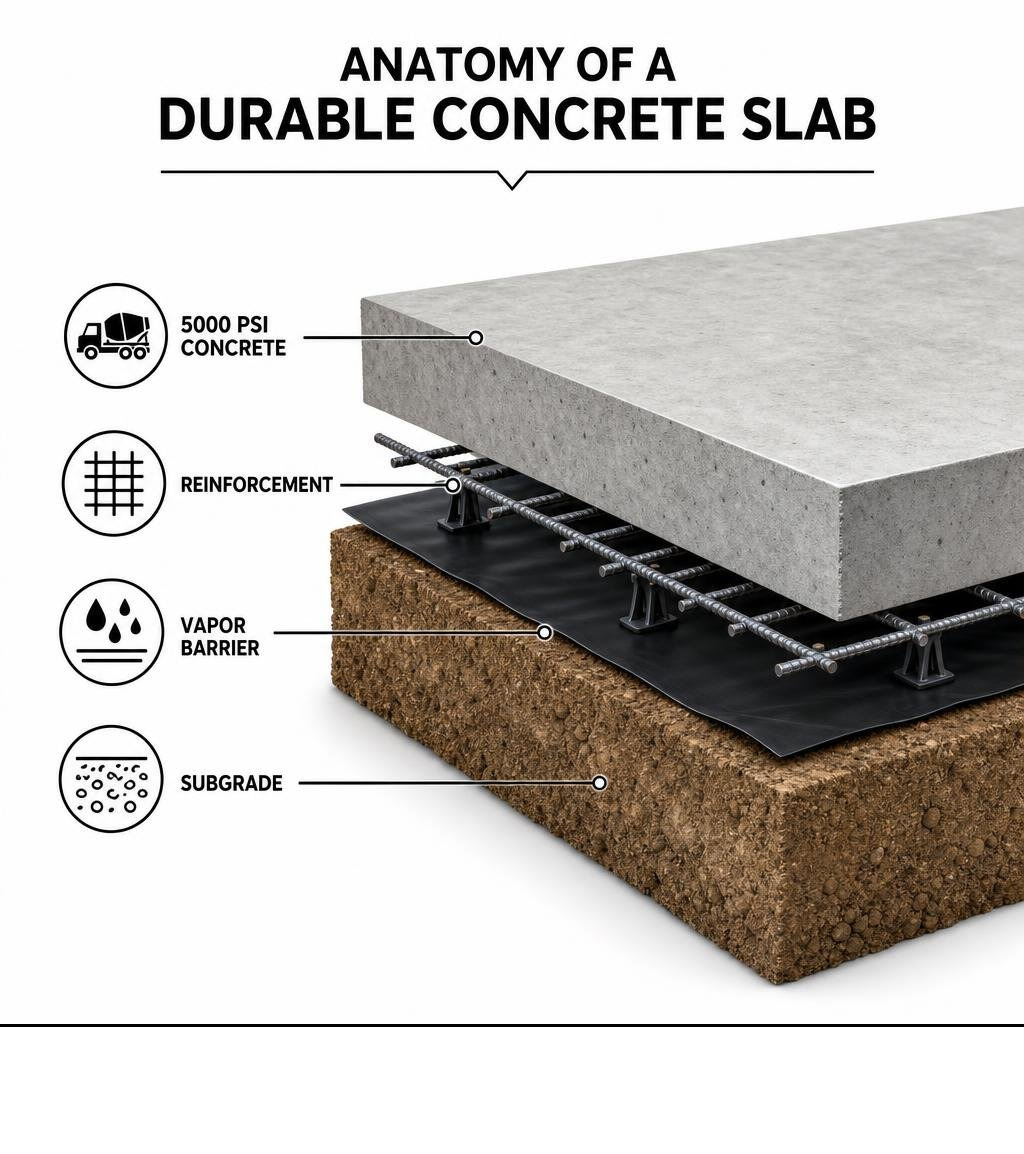
The strength of concrete is measured in pounds per square inch (PSI) after a standard 28-day curing period. At JCD Concrete Inc., 5000 PSI concrete is our standard residential mix, exceeding the 4000 PSI mix commonly used by many contractors.
This high-strength concrete provides excellent density and durability. In coastal areas like Cocoa Beach, Satellite Beach, and Indialantic, salt air, moisture, and storm exposure can be hard on exterior concrete. A stronger, denser mix can help reduce permeability, water absorption, and long-term surface wear, helping your concrete flatwork remain stronger for years.
Reinforcement Options
Concrete is incredibly strong under compression, meaning it can support direct downward weight. However, it is relatively weak under tension, which occurs when the ground shifts or the slab flexes. To give the slab tensile strength, we may incorporate reinforcement based on the project:
- Steel Rebar Grid: For driveways, garage floors, RV pads, and heavy equipment pads, we may assemble a grid of steel rebar set on concrete chairs. Placing the steel on chairs helps keep it positioned correctly during the pour, so it rests in the proper position within the slab rather than sinking to the bottom where its effectiveness is reduced.
- Welded Wire Mesh: This can be effective for controlling minor temperature and shrinkage cracking in many patios, sidewalks, and lighter-use slabs.
- Fiber Reinforcement: We may incorporate specialized polypropylene fibers directly into the concrete mix. These fibers spread throughout the slab, creating a three-dimensional support network that helps minimize micro-cracking as the concrete cures.
Vapor Barriers
In Florida, the water table is often high enough that moisture control must be part of the conversation, especially for garage slabs, interior slabs, and enclosed spaces. Moisture from the soil can migrate upward through porous concrete, which may damage indoor flooring, promote mold growth, or cause garage floor coatings to delaminate. When appropriate for the project, we install a heavy-duty polyethylene vapor barrier beneath slabs that need moisture protection.
Why Soil Prep Matters for a Concrete Slab
If you ask any experienced concrete builder what the most important part of a pour is, they won’t say the concrete itself. They will tell you it is the dirt underneath. The ground beneath your slab acts as its foundation. If that foundation shifts, settles, or washes away, even strong concrete is likely to crack and sink.
When searching for concrete slab near me, make sure your chosen contractor prioritizes thorough site preparation. In Brevard County, our sandy soil presents distinct structural challenges.
Sandy Soil Compaction
Our local soil is predominantly sand, which drains water quickly but can easily shift or erode if not properly prepared. Before a single drop of concrete is poured, we remove organic topsoil, grass, roots, and debris that can break down over time and leave voids. We then prepare the base and make sure it is properly compacted using professional equipment, creating a more stable platform that helps reduce settling.
High Water Table Mitigation
During our seasonal summer rains, the water table in areas like Merritt Island, Cape Canaveral, and Grant-Valkaria rises dramatically. If a slab is poured on oversaturated ground, the water can wash away the supporting sand beneath the forms. We carefully evaluate the elevation of your property and build up the subbase using clean, compactable fill dirt or crushed aggregate as needed to keep the concrete above problem moisture conditions.
Drainage and Stormwater Runoff
Water is one of the biggest threats to concrete performance. When heavy downpours strike, stormwater should flow away from your slab, not pool alongside it. We use professional grading practices to establish the right slope for the site, helping move water away from residential structures and finished slabs. Proper drainage and meticulous base preparation are just as vital to slab longevity as using strong concrete.
If we are installing a new driveway slab over an existing roadside ditch, we integrate durable concrete culverts to maintain proper neighborhood stormwater flow, helping prevent washouts, settlement, standing water, erosion, and localized flooding.
Our Step-by-Step Slab Installation Process
We believe in doing things right the first time. With over 40 years of experience in business, we have refined a systematic, step-by-step installation process designed to support structural integrity, clean workmanship, and a quality finish on residential slab projects.

Step 1: Site Assessment and Grading
We begin by evaluating the site, checking for underground utilities, and analyzing the natural grade of the land. We clear out vegetation, roots, and debris, then grade the soil to support proper water runoff.
Step 2: Formwork Setup
We erect sturdy wood forms to outline the exact perimeter and height of your new slab. We secure these forms with heavy-duty stakes to help prevent bowing or blowouts under the pressure of wet concrete.
Step 3: Subgrade Compaction and Reinforcement
We compact the soil thoroughly and place a vapor barrier when the slab needs moisture protection. Next, we install the appropriate reinforcement for the project, such as rebar, wire mesh, or fiber reinforcement.
Step 4: The Concrete Pour
The ready-mix concrete is delivered and placed evenly throughout the forms. For sites with limited access, we may use concrete pumps to place the material precisely without tearing up your lawn or landscaping.
Step 5: Screeding and Leveling
Our skilled crew uses a straightedge tool called a screed to level the wet concrete flat with the top of the wood forms. We then use bull floats to smooth out ridges and bring the cement paste to the surface for a clean finish.
Step 6: Finishing Touches
Depending on the application, we apply the chosen finish. For outdoor areas like patios, driveways, and sidewalks, we apply a professional broom finish to create a slip-resistant texture. For garage floors or workshops, we may use power trowels to create a smooth, dense, and easy-to-clean surface. If your project includes adjacent elevation changes, we can also evaluate whether concrete walls are appropriate to help manage soil and grade changes.
Step 7: Control Joints and Curing
To manage the natural shrinkage of concrete as it dries, we cut or form control joints at appropriate intervals for the slab design. Finally, we use proper curing practices to help protect the concrete from drying out too quickly under the hot Florida sun.
How Much Does a Concrete Slab Cost in Brevard County, FL?
When planning a home improvement project, understanding the budget is essential. When searching for concrete slab near me, you will find that pricing is influenced by several local factors rather than a single flat rate.
We focus on providing long-term value. While a cheap, poorly prepared slab might save money upfront, the cost of tearing out and replacing a cracked, settling driveway a few years down the road is incredibly high. Investing in proper site prep, appropriate reinforcement, and our standard residential 5000 PSI concrete helps give you a slab built for Brevard County conditions.
Factors Influencing Your Estimate
Several variables affect the overall investment required for your concrete slab:
- Slab Thickness and Size: Thicker slabs require more raw materials and stronger reinforcement, which naturally increases the investment.
- Site Preparation and Accessibility: If your backyard is difficult to reach, requires extensive tree root removal, or needs significant fill dirt to correct a drainage issue, the labor and equipment costs will be higher.
- Local Permitting and Inspections: Permitting fees and requirements can vary between municipalities, such as Melbourne, Palm Bay, and Cocoa. We help with the process so your project is planned around applicable local requirements.
High-Level Cost Comparison
To help you plan your project, here is a general breakdown of how different residential slab types compare in design and relative value:
| Slab Type | Common Thickness | Primary Reinforcement | Best Used For | Relative Value |
|---|---|---|---|---|
| Standard Patio Slab | Often 4 Inches | Wire Mesh / Fiber | Backyard Patios, Walkways, Some Shed Pads | Economy / Standard |
| Heavy-Duty Driveway Slab | Often 6 Inches | Steel Rebar Grid | Driveways, RV Parking, Garage Floors | Premium / High Load |
| Residential Foundation or Equipment Pad | Varies by Load and Code | Project-Specific Reinforcement | Sheds, Garages, Equipment Pads, Approved Residential Structures | Site-Specific / Engineered |
Choosing the Best Local Concrete Contractor
Pouring concrete is physically demanding, highly time-sensitive, and leaves very little room for error. Once the concrete truck arrives, the clock is ticking. If the crew is inexperienced, the concrete can set up before it is properly leveled, leaving you with an uneven, unsightly, or structurally weak surface.
If you are comparing companies after searching for concrete slab near me, look for a contractor who offers:
- Owner-Operated Oversight: There is no substitute for having experienced leadership involved in your pour. At JCD Concrete Inc., John DomBek personally oversees our projects to help maintain quality control at every step, from the first shovel of dirt to the final broom finish.
- A Deep Local Portfolio: Ask to see a gallery of completed projects in your immediate area. We gladly share our local work history and point you toward local residential projects we have completed.
- Decades of Experience: In our fragile coastal environment, experience is everything. Our team brings over 40 years of experience to every job site, giving us a deep understanding of local soils, weather patterns, drainage concerns, and residential slab requirements.
Homeowners comparing a concrete slab contractor near me should evaluate experience, drainage expertise, reinforcement practices, and local project history before choosing the lowest bid.
Finding a Reliable Local Concrete Contractor
When searching for a local concrete contractor, always verify that the company is fully licensed and insured. In Florida, working with an unlicensed contractor can leave you personally liable for injuries on your property and can create problems with inspections, code enforcement, or future resale.
Beyond basic licensing, look for a contractor with specialized local expertise. For example, if you live in a coastal community with sandy soil or high water tables, look for a team that understands regional structural issues and local concrete standards. At JCD Concrete Inc., we pride ourselves on our complete range of professional services. We handle residential slab projects such as patios, driveways, sidewalks, garage slabs, shed pads, RV pads, equipment pads, and related concrete work from the initial site grading to the final cleanup.
Frequently Asked Questions About Concrete Slabs
Do I need a permit to pour a concrete slab in Brevard County?
In many cases, yes. Municipalities like Melbourne, Palm Bay, Cocoa, and Titusville may require building permits for new concrete slabs, especially if they are structural, tied to an existing building, located near property setbacks, or affect the drainage of your property. We help homeowners understand the permitting process so the project is planned around local zoning, inspection, and stormwater requirements.
How long does it take for a new concrete slab to cure?
While concrete may feel dry to the touch within 24 to 48 hours, the chemical curing process takes time. Here is our recommended timeline for using your new slab:
- 24 to 48 Hours: Safe for light foot traffic and pets.
- 7 Days: Often safe for standard passenger vehicles and light lawn equipment, depending on the slab and conditions.
- 28 Days: Concrete generally reaches its full engineered design strength and may be ready for heavier use, depending on the slab design and project requirements.
How do I maintain and seal my concrete slab?
To keep your slab looking great and protect it from our harsh coastal environment, we recommend sealing it every 3 to 5 years. For outdoor driveways and patios, penetrating silane or siloxane sealers are highly effective. They sink deep into the concrete pores, repelling water, salt, and automotive fluids without making the surface slippery.
For pool decks and highly visible patios, you can also explore decorative options like spray decking, which adds beautiful texture and keeps the surface cool under the hot sun. For more tips on concrete care, check out our helpful blog.
Conclusion
A high-quality residential concrete slab is one of the smartest investments you can make for your home. Whether you need a new driveway, a spacious backyard patio, a sturdy shed pad, a garage slab, an RV pad, a sidewalk, or an equipment pad, success comes down to three critical elements: thorough soil preparation, appropriate reinforcement, and experienced local installation.
When you are ready to start your next project and are searching for concrete slab near me, work with a team that understands the unique coastal conditions of Brevard County, FL. At JCD Concrete Inc., we back every project with over 40 years of experience, owner-operated oversight, our standard residential 5000 PSI concrete mix, and a commitment to exceptional service.
Contact us today for a free, itemized estimate and get a concrete slab built for Brevard County conditions.