What Should Brevard County Homeowners Expect Before Installation Begins?
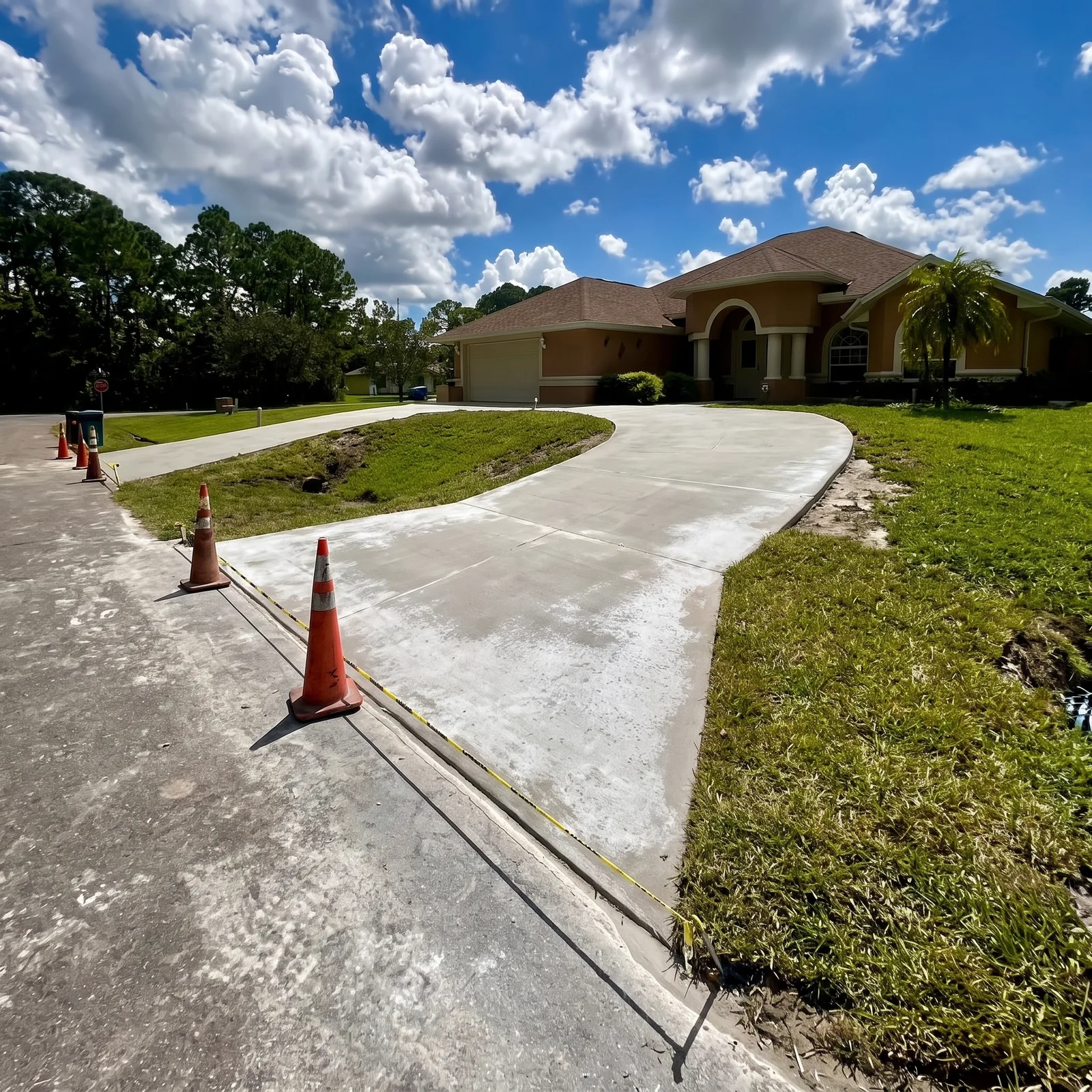
A concrete driveway installation is a multi-step project that starts well before the concrete truck arrives. For Brevard County homeowners, the most important things to understand are how the site will be evaluated, how drainage and sandy soil conditions affect the plan, what happens during demolition and preparation, and how the new slab should be protected while it cures.
This walkthrough explains what to expect before, during, and after a professional concrete driveway installation in Brevard County, FL. It focuses on the practical decisions that affect long-term performance, including grading, culverts, base preparation, reinforcement where appropriate, 5000 PSI concrete on residential projects, finishing options, curing, and early maintenance.
A professional driveway installation typically includes:
- Property and project review
- Drainage, elevations, and access review
- Removal or excavation where required
- Subgrade and base preparation
- Forming and reinforcement where appropriate
- Concrete placement and finishing
- Joints and curing
- Project-specific guidance before normal use
Brevard County properties can involve sandy soils, heavy seasonal rainfall, changing drainage conditions, coastal exposure in some areas, and groundwater conditions that vary by location. These factors are part of why site preparation and drainage planning matter before a driveway is installed.
JCD Concrete is owner-operated by John DomBek, who brings more than 40 years of concrete experience. That experience informs how we evaluate site preparation, drainage, access, and other project-specific conditions before a residential driveway is installed.
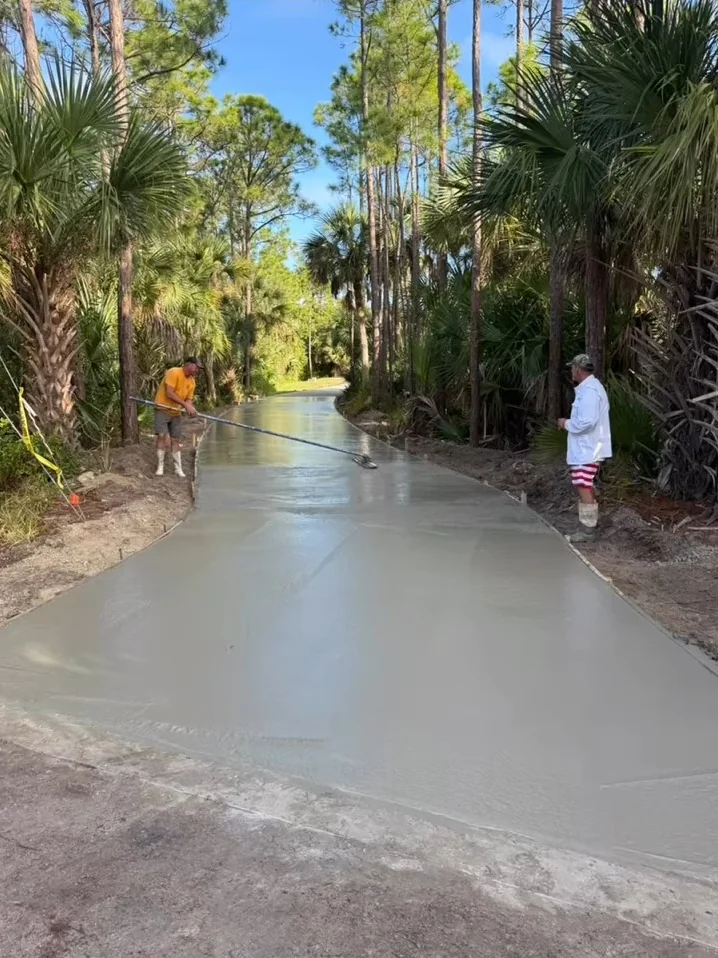
What Happens During a Concrete Driveway Installation?
A successful concrete driveway project is not just about pouring wet concrete onto the ground and smoothing it out with a trowel. It requires a detailed, multi-phase plan carried out with the right preparation, equipment, and site-specific decisions.
Why Homeowners Choose Professional Installation
A driveway installation is one of those projects where the details below the surface matter just as much as the finished concrete you see from the street. Professional installation helps reduce the risk of common problems such as early cracking, settlement, drainage trouble, and costly repairs.
Homeowners often choose an experienced concrete contractor because a professional crew can handle:
- Drainage planning: Proper grading helps move stormwater away from the garage, foundation, yard, and right-of-way.
- Project requirements: Permit, right-of-way, and inspection requirements can vary by property, jurisdiction, road ownership, and project scope. Applicable requirements should be confirmed for the specific project before work begins.
- Subgrade preparation: Where excavation or base work is required, the existing soil and supporting material should be evaluated, shaped, and compacted as appropriate for the site before concrete is placed.
- Reinforcement placement: When reinforcement is part of the project design, it should be placed properly so it supports the slab instead of sitting uselessly on the ground.
- Specialized equipment: Excavation, compaction, forming, concrete placement, and finishing all require the right tools and an experienced crew.
- Clear project guidance: A reputable contractor should explain the project scope, curing expectations, and use guidance before work begins.
With more than 40 years of concrete experience, JCD has seen driveway problems associated with inadequate preparation, drainage issues, and installation conditions that were not properly addressed.
Phase 1: Site Preparation and Florida Drainage Planning
Every great driveway starts with site preparation. In Brevard County, that means reviewing access for equipment and concrete delivery, removing old concrete or unstable material where required, and planning around local sandy-soil conditions before forms are set.
During this phase, we focus on:
- Removal, Excavation & Access: Removing the old, cracked driveway, clearing the work area, addressing access for equipment, and excavating unstable material where needed.
- Drainage, Grading & Elevations: Grades and elevations should be planned so water moves appropriately for the property, adjoining surfaces and drainage system.
- Culverts Where Applicable: Evaluating drainage culverts near the right-of-way when they affect driveway drainage, water flow or washout risk, with replacement or related concrete work addressed where appropriate to the project.
- Base Preparation & Compaction: Shaping and compacting the subgrade thoroughly to provide a stable, properly prepared base for the new driveway.
Experience-based insight: Soil, drainage, and groundwater conditions can influence how the site should be prepared, especially in coastal areas or properties with a high water table. A property-specific evaluation helps determine the right excavation, elevation, drainage, base preparation, and compaction approach before any concrete is poured.
Phase 2: Pouring 5000 PSI Concrete and Applying Finishes
Once the forms are set and the driveway layout is confirmed, the project moves into reinforcement where appropriate, concrete placement, finishing, and control joint planning. When reinforcement is appropriate for the driveway design, it should be positioned correctly as part of the project-specific slab plan.
JCD uses 5000 PSI concrete on residential projects. That concrete strength is an important part of the installation, but it works together with site preparation, drainage planning, base support, reinforcement where appropriate, placement, finishing, control joints, and curing to affect how the driveway performs over time.
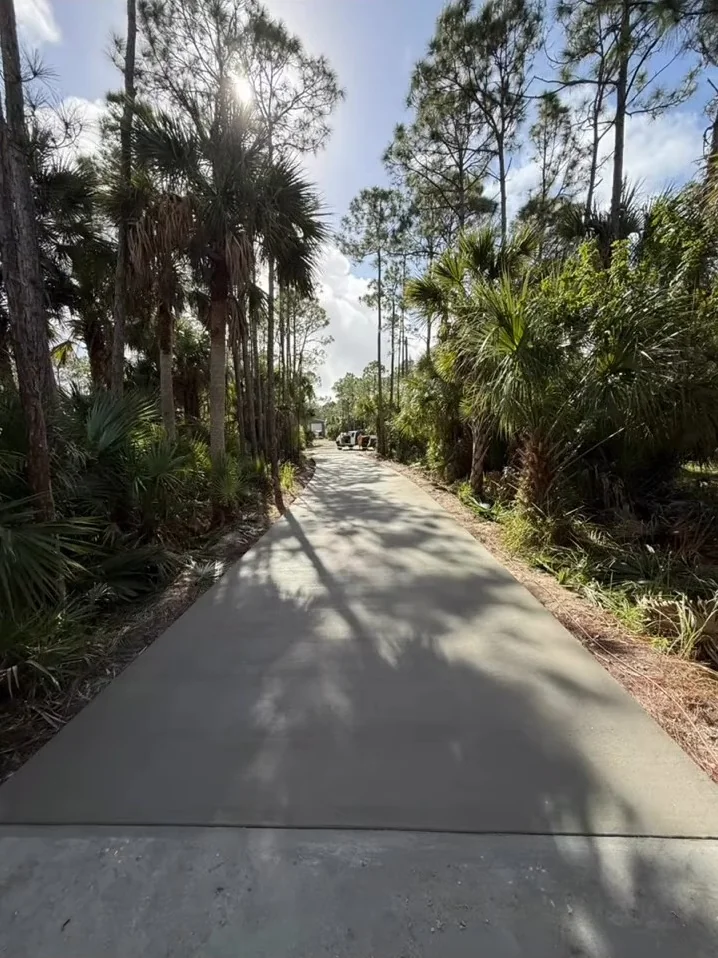
Next comes the finish. Finish options depend on the project. These may include a standard broom finish, stamped or decorative concrete, or exposed aggregate where appropriate.
Phase 3: Concrete Curing Timeline
Curing is an important part of how concrete gains strength after placement. The slab may look finished soon after the pour, but the surface still needs to be protected while curing continues.
Use this conservative driveway curing framework:
- First 24–48 hours: Protect the concrete from people, pets, debris, sprinklers, and anything that could mark or damage the surface. Light foot traffic may be appropriate depending on the project and the contractor’s guidance.
- Days 2–7: Curing continues, and the surface should still be protected from dragging, impact, heavy items, early vehicle traffic, and unnecessary wear.
- Around 28 days: Under typical assumptions, concrete commonly reaches its specified or design strength around this point, though the actual timing can be influenced by the mix, placement conditions, weather, and curing environment.
- Vehicle access: JCD provides project-specific vehicle-access guidance based on the installation, weather, concrete, and expected loads rather than relying on a universal date for every driveway.
Phase 4: Common Mistakes During Concrete Curing to Avoid
Even a strong concrete mix can be damaged if the curing process is interrupted. To protect your new driveway, avoid using the driveway before your contractor says it is ready, pressure washing too soon, dragging heavy equipment across the surface, placing heavy loads too early, or skipping any curing guidance your contractor provides.
Questions to Clarify Before a Driveway Project Begins
Before a driveway project begins, homeowners should understand how the proposed scope responds to the property, intended use and site conditions. Useful questions include:
- How will the existing soil and supporting base be evaluated and prepared?
- How will grades, elevations and drainage be addressed for the property?
- What concrete strength is specified for the project?
- What reinforcement, if any, is appropriate for the installation?
- Could permit, right-of-way or inspection requirements apply to this property?
- How will finishing, joints, cleanup, curing and vehicle-access guidance be handled?
Differences between estimates can reflect differences in project scope, preparation, drainage planning, concrete specifications, reinforcement where appropriate, finishing and other site-specific requirements. Homeowners should compare what each proposal actually includes rather than evaluating price alone.
JCD Concrete is owner-operated by John DomBek, who personally oversees projects and brings more than 40 years of concrete experience. JCD is Licensed & Insured • License #885033955. During estimating and planning, JCD reviews the property-specific conditions that affect the concrete scope and explains the planned approach before placement.
What Factors Affect the Cost of a Driveway Project?
A new driveway is a long-term investment in your property’s functionality and curb appeal. For a closer look at common pricing variables, review our driveway replacement cost guide.
Key Variables That Influence a Driveway Estimate
When we prepare a professional estimate for your property, several factors come into play:
- Project Size & Scope: Total square footage, driveway layout, adjoining concrete, and the approved scope all affect the estimate.
- Access, Demolition & Site Preparation: Equipment access, removal of existing concrete or asphalt, excavation needs, dirt work, and base preparation can change the amount of labor and material required.
- Drainage, Culverts & Finish Details: Drainage planning, culvert work when applicable, finish selection, decorative upgrades, and unusual loads all influence the final project plan.
Thickness and other installation details depend on the project, intended loads, site conditions and approved scope.
A deteriorated or failing culvert can contribute to washout and settlement problems near a driveway connection, so its condition should be evaluated when it affects the project.
Why Installation Quality Matters Over Time
Driveway materials can differ in upfront cost, maintenance needs, drainage requirements, and long-term upkeep. For concrete, long-term performance depends on more than the finished surface. Site preparation, drainage, base support, reinforcement where appropriate, placement, finishing, joints, curing, and maintenance all matter.
The goal is not to assume one material is best for every property, but to make sure the selected driveway system is planned and installed for the site’s conditions and intended use.
Concrete Driveway Installation FAQs
How long before I can drive on my new concrete driveway?
The timeline depends on the concrete installation, weather, curing conditions and the loads the driveway will carry. Concrete continues gaining strength for weeks and commonly reaches its specified/design strength at about 28 days under typical assumptions. JCD provides project-specific guidance before vehicles are placed on a new driveway.
Do I need a permit for a concrete driveway installation in Brevard County?
Permit, right-of-way and inspection requirements vary by municipality, road ownership, property location and project scope. Requirements should be confirmed with the authority responsible for the property before work begins.
How often should I seal my concrete driveway?
Sealer guidance depends on the product used, surface condition, exposure, and maintenance goals. Homeowners should follow the specific sealer manufacturer’s instructions and ask their contractor what is appropriate for the driveway’s finish, location, and use.
What to Know Before Your Driveway Project Begins
A professional concrete driveway installation should give homeowners a clear understanding of the project before, during, and after the pour. That includes a site review, drainage and elevation planning, preparation, reinforcement where appropriate, JCD’s use of 5000 PSI concrete on residential projects, concrete placement, finishing, joints, and project-specific curing and use guidance.
Planning a new driveway or replacing an existing one? Learn more about JCD’s concrete driveway installation and replacement services or request a free estimate for your project in central and southern Brevard County and the Space Coast.