What Is a Stamped Concrete Walkway (And Is It Right for Your Home)?
A stamped concrete walkway is one of the most popular upgrades Brevard County, FL homeowners ask us about, and for good reason. It combines the strength of poured concrete with decorative patterns and colors that can closely mimic natural stone, brick, slate, or even wood.
Quick answer for homeowners planning a stamped concrete walkway:
- Stamped concrete is regular concrete imprinted with texture mats and colored before it cures
- Common patterns include ashlar slate, cobblestone, flagstone, brick, and wood plank
- Typical costs range from $8 to $28 per square foot depending on complexity, size, and site conditions
- A properly installed walkway can last well over 20 years with periodic resealing
- It costs significantly less than natural stone while delivering a very similar look
- Professional installation is strongly recommended because timing during stamping is critical
Walkways do more than connect two points on your property. They set the tone for your entire exterior. A well-designed stamped walkway adds curb appeal, improves drainage flow when properly graded, and holds up to Florida’s heat, heavy rain, and sandy soil conditions far better than loose pavers or gravel.
I’m John DomBek, owner of JCD Concrete Inc., and after more than 40 years of experience installing residential concrete throughout Brevard County, FL, I’ve seen what separates a stamped concrete walkway that holds up for decades from one that fades, cracks, or shifts within a few years. This guide covers everything you need to plan your project the right way.
Why Choose a Stamped Concrete Walkway?
When homeowners in Melbourne, FL, Titusville, FL, or Palm Bay, FL look to upgrade their front entryways, they usually find themselves choosing between poured concrete, individual pavers, or natural stone.
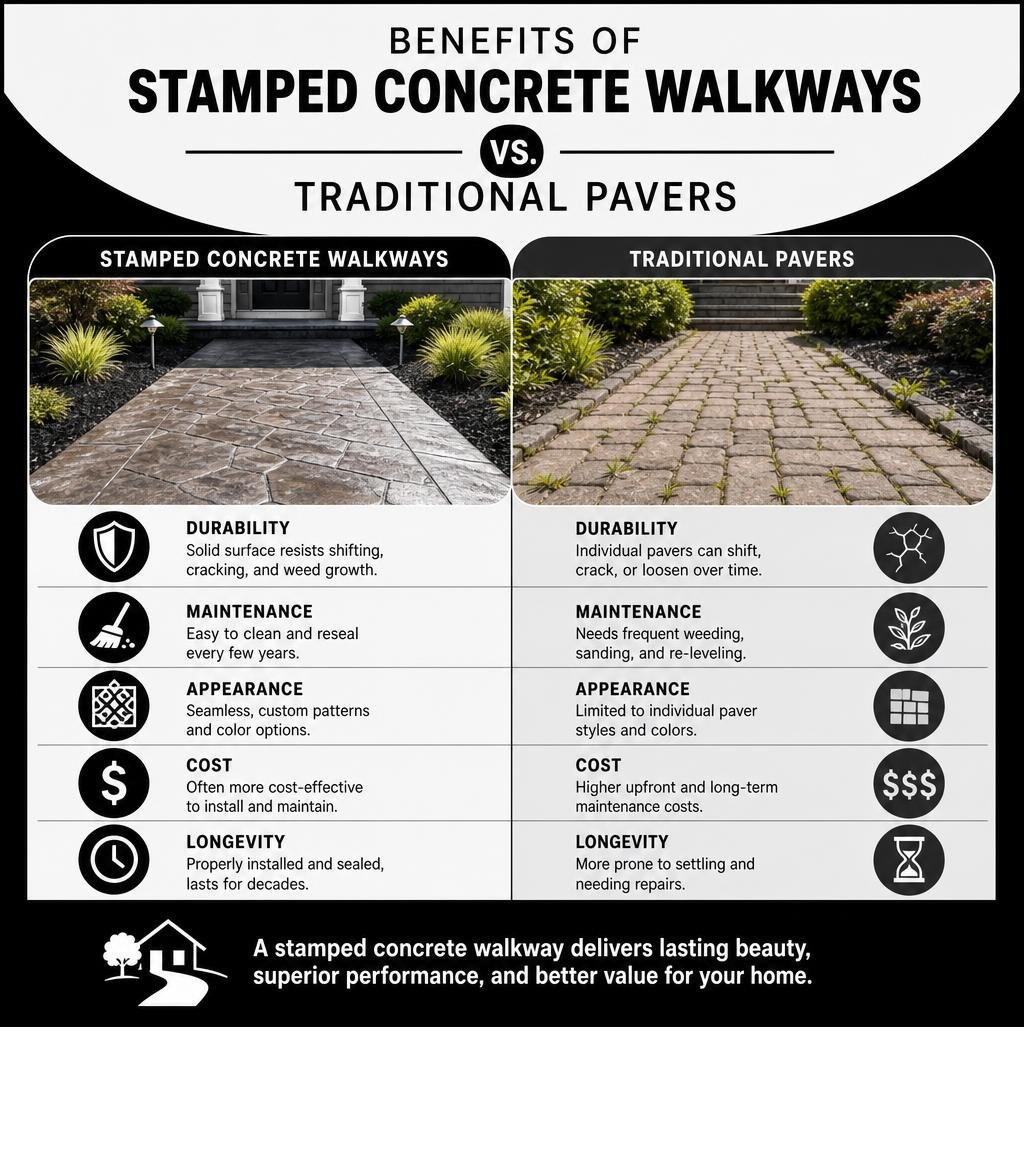
One of the biggest advantages of a stamped concrete walkway is its structural continuity. Unlike loose materials, a stamped walk is a single, continuous slab of reinforced concrete. One issue we frequently encounter with individual pavers in Florida’s humid coastal climate is that the soil shifts easily. Over time, heavy summer downpours wash away the joint sand, leaving gaps where weeds and pests quickly take over.
A continuous concrete surface eliminates many of the joints that often require maintenance in paver installations. This translates directly to less weekend maintenance for you.
For a closer look at standard concrete walk options, you can explore our concrete sidewalks to see how we design durable pathways.
What is a Stamped Concrete Walkway?
A stamped concrete walkway is a poured concrete walkway that is textured and colored while the concrete is still workable to resemble materials such as stone, slate, brick, or wood.
To achieve a lifelike appearance, we don’t just stamp the surface, we also apply multiple layers of color. This includes a base color mixed directly into the concrete (integral color) and secondary colors applied to the surface (release agents or antiquing stains) to highlight the deep textures and “grout” lines.
Stamped Concrete vs. Pavers and Natural Stone
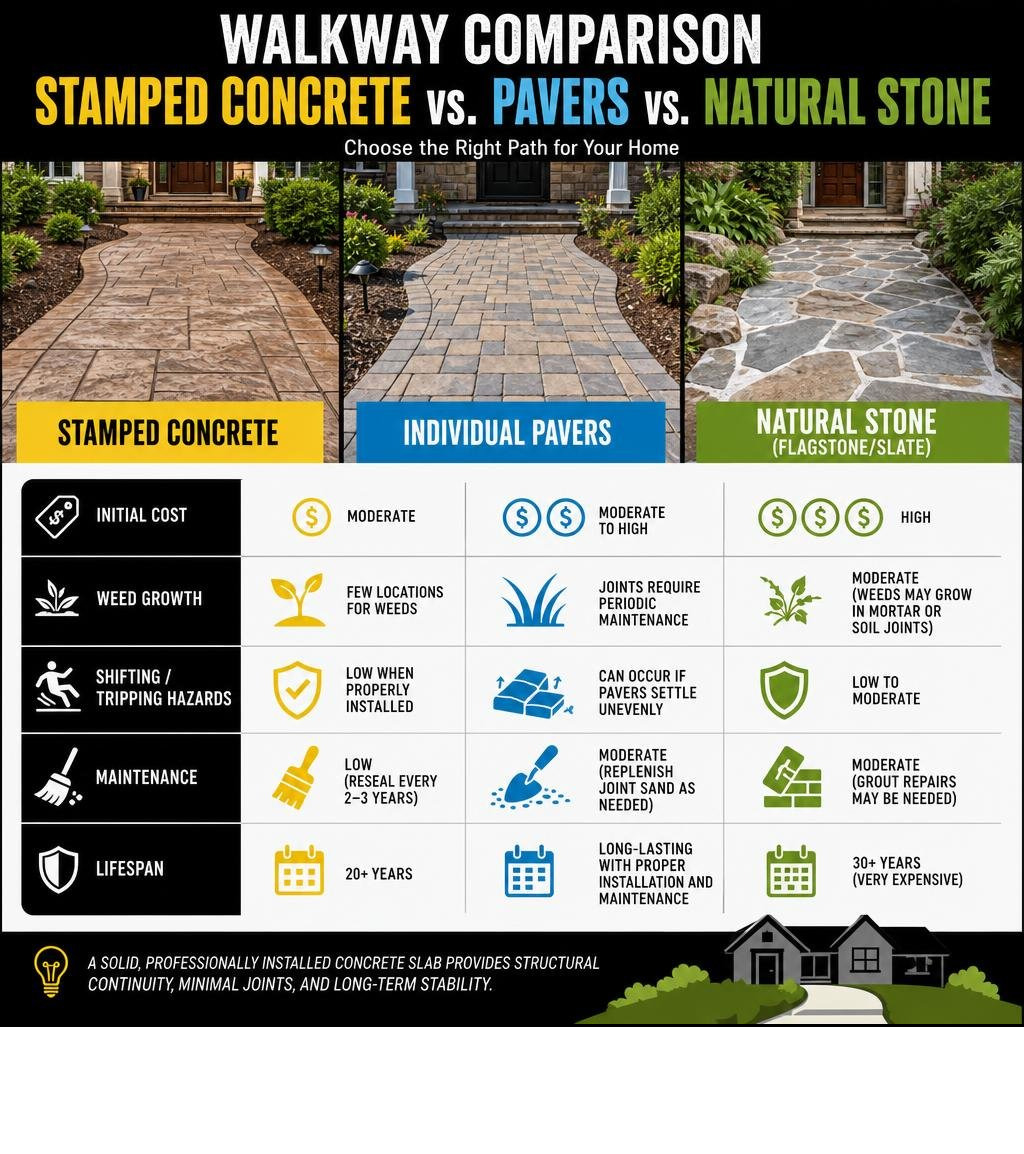
To help you decide which material fits your budget and lifestyle, here is how a stamped concrete walkway stacks up against traditional alternatives:
| Feature | Stamped Concrete | Individual Pavers | Natural Stone (Flagstone/Slate) |
|---|---|---|---|
| Initial Cost | Moderate | Moderate to High | High |
| Weed Growth | Few locations for weeds | Joints require periodic maintenance | Moderate (weeds may grow in mortar or soil joints) |
| Shifting/Tripping Hazards | Low when properly installed | Can occur if pavers settle unevenly | Low to Moderate |
| Maintenance | Low (Reseal every 2–3 years) | Moderate (Replenish joint sand as needed) | Moderate (Grout repairs may be needed) |
| Lifespan | 20+ Years | Long-lasting with proper installation and maintenance | 30+ Years (Very expensive) |
While individual pavers can look beautiful initially, Florida’s sandy soils and high water table mean those individual blocks can shift over time. A solid, professionally placed concrete slab distributes weight evenly, making it a much more stable long-term option for our local environment.
To learn more about structural concrete slabs and how we prep them, you can read about our concrete flatwork services.
Designing Your Stamped Concrete Walkway: Patterns, Colors, and Features
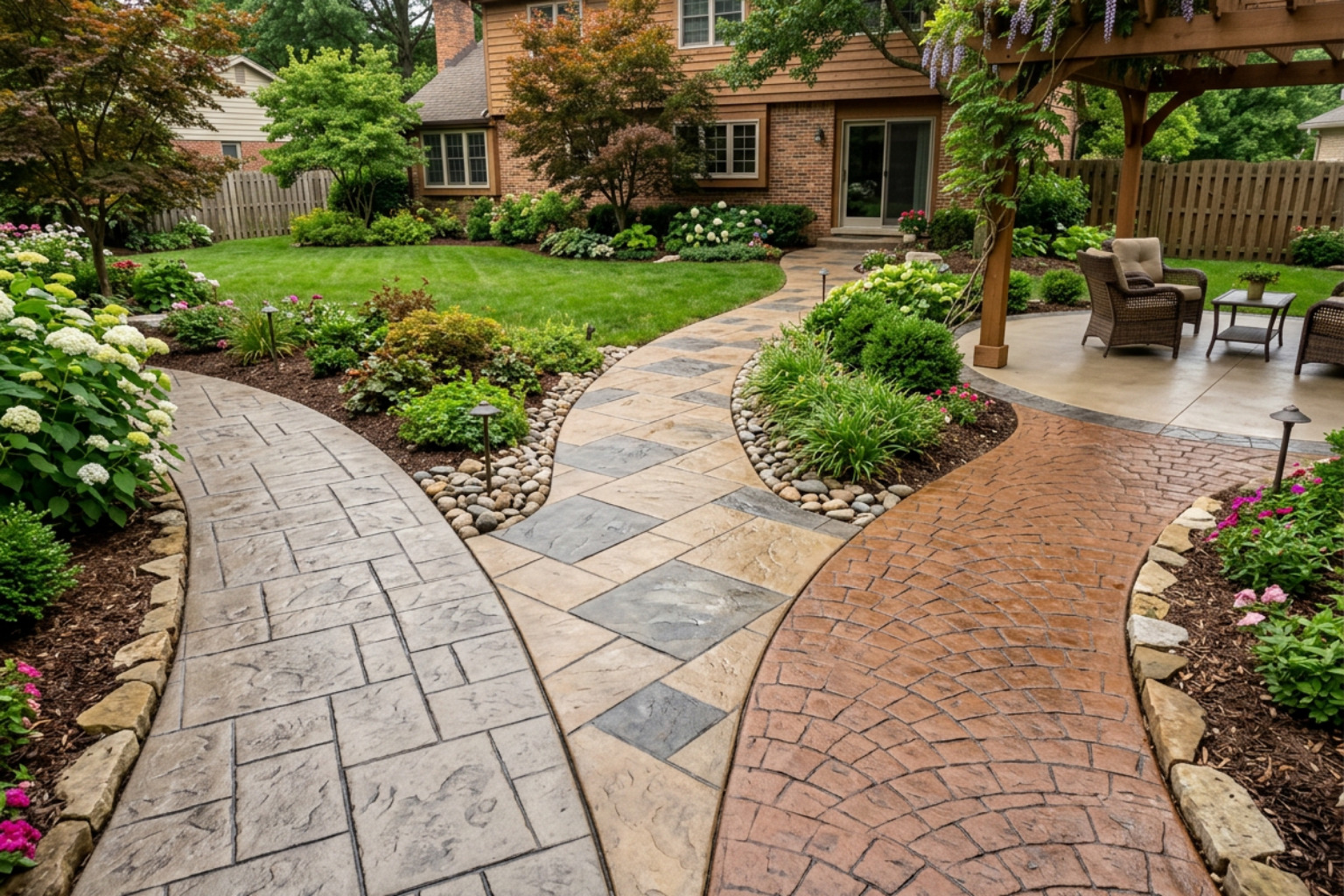
One reason many homeowners choose stamped concrete is the ability to create a custom appearance without the maintenance requirements of individual pavers or natural stone. We can customize the pathway to flow naturally around your landscaping, matching the architectural style of your home.
Whether you prefer the look of natural stone, slate, brick, or wood, stamped concrete offers a wide range of styles that can complement almost any home.
If you are planning a larger outdoor living project, you can easily tie your new walkway into a matching stamped patio. Read more about these options on our concrete patios page.
One mistake we regularly see is homeowners choosing a pattern before thinking about the rest of the property. A walkway should complement the driveway, landscaping, entryway, and patio rather than competing with them.
Best Stamped Patterns by Home Style
Choosing the right pattern is all about complementing your home’s existing architecture. Here are a few practical pairings we often recommend for Brevard County, FL homes:
| Home Style | Recommended Pattern |
|---|---|
| Coastal | Ashlar Slate |
| Mediterranean | Cobblestone |
| Farmhouse | Wood Plank |
| Traditional | Brick |
| Modern | Seamless Slate |
Popular Pattern Options
- Ashlar Slate: This pattern features interlocking rectangular stones of varying sizes. It is incredibly versatile and pairs beautifully with modern, transitional, or traditional Florida homes.
- Cobblestone: Perfect for traditional, colonial, or Mediterranean-style homes. It gives an Old World, hand-laid feel that looks fantastic as a curved front entry walk.
- European Fan: An elegant, sweeping pattern that creates high visual interest. This works exceptionally well for wider walkways and grand entryways.
- Wood Plank: Replicates the warm, organic texture of wood decking without the splinters, rotting, or constant staining. It’s a great fit for coastal, beachside, or rustic-style homes.
- Brick Running-Bond: A classic look that mirrors traditional brick paving. It is an excellent match for brick-front homes or historic properties.
The Walkway Color Guide
Coloring concrete is an art form, but homeowners usually make the best decisions when they can picture how the walkway will relate to the roof, trim, and exterior colors already on the home.
| Roof or Exterior Tone | Suggested Base Color | Accent Color |
|---|---|---|
| Charcoal or black roof | Light gray or medium gray | Dark charcoal or slate |
| Brown or tan roof | Sandstone, beige, or tan | Walnut or dark brown |
| Terracotta or warm roof | Cream, buff, or light tan | Terra cotta or warm brown |
| White, blue, or coastal exterior | Soft gray or limestone | Charcoal, pewter, or muted blue-gray |
| Modern neutral exterior | Cool gray or greige | Graphite or dark slate |
We also recommend considering the color of nearby hardscape features, such as driveways, patios, pool decks, and retaining walls, so the finished project feels cohesive rather than disconnected.
Color is typically built in layers to create depth and realism:
- Integral Color: We mix this directly into the concrete truck. It ensures that the entire slab is colored all the way through, meaning if the concrete ever chips, the color remains consistent.
- Color Release Agent: This powder or liquid is applied right before stamping. It prevents the stamps from sticking to the wet concrete and leaves a darker accent color in the deep texture lines, mimicking natural shadows.
- Antiquing Stains: Used to add subtle, multi-toned highlights after the concrete has cured, giving the surface a weathered, natural appearance.
Color Pairing Tip: As a general rule, we recommend matching your walkway’s primary base color to your home’s roof or trim color, while keeping the accent colors a shade or two darker to make the pattern pop.
Walkway Features Worth Adding During Construction
When we pour a new walkway, it is the best time to plan for future upgrades. Some of the smartest additions we recommend during the initial construction phase include:
- Lighting Conduit: We can run PVC sleeves under the walkway before pouring. This allows you or your landscaper to easily run low-voltage wiring for path lights later on without digging up your new concrete.
- Landscape Borders: Adding a contrasting, solid-colored concrete border frames your walkway beautifully and helps contain mulch or decorative stone.
- Integrated Steps and Landings: If your front yard has a slight slope, we can design matching stamped concrete steps to transition smoothly to your front door.
- Drainage Improvements: If water currently crosses the walkway area, it’s often easier and less expensive to correct drainage during construction than after the walkway has been completed.
- Retaining or Decorative Walls: If your property requires structural support or you want to frame your entry with low seat walls, we can build matching structures. See our concrete walls page for more details.
Planning and Cost Factors for Florida Walkways
A beautiful walkway is an investment in your home’s curb appeal and long-term value. When budgeting for your project, keep in mind that pricing is highly dependent on the layout, the number of colors used, and the amount of preparation required to ensure proper drainage.
To understand the basics of concrete slab preparation, you can read our guide on concrete pads & slabs.
Typical Pricing and Cost Drivers
High-level pricing for a stamped concrete walkway generally ranges from $8 to $28 per square foot. The final cost of your project is driven by several practical factors:
- The Complexity of the Design: A straight walkway with a single pattern and color will be much more economical than a highly curved, multi-colored path with custom borders.
- Site Accessibility: Can our equipment easily reach the installation area? If we have to transport concrete using smaller machinery to protect your existing landscaping, it requires more labor.
- Site Preparation and Grading: Florida’s sandy soils require thorough compaction and grading to prevent settling. Skipping proper site prep might save money upfront, but it leads to structural issues later.
- Demolition of Existing Concrete: Removing an old walkway or correcting settlement issues adds labor and disposal costs but helps ensure the new installation starts with a stable foundation.
Overlays vs. Full Replacement
Homeowners often ask if we can apply a stamped concrete overlay directly over their existing, worn-out sidewalk.
While overlays can work on concrete that only has minor surface blemishes, they are rarely a good idea if your existing walk has deep, structural cracks or has begun to sink. In Florida, our sandy soil and high water table mean that if the original slab is shifting, any overlay applied on top of it is likely to crack in the exact same spots.
In most cases across Brevard County, FL, full demolition and a fresh pour are necessary to guarantee a walkway that lasts. We make sure the subgrade is properly compacted and stable.
What Professional Installation Includes
Stamped concrete requires careful timing because the decorative pattern must be applied while the concrete is at the proper stage of curing. For homeowners, the main thing to understand is not every installation detail, but what a professional crew should account for before, during, and after the pour.
What Homeowners Should Expect
A quality stamped concrete walkway installation should include careful planning around the site, drainage, base stability, reinforcement, decorative finish, and curing window.
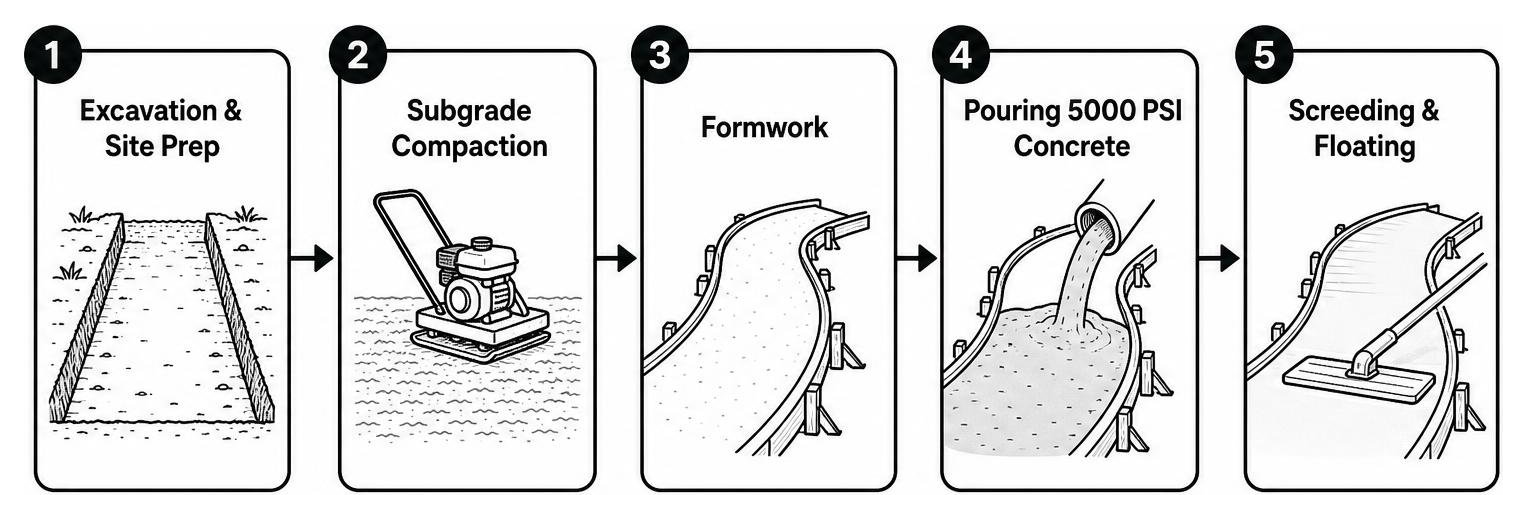
- Site Prep: The walkway area should be cleared of grass, roots, loose soil, and debris so the new concrete is placed on a stable base rather than unstable organic material.
- Grading: The walkway should be shaped with the right slope so water moves away from the home, landscaping, and entry areas instead of pooling on the surface.
- Compaction: Florida’s sandy soil needs to be properly compacted before concrete is poured to help reduce settling, erosion, and uneven movement over time.
- Reinforcement: Depending on the layout and site conditions, reinforcement may be used to help the slab perform better as one continuous concrete surface.
- 5000 PSI Concrete: While many contractors continue using lower-strength concrete, JCD installs 5000 PSI concrete on every residential project because we believe homeowners benefit from the added durability and long-term performance.
- Stamping and Color Work: The stamping pattern and color accents are applied while the concrete is still workable, which is why experience and timing matter so much for a clean, realistic finish.
- Curing and Protection: After the walkway is finished, it needs time to cure before normal use. A professional installer should explain when it is safe for foot traffic and when to avoid heavier loads.
Managing Florida Drainage and Soil Conditions
One mistake we regularly see less-experienced contractors make is ignoring Florida’s heavy seasonal rainfall. In areas like Merritt Island, FL, Satellite Beach, FL, and Cocoa Beach, FL, high water tables and barrier island runoff can easily wash out the soil beneath a walkway if drainage isn’t planned correctly. Proper drainage and base preparation are just as vital as using 5000 PSI concrete to prevent settlement and erosion.
We grade every walkway with a 1% to 2% slope away from your home’s foundation to ensure rainwater runs off into your yard or drainage system. If your walkway crosses a swale or drainage ditch, we can install integrated culverts to keep water flowing freely. Learn more about this on our concrete culverts page.
The Homeowner’s Guide to Concrete Curing
Once your walkway is finished, the curing process begins. While concrete reaches its full design strength at 28 days, you don’t have to wait that long to use it:
- First 24 Hours: Keep kids, pets, and irrigation systems completely off the wet concrete.
- 24 to 48 Hours: The surface is safe for light foot traffic. Walk carefully and avoid dragging heavy items.
- Days 2 to 7: The concrete is continuing to gain strength. Avoid heavy lawn equipment or construction traffic.
- Day 28: Your walkway has reached its maximum structural strength.
Maintenance, Sealing, and Long-Term Care
A stamped concrete walkway is relatively low-maintenance, but “low-maintenance” doesn’t mean “no maintenance.” Taking care of your investment will keep the colors vibrant and the surface protected for decades.
Best Practices for Sealing Stamped Concrete
The secret to keeping stamped concrete looking brand new is a high-quality acrylic sealer. A professional sealer reduces moisture and salt intrusion when properly maintained, protecting the concrete from UV fading, oil stains, and tire marks.
- Frequency: We recommend resealing your walkway every 2 to 3 years, or whenever you notice water stops beading on the surface.
- Breathability: We use high-grade, breathable sealers designed specifically for Florida’s high humidity to prevent moisture from getting trapped beneath the sealer and turning it cloudy.
- Finishes: You can choose between a matte, satin, or high-gloss finish depending on the aesthetic you want to achieve.
Frequently Asked Questions
If you have questions about decorative concrete, we have answers. To explore our full list of residential concrete offerings, visit our main Services page.
How wide should a residential walkway be?
Most residential walkways are about 3 to 4 feet wide. A 3-foot walkway is usually enough for one person to walk comfortably, while a 4-foot walkway feels more open and makes it easier for two people to pass, carry groceries, or move lawn equipment. For front entry walks, we often recommend thinking about how the walkway will look in proportion to the driveway, landscaping, and entryway.
Is stamped concrete slippery?
Stamped concrete can become slick when it is sealed without traction additives, especially during Florida rain. To improve slip resistance, we mix a specialized, micronized anti-slip additive directly into the sealer. This adds a fine, nearly invisible texture to the surface so the walkway has better traction underfoot without changing the look of the stamped pattern.
Will my stamped concrete walkway crack in Florida’s heat?
All concrete expands and contracts with temperature changes. To prevent random cracking, we place deep control joints within the stamped pattern. These joints act as pre-planned “release valves,” ensuring that if a hairline crack does form, it happens invisibly at the bottom of a joint line rather than across the face of your pattern.
How do I clean stains off my stamped walkway?
For routine cleaning, a simple sweep and a rinse with a garden hose are all you need. For tougher stains like dirt buildup or leaf tannins, use a mild detergent and a soft-bristle brush. Avoid harsh chemicals, wire brushes, or blasting the surface with a high-powered pressure washer at close range, as this can damage the protective sealer.
Can I install a stamped concrete walkway myself?
We highly recommend hiring a professional. Stamping is incredibly time-sensitive. If you stamp too early, the concrete will turn into a messy soup; if you stamp too late, the concrete will set up and won’t take the pattern. You only get one chance to get it right.
Conclusion
A custom stamped concrete walkway is a fantastic way to improve your home’s exterior, improve drainage, and add real value to your property. By choosing a solid, continuous concrete surface over shifting pavers, you enjoy a beautiful, low-maintenance entry path that stands up to the unique demands of our Florida climate.
At JCD Concrete Inc., we bring over 40 years of experience to every project we pour in Brevard County, FL. From proper soil compaction to our exclusive use of 5000 PSI concrete, we do things the right way so your walkway looks attractive for decades to come.
Ready to transform your home’s entrance? Explore our gallery to see some of our completed local projects, or contact us today to schedule your free on-site design consultation. If you are planning a complete driveway overhaul to match your new walk, check out our concrete driveways page for more inspiration.