How to Read a Concrete Patio Cost Benchmark
Searching for the average cost concrete patio can help establish an early planning budget, but an online average is not the same thing as a project-specific quote. Published benchmarks usually simplify the work into a total price or square-foot figure, while an actual estimate depends on the patio’s size, site access, existing conditions, preparation requirements, reinforcement where appropriate, finish, drainage considerations, cleanup, and the contractor’s defined scope.
The useful question is not simply, “What is the average?” It is: What does that benchmark include, what does it leave out, and how closely does it resemble the project being planned?
This guide explains how to interpret concrete-patio cost benchmarks without mistaking them for a guaranteed local price. It also shows which project details should be gathered before requesting an estimate so homeowners can compare an online benchmark with an actual contractor scope more intelligently.
JCD Concrete Inc. is owner-operated by John DomBek and brings more than 40 years of concrete experience to residential and commercial concrete work. JCD provides free estimates and is licensed and insured (License #885033955).
What an Average Patio-Cost Benchmark Can and Cannot Tell You
An online patio-cost benchmark can be useful for early budget orientation and for understanding the rough scale of a project. It cannot establish the final cost of a specific property, because the benchmark may not reflect the actual work, conditions, or contractor scope involved.
Before relying on a benchmark, check when it was published and which geographic market it represents. Older figures may not reflect current material and construction input conditions, which the U.S. Bureau of Labor Statistics’ Producer Price Index tracks over time, while data from another region may include different local requirements and site conditions.
It is also important to compare the included scope. A benchmark may or may not include demolition, removal of existing materials, excavation, base preparation, forming, reinforcement where appropriate, drainage-related work, cleanup, or disposal. A meaningful comparison should also involve a similar finish level, since a basic broom finish and a decorative finish can require different labor, materials, and finishing steps. For a local point of reference, compare the benchmark with a written quote that clearly defines the work included.
Finally, consider whether the access and site constraints described by the benchmark resemble the property being planned. A local estimate can define the actual scope after the contractor reviews the site, discusses the intended finish, and identifies the work needed for that specific patio.
Why Cost-Per-Square-Foot Numbers Need Context
Square-foot shorthand can be useful for early planning only when the underlying scopes are genuinely comparable. Two patios with similar dimensions may not price identically when the work involves different mobilization or minimum-load considerations, site access, demolition, preparation, reinforcement where appropriate, finish requirements, or cleanup.
Searches such as “concrete cost per square foot patio,” “concrete patio cost,” “concrete patio cost per sf,” “concrete patio cost per sq ft,” “concrete patio cost per square foot,” “concrete patio per square foot cost,” and “cost per square foot for concrete patio” are common ways homeowners look for an early benchmark. None of these phrases represents one universal price; each still needs to be evaluated against the work, conditions, and scope of the specific project.
Other homeowners search “average cost of concrete patio” or “cost of concrete patio,” along with questions such as “how much does a concrete patio cost,” “how much does a poured concrete patio cost,” “how much does it cost for a concrete patio,” “how much will a concrete patio cost,” and “how much would it cost to pour a concrete patio.” These are search-language variations, not separate pricing rules. When researching an average cost concrete patio, compare what the figure includes and excludes rather than treating it as a stand-alone quote. That keeps the comparison focused on matching scopes without turning a broad benchmark into a promise for a specific property.
Finish Level Changes What a Benchmark Represents
A basic exterior finish and a more labor-intensive decorative finish are not directly comparable budgets. Before comparing an online benchmark with a contractor quote, define the expected finish level so both figures describe work of a similar scope.
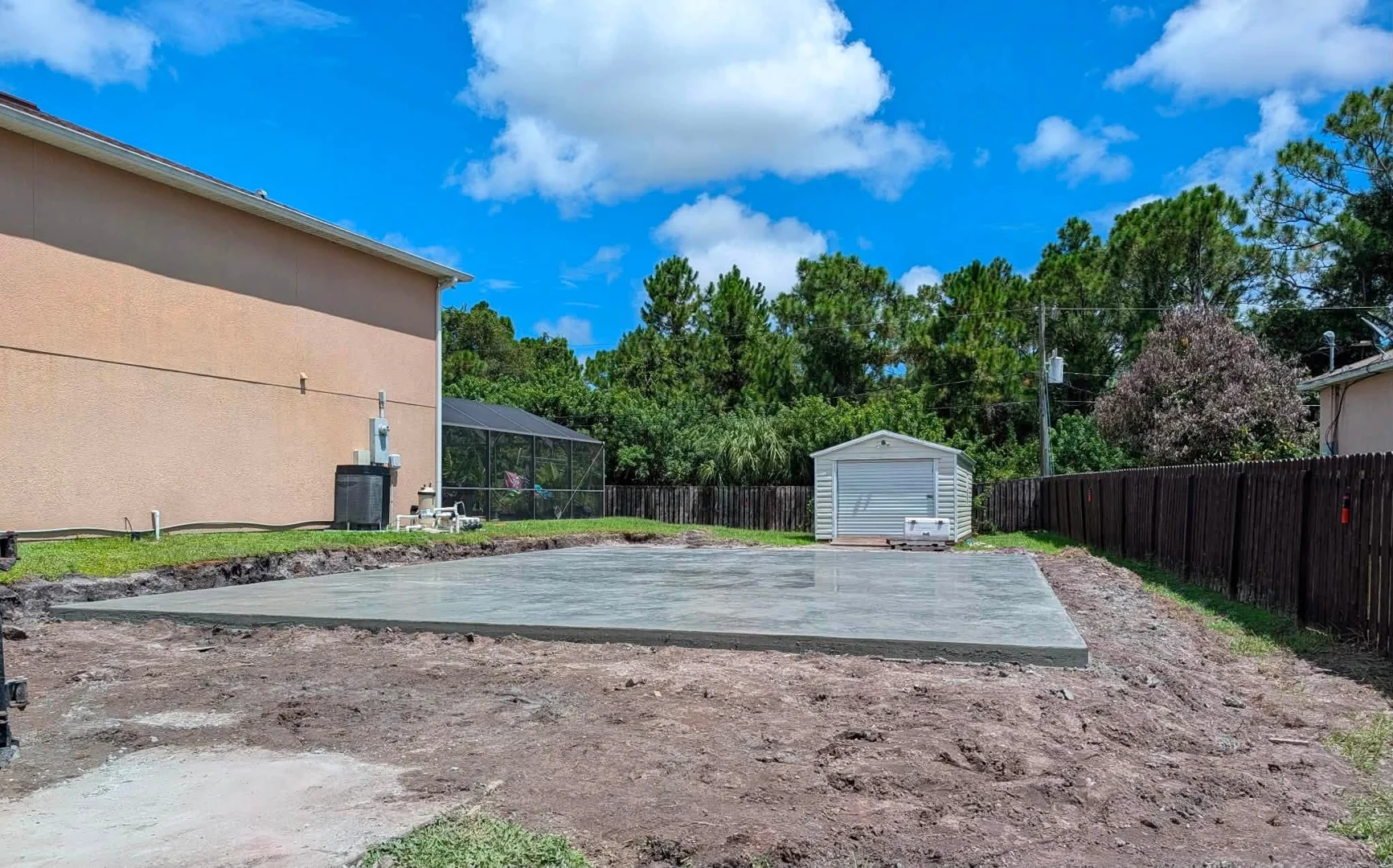
What a Property-Specific Patio Estimate Has to Account For
A property-specific patio estimate has to account for the patio’s size and layout, site access, existing concrete or removal where applicable, and the preparation or base work required for that property. It should also define reinforcement where appropriate, the intended finish level, drainage and grade considerations within the concrete scope, cleanup, and any exclusions.
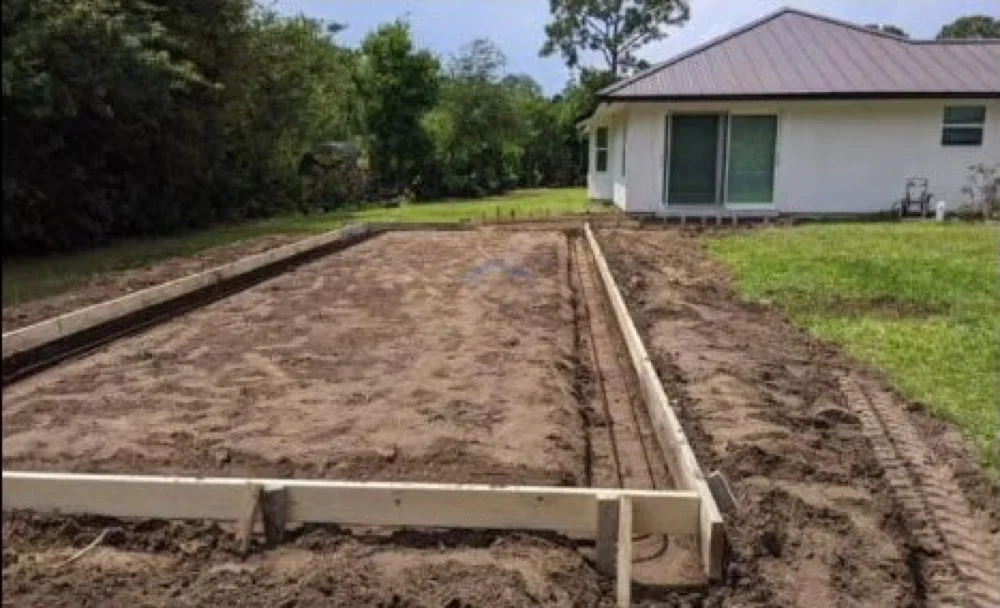
These details determine the actual scope of work, which is why an online benchmark cannot become a site-specific quote. A written estimate should clarify what is included so homeowners can compare proposals based on comparable scopes rather than a broad average.
What to Gather Before Requesting a Patio Estimate
Before requesting a patio estimate, gather the details that help define the project clearly. Share approximate dimensions and the planned layout, current photos of the area, the patio’s intended use, any access constraints, and whether existing concrete may need to be addressed. Note known drainage concerns, the finish expected, and any plans or property requirements already available.
Reviewing JCD’s project gallery can also help you identify layouts and finished concrete work that are useful to discuss when defining your own patio scope.
How to Compare an Online Benchmark With a Real Quote
Use a short checklist before comparing an online benchmark with a contractor’s quote:
- Is the benchmark current?
- Is its geographic market identified?
- Does it include demolition or removal?
- Does it include the preparation or base work required?
- Is the finish level comparable?
- Are the access conditions comparable?
- Does it include reinforcement where appropriate?
- Are cleanup, exclusions, and other scope items stated?
A benchmark is an early budgeting reference, not evidence that a contractor’s quote is high or low.
Get a Project-Specific Patio Estimate
JCD Concrete Inc. is owner-operated by John DomBek and brings more than 40 years of concrete experience to residential and commercial concrete work in central and southern Brevard County and the Space Coast. JCD provides free estimates and is licensed and insured (License #885033955).
An online average can help establish an early budget, but an actual patio estimate has to reflect the property, scope, access, preparation requirements, reinforcement where appropriate, finish, drainage considerations, and exclusions that apply to the project.
If you are planning a concrete patio, send JCD the project location, approximate size or layout, photos, intended use, access constraints, existing concrete information, known drainage concerns, and preferred finish. JCD can review whether the project fits its concrete patio services and provide a free estimate based on the actual scope. Contact JCD to start with a free estimate.