What Does a Concrete Paving Contractor Do in Brevard County?
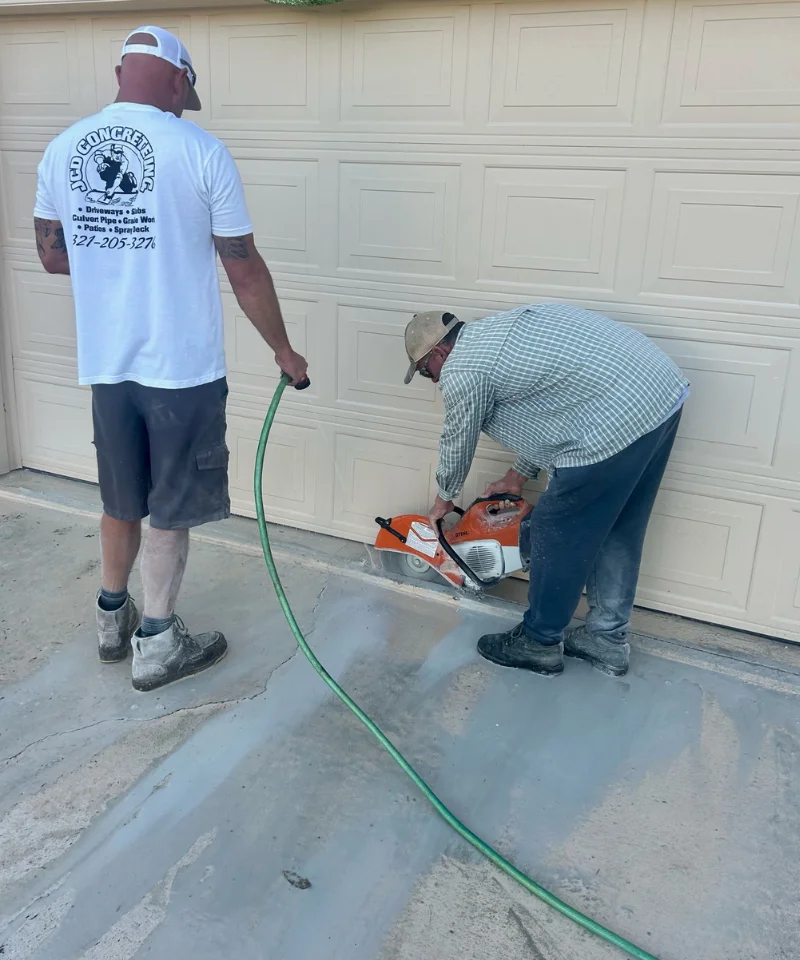
Hiring a concrete paving contractor is one of the more important decisions you’ll make for your property, whether you’re replacing a cracked driveway, adding a patio, installing a sidewalk, or pouring a new slab. Concrete paving refers to the construction of durable concrete surfaces designed for vehicle traffic, foot traffic, outdoor living, drainage access, and long-term property use.
A professional paving and concrete company typically handles services such as:
- Concrete driveways: new driveway installation, driveway replacement, parking pads, and driveway extensions
- Concrete sidewalks: safe, walkable paths for homes, entryways, side yards, and commercial areas
- Patios and outdoor slabs: backyard patios, garage slabs, shed pads, equipment pads, and utility slabs
- Parking areas: small residential or light commercial concrete parking surfaces built for repeated vehicle loads
- Culverts and drainage access: driveway culvert installation or replacement where water must move beneath an entrance
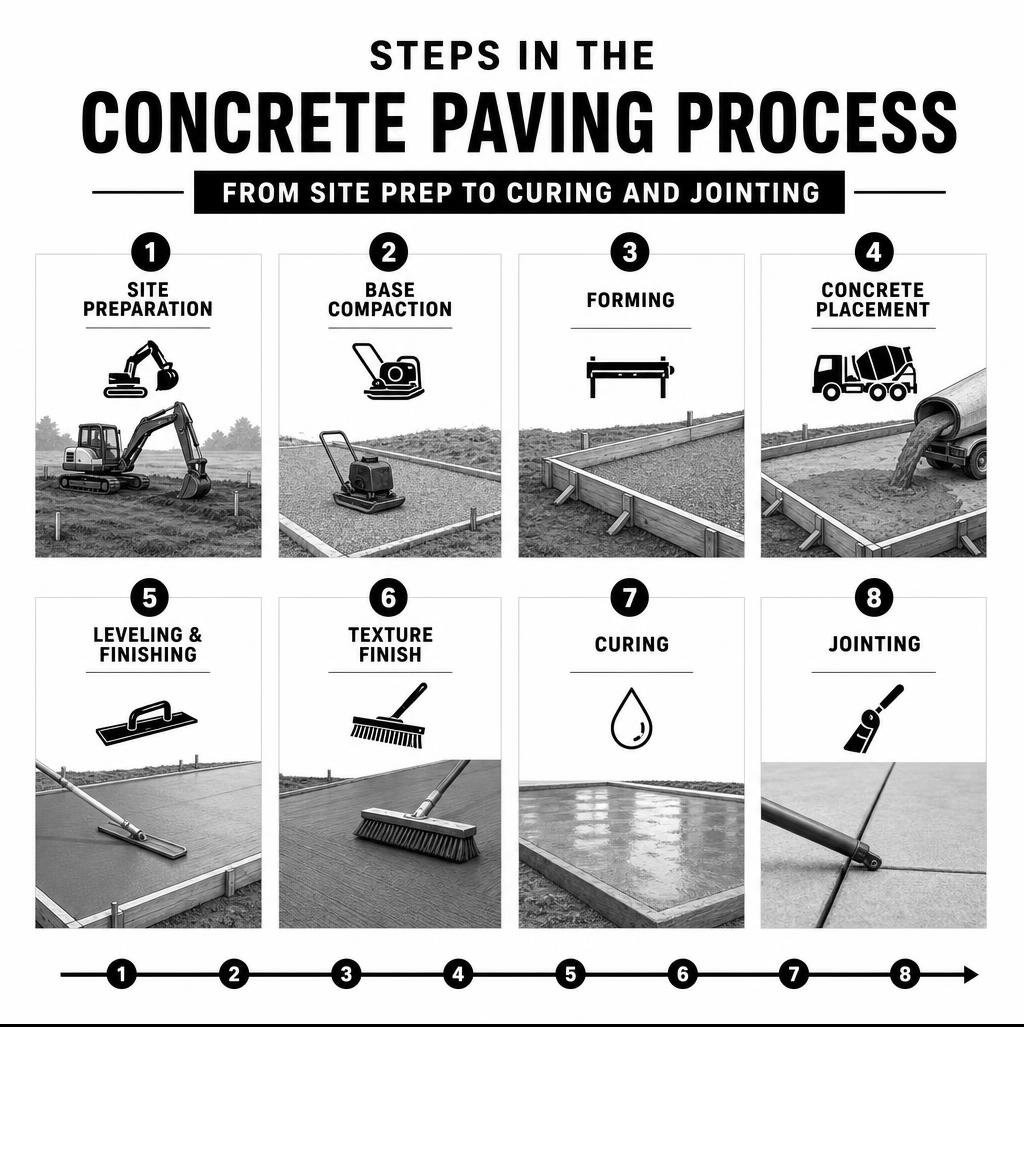
- Site grading and preparation: excavation, shaping, compaction, and subgrade stabilization before concrete is poured
- Drainage improvements: slope planning, runoff control, and washout prevention to protect the slab and surrounding property
- Finishing and jointing: broom finishes, edge work, control joints, and curing practices that support long-term performance
- Demolition and removal: breaking out and hauling away failed concrete before new concrete paving begins
In Brevard County, those basics take on extra importance. The sandy soil, high water table, and heavy summer rainfall here create conditions that punish shortcuts fast. A driveway, sidewalk, patio, or slab poured without proper base prep or drainage in Palm Bay, FL or Melbourne, FL can start showing problems within a few years. Getting concrete paving right from the start means understanding the local environment, not just how to pour concrete.
We’re JCD Concrete Inc., and our owner John DomBek brings over 40 years of hands-on experience as a concrete paving contractor right here on the Space Coast. Every project we take on, from driveway installation to culvert work, is managed directly by John from first consultation through final finish.
What to Look for in a Professional Concrete Paving Contractor
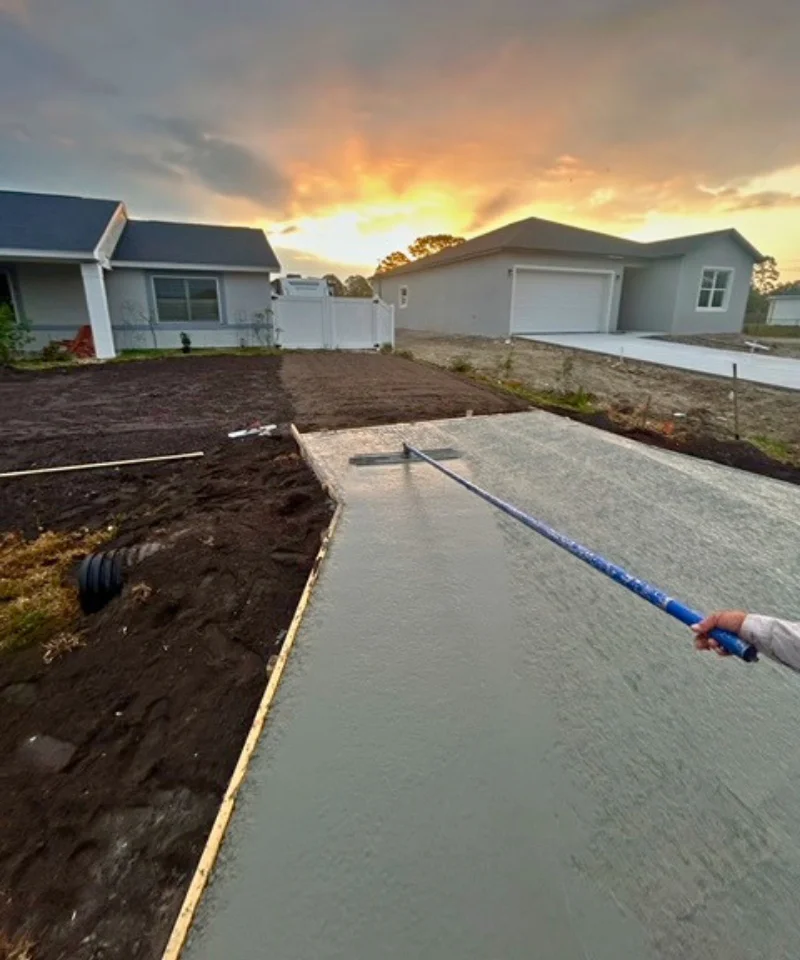
When you start searching for a concrete paving contractor to handle your project, it is easy to get overwhelmed by options. However, paving work requires more than simply ordering a truck and placing concrete. A dependable contractor has to evaluate the surface use, base conditions, drainage path, slab thickness, finish, reinforcement needs, and long-term load requirements.
Homeowners searching for concrete paving companies near me should look beyond price and evaluate experience, site preparation methods, drainage expertise, and material quality. Not all concrete pavement contractors follow the same standards for grading, reinforcement, drainage planning, and concrete strength. Contractors unfamiliar with Brevard County’s sandy soils, heavy rainfall, and drainage challenges often overlook details that affect long-term performance.
At JCD Concrete Inc., we bring decades of local experience to every job. We maintain full licensing and comprehensive insurance coverage to protect your property and our crew. Most importantly, you should look for owner-operator oversight. Many large paving networks or national brokers will take your deposit and subcontract the actual labor to the lowest bidder. At JCD Concrete Inc., we handle things differently. We do not sub out our work to unsupervised crews; our owner-operator oversight ensures every pour is handled correctly from start to finish. John DomBek is on-site, guiding the crew, checking the forms, and ensuring the mix is exactly right. To learn more about our commitment to quality, you can read about our background and commitment to quality.
Why Local Expertise Matters for a Concrete Paving Contractor in Florida
Operating as a concrete paving contractor in Brevard County, Florida, means constantly working with sandy subgrade and preparing for heavy summer storms. Sandy soil is naturally prone to movement and settlement if it is not properly compacted and stabilized. If a contractor does not understand how to stabilize this subgrade or plan for washout prevention, the weight of vehicles, foot traffic, and repeated water flow can cause concrete to settle unevenly.
We frequently see driveway and pavement failures caused by inadequate slab thickness, poor compaction, or insufficient drainage planning. In our area, trying to cut corners with a thin slab, loose base, or poorly planned runoff path often results in deep cracks, broken corners, settlement, and edge erosion. Our deep understanding of local conditions prevents these costly mistakes. We know how the soil behaves in Titusville, how the high water table in Merritt Island affects curing, and how to properly prep a base so your driveway remains level and whole. You can see real examples of how we handle these local challenges by viewing our residential concrete projects in Brevard County.
How a Concrete Paving Contractor Handles Site Preparation and Grading
Before a single yard of concrete leaves the truck, the battle for a long-lasting slab is either won or lost in the dirt. Site preparation and grading are the most critical phases of any paving project. If the ground is not graded to shed water away from your structures, you are inviting major structural issues down the road.
Concrete surfaces that are improperly graded can direct water toward foundations, garages, patios, entryways, and other finished areas. Over time, pooled water can weaken the soil supporting the slab, increase erosion, and create conditions for settlement or cracking. When we prepare a site for concrete pads and slabs, we use professional grading equipment to establish a precise slope. We clear out organic matter like roots and decaying leaves, compact the sandy subgrade until it is tight and stable, and build up a solid foundation that ensures proper water runoff.
The Importance of Concrete Strength and Proper Drainage

A beautiful finish doesn’t mean much if the concrete underneath cannot handle the load or if the first heavy rainstorm washes away the supporting soil. To build concrete structures that perform the way they should for years, concrete pavement contractors must balance material strength with smart water management.
At JCD Concrete Inc., 5000 PSI concrete is our standard mix for residential projects, exceeding the 4000 PSI mix commonly used by many contractors. That added strength gives our clients extra durability against heavy trucks, RVs, and the relentless Florida heat. However, even 5000 PSI concrete needs a stable foundation. Proper drainage and thorough base preparation are just as critical to long-term performance as high-strength concrete. Without them, water can find a way under the slab, wash out the sand, and leave the concrete sitting over an empty pocket.
Managing Water Flow and Preventing Washouts
In places like Cocoa, Rockledge, and West Melbourne, seasonal downpours can dump inches of rain in a matter of minutes. If your property doesn’t have a clear path for that water to escape, it can pool along the edges of your driveway, sidewalk, patio, or parking area and cause severe erosion.
We focus on practical drainage solutions to prevent settlement and culvert failures. For many homeowners, this involves installing or replacing concrete culverts where the driveway meets the roadside ditch. If a culvert pipe is cracked, rusted through, or set at the wrong elevation, water stagnates and the system backs up. This standing water saturates the soil surrounding your driveway, leading to rapid erosion and possible cave-ins. When we install concrete driveways or concrete sidewalks, we make sure the surrounding grade and drainage path are properly planned so water flows where it should.
Why We Focus Exclusively on Solid Concrete Slabs
We made the deliberate choice to focus exclusively on solid concrete slabs for our residential projects. In Brevard County’s shifting sandy soil, a solid slab provides the structural integrity and low-maintenance durability that other surface options simply cannot match. For a clean, reliable surface that holds up under Florida’s demanding conditions, solid concrete flatwork is the most dependable option for our local climate.
Why Concrete Paving Excels in Coastal Environments
Living on the Space Coast means dealing with salt air, high humidity, intense UV rays, and sudden temperature shifts. These coastal elements are incredibly harsh on outdoor surfaces.
Concrete is uniquely suited for our local climate because of its natural heat resistance and structural rigidity. It does not soften when the thermometer climbs past 90 degrees. It easily resists damage from parked cars, heavy trailers, and automotive fluid spills. That kind of durability is exactly what you need for concrete sidewalks, driveways, patios, slabs, and parking areas in our local residential neighborhoods.
Long-Term Maintenance and Performance
Getting a great result from your concrete paving contractor requires paying attention to the finishing details. Two of the most important elements of a successful pour are the surface texture and the placement of control joints.
A smooth, troweled finish might look nice indoors, but a broom finish provides vital traction on a wet Florida driveway when our daily summer thunderstorms roll through. Without that textured surface, walking or driving on wet concrete can be incredibly slick.
Control joints are installed at the appropriate stage of the curing process, either during finishing or through saw cutting, depending on project requirements and weather conditions. Concrete naturally shrinks as it cures, which creates internal tension. If you don’t give it a neat, planned line to crack along, it will create its own ugly, jagged cracks across the middle of your new concrete patios. Proper joint placement helps guide those natural micro-movements so cracks are more likely to occur in controlled locations instead of randomly across the surface.
Frequently Asked Questions About Concrete Paving
What services does a concrete paving contractor provide?
A concrete paving contractor typically installs and replaces durable concrete surfaces such as driveways, sidewalks, patios, slabs, parking areas, and access pads. Many also handle related preparation work such as demolition, grading, compaction, drainage planning, and culvert installation. At JCD Concrete Inc., we focus on solid residential concrete surfaces built for Brevard County’s sandy soil, heavy rainfall, and everyday homeowner use.
How long does it take for a new concrete driveway to cure?
We know you are eager to use your new driveway, but patience during the curing phase is essential. You can typically walk on the new concrete about 24 hours after we finish pouring. However, you must keep all vehicles, heavy equipment, and golf carts off the slab for at least seven full days.
During this initial week, the concrete is rapidly building its crystalline structure to reach its design strength. Driving on it too early can cause structural damage that cannot be easily repaired. If you want to see what a properly cured, professionally finished driveway looks like, view our gallery of completed projects.
Why is 5000 PSI concrete preferred over the 4000 PSI baseline?
When we talk about PSI (pounds per square inch), we are talking about how much concentrated weight the concrete can support before it fails. While a 4000 PSI mix is a legitimate industry standard that works well for basic walkways, it can struggle under the concentrated weight of heavy modern vehicles.
Think about what happens when you park a heavy dual-axle truck, a boat trailer, or an RV on your driveway. That weight isn’t distributed evenly; it is concentrated entirely on a few small tire contact patches. A 5000 PSI mix provides a solid, stable anchor for heavy vehicles without relying on complex formulas or extra thick slabs. This high-strength concrete is especially important when we pour concrete foundations or parking pads that must support heavy loads day after day.
How do you prevent cracks in Florida’s sandy soil?
Because Florida’s sandy soil naturally shifts and settles, preventing cracks requires a multi-step approach. First, we thoroughly compact the subgrade to eliminate air pockets and soft spots. Second, we use high-strength 5000 PSI concrete reinforced with fiber mesh or steel rebar where necessary to hold the slab together.
Finally, we cut deep control joints at precise intervals. These joints act as planned “relief valves” for the concrete. When the slab naturally expands and contracts with the daily temperature swings, the control joints allow it to move without creating random, unsightly cracks across your yard. We regularly share tips on keeping your concrete looking its best by reading our concrete maintenance blog.
Conclusion
Investing in new concrete paving is a great way to improve your property’s utility and value, but only if the work is done right. From the initial grading and subgrade compaction to the final broom finish and precise joint placement, every step of the process requires local expertise and an eye for detail.
With over 40 years of experience serving homeowners throughout Brevard County, including Palm Bay, Melbourne, Cocoa, Titusville, Merritt Island, and Viera, JCD Concrete Inc. is the local name you can trust. We take pride in our hands-on, owner-operated approach, using premium 5000 PSI concrete to deliver beautiful, reliable results.
If you are searching for a concrete paving contractor in Brevard County, whether for a driveway, sidewalk, patio, slab, parking area, or drainage project, JCD Concrete Inc. is ready to help. We invite you to contact our team today for a consultation, or explore our full range of residential concrete services. We look forward to providing a durable concrete solution that serves your home reliably for decades.