Concrete Driveway Installation & Replacement: Why Culvert Health Matters in Brevard County, FL

Driveway culvert replacement is a critical maintenance item for homeowners, often becoming apparent when water pools at the driveway entrance or the pavement begins to settle. This process involves identifying structural failures, securing necessary permits, and selecting appropriate materials like HDPE plastic or reinforced concrete to ensure the drainage system supports vehicle loads.
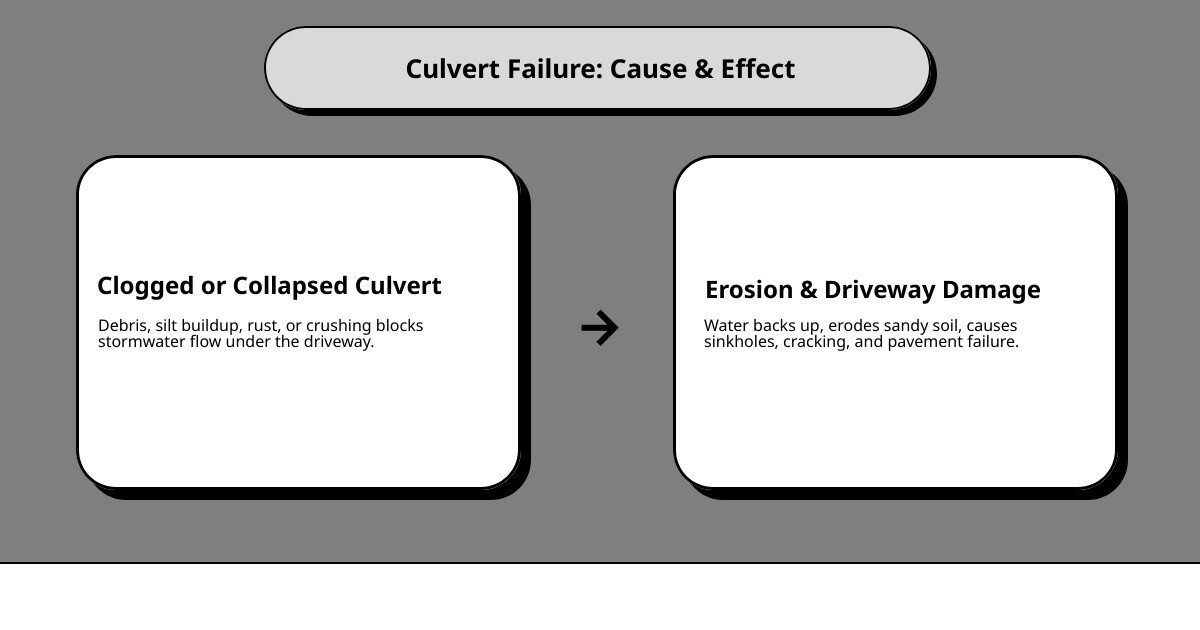
Driveway culverts are pipes that sit beneath your driveway and allow stormwater to flow through the roadside swale without blocking vehicle access. When they fail, water backs up, erodes the soil underneath your driveway, and can cause serious structural damage to your pavement.
On Florida’s Space Coast, heavy seasonal rain and sandy soil can cause culverts to collapse or clog. I’m John DomBek, owner of JCD Concrete Inc., and over 40 years of hands-on residential concrete work across Brevard County, FL, I’ve seen how a neglected culvert can undermine an otherwise solid driveway. Addressing drainage is a vital step in any professional project, as no surface holds up long when the underlying drainage is failing.
Understanding the Need for Driveway Culvert Replacement
A driveway culvert has a simple job: move stormwater under the driveway while keeping the swale open and working. If that pipe crushes, rusts through, clogs with silt, or gets installed at the wrong grade, the whole drainage path starts to fail.
In Brevard County, FL, this matters significantly. We deal with hard summer rain, flat terrain, and sandy soils. If the culvert stops carrying water, the swale cannot do its job, and the driveway becomes the weak link.
Typical residential culverts are often in the 12-inch to 15-inch range, though the correct size depends on local requirements, site drainage, and traffic load. Heavier vehicle use may call for a more durable pipe and better base preparation. What looks like “just a pipe” is really part of the drainage system supporting your driveway.
From a practical contractor standpoint, culvert replacement usually becomes necessary when the pipe has structurally failed, is too clogged to carry water, or the driveway above it is sinking. If you’re already planning a new driveway, it’s smart to evaluate the culvert at the same time. We cover related surface work in our guide to concrete driveway replacement.

Once a metal pipe is badly rusted or partially collapsed, replacement is the standard solution. Replacing the pipe, correcting the grade, and rebuilding the support around it gives the driveway a much better chance of lasting.
Identifying Culvert Ownership and Responsibility
In most residential situations, the homeowner is responsible for maintaining and replacing the culvert serving their driveway, even though the pipe may sit in or near the public right-of-way.
Responsibility can vary based on whether the road is city-, county-, or district-maintained and whether the work is for a new driveway or an existing failed culvert. In Brevard County, FL, we recommend confirming responsibility before work starts to ensure all permits and approvals are in place. Work in the right-of-way typically requires licensed and insured contractors to ensure the pipe size and grade meet local standards.
Signs Your Drainage System Requires Attention
Most failing culverts show up as drainage problems first, then surface damage second. Watch for these common warning signs:
- Standing water at the driveway entrance after rain
- A soft or sunken spot over the pipe
- Cracking, dipping, or edge failure in the driveway
- Erosion around the inlet or outlet
- Soil washing out from under the slab or apron
- Slow drainage through the swale
- Visible rust, crushing, or pipe separation at the ends
In Melbourne, FL, Palm Bay, FL, Merritt Island, FL, and other low-lying Space Coast areas, even minor ponding can become a bigger issue during back-to-back storms. Water that lingers where it should move is usually an indicator of underlying failure.
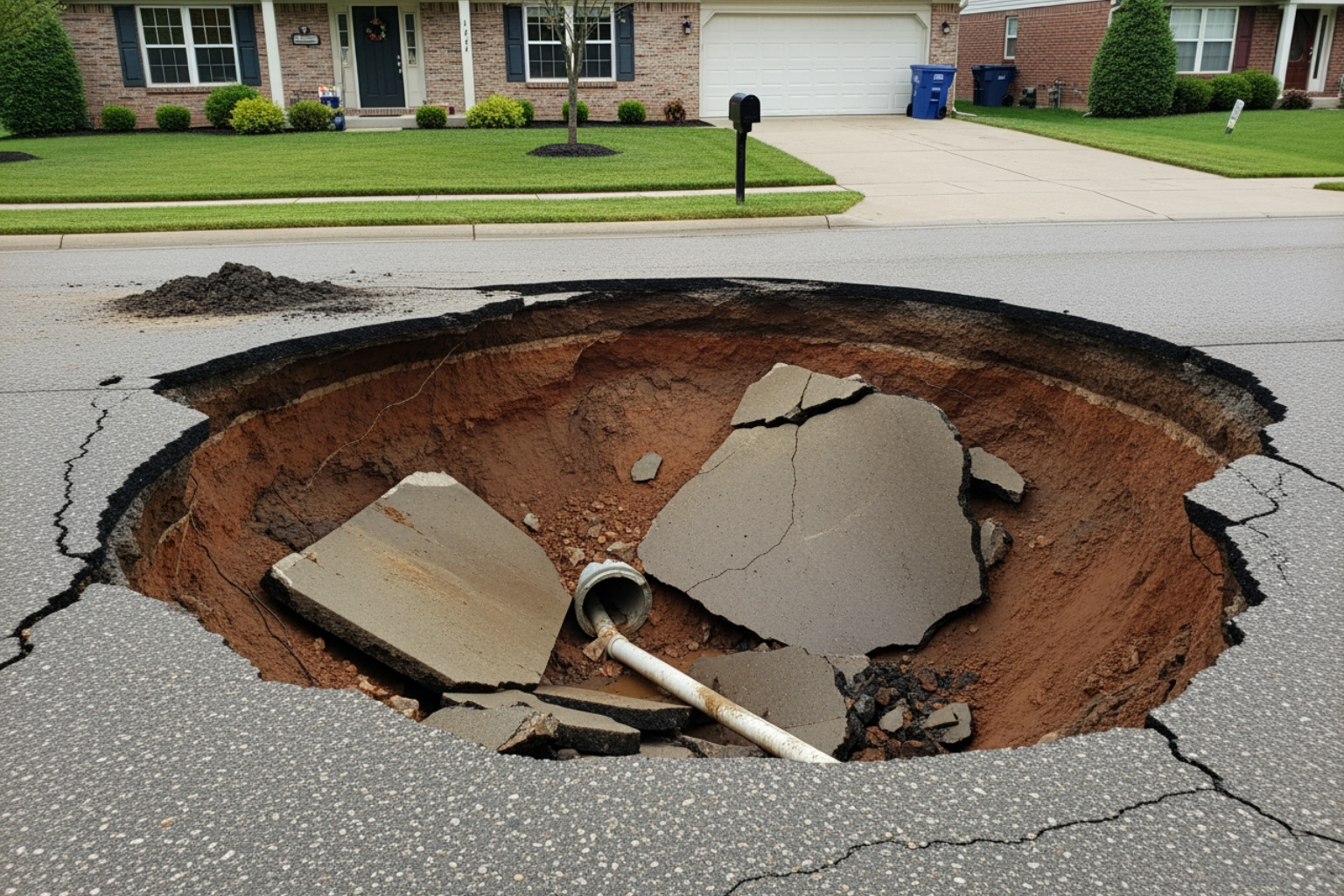
A failed culvert can also create problems beyond your property line. Blocked flow can back water into the swale, contribute to flooding, and increase erosion downstream.
Structural Indicators of Failure
Some clues point to full replacement rather than simple maintenance. Structural signs include buckling or sagging above the culvert, visible rust-through, or a pipe that has flattened or partially collapsed. A culvert can also be hydraulically deficient if it cannot move water as intended because of poor slope or undersizing. If you want to learn more about our drainage-related work, visit our concrete culverts page.
Material Selection for Florida Environments
Choosing the right culvert material matters in Florida. Between moisture, sandy soil, traffic loads, and salt exposure in coastal areas, not every pipe performs the same long term.
| Material | Main advantages | Main drawbacks | Best fit |
|---|---|---|---|
| Galvanized steel | Strong, commonly used, handles traffic well when installed correctly | Can corrode over time, especially in wet or aggressive environments | Some residential driveways where local approval allows it and corrosion risk is manageable |
| HDPE plastic | Lightweight, corrosion-resistant, smooth interior helps flow | Needs proper bedding and compaction | Many residential driveways in sandy Florida soils |
| Reinforced concrete | Very durable, excellent for heavier loads, strong long-term choice | Heavier to install, requires equipment | High-load driveways or projects tied to concrete driveway work |
Research consistently shows steel has been widely used in the past, but corrosion is one of the main reasons older culverts fail. HDPE has become a popular option because it resists rust. Reinforced concrete remains a solid choice where durability and load support are top priorities.
For homeowners already investing in a new concrete driveway, we look at the whole system together. The culvert, subgrade, base, and surface all need to work as one. That same thinking applies to surface strength, which is why many owners also read our page on 4000 PSI vs 5000 PSI concrete.
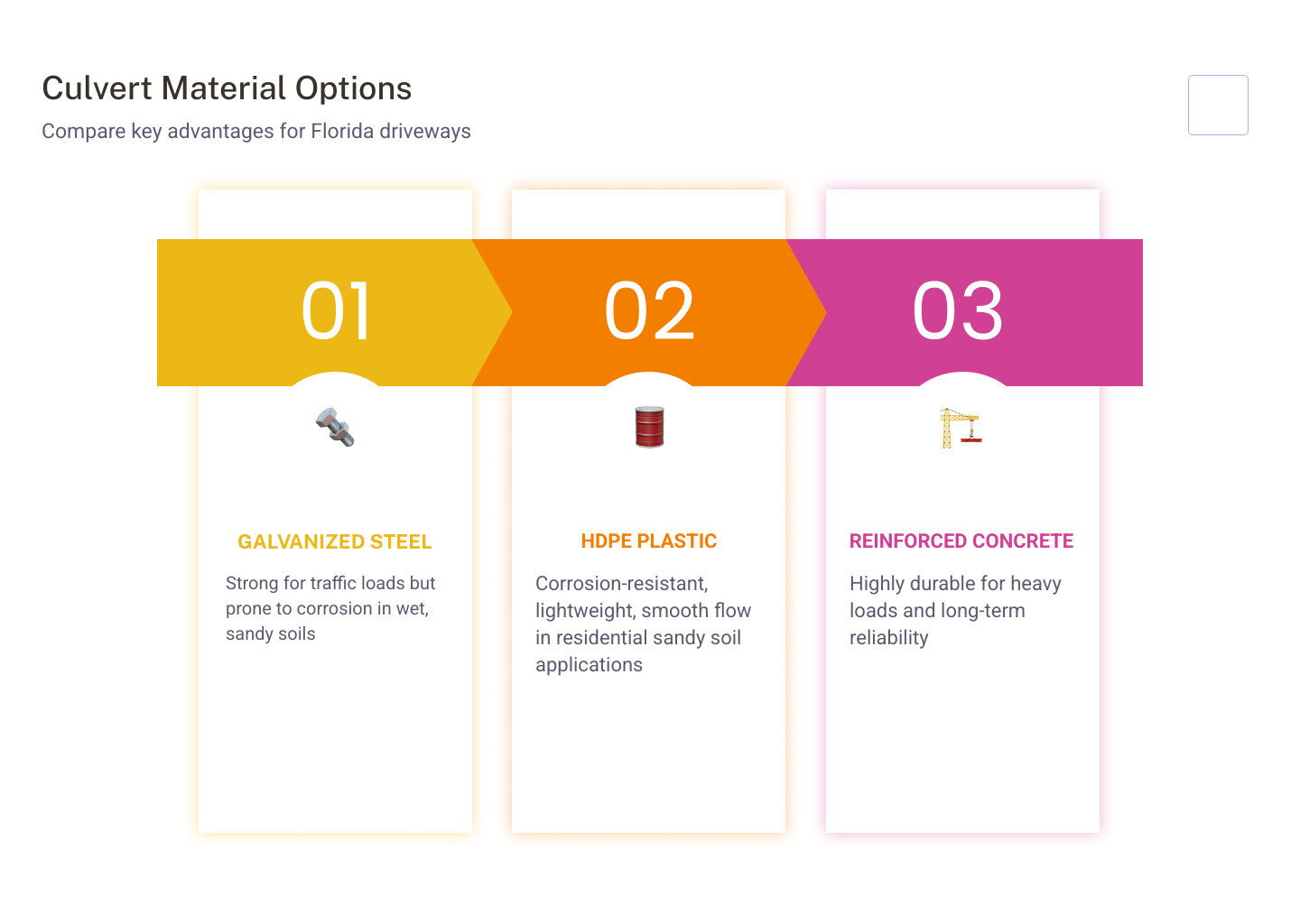
Selecting the most suitable material depends on the site. For many standard residential applications, HDPE is a very practical choice. For heavier vehicles or high-demand installations, reinforced concrete may be the appropriate upgrade. In coastal Brevard communities, corrosion resistance is a major factor, making materials that do not rust more reliable over time.
The Professional Installation Workflow
A proper driveway culvert replacement involves more than just placing a new pipe. Long-term success comes from the professional setup around the pipe. This includes inspecting the drainage path, confirming permit needs, and requesting utility locates before excavation. The process requires establishing the correct slope—often between 1% and 4%—and installing bedding material to support the pipe.
Backfill cover is also critical; professional standards often call for 8 to 16 inches of cover to support vehicle traffic before the driveway material is placed. Culvert pipes gain much of their strength from the compacted material surrounding them. A pipe set in loose fill is prone to settlement and future cracking.
Permitting and Regulations for Driveway Culvert Replacement
In Brevard County, FL, and across the Space Coast, permit requirements vary by municipality and road classification. Key items to address include driveway or right-of-way permits, local approval for pipe size and type, and utility locating through 811. Utility lines can be much shallower than expected, and hitting one can be a costly mistake. Safety precautions include keeping excavation away from unsupported edges and using proper equipment for removal and placement. Hiring a licensed professional is the standard path for work involving public drainage and right-of-way situations.
Best Practices for Driveway Culvert Replacement in Sandy Soil
In Merritt Island, FL, Palm Bay, FL, Melbourne, FL, and other Brevard County areas, sandy soil can wash out if the trench is not prepared correctly. Professional standards include shaping a stable trench, using firm bedding material, and compacting backfill in layers. The goal is to keep water moving without undermining the driveway surface.
Frequently Asked Questions about Culverts
Who is responsible for maintaining the culvert under my driveway?
In most cases, the homeowner is responsible for maintaining and replacing the driveway culvert, even if it connects to a roadside swale. Because responsibility can vary by location and right-of-way conditions, we recommend confirming it with the local authority in Brevard County, FL, before work begins.
How much does a professional culvert replacement cost on average?
Professional installation commonly falls between $1,000 and $9,000, with many jobs averaging around $4,500. Simpler replacements may be closer to the lower end, while longer pipes, difficult access, and complex drainage work increase costs. Homeowners should prioritize overall value and durability for these essential infrastructure components.
What is the most suitable material for a long-lasting driveway culvert in Florida?
For many Florida homes, HDPE plastic is a strong choice because it resists corrosion. Reinforced concrete is also an excellent option where heavier loads or long-term durability are priorities. The most appropriate choice depends on traffic, drainage conditions, and local approval.
Conclusion
A failing culvert can undermine the driveway, create washouts, and shorten the life of any surface installed above it. That is why driveway culvert replacement should be handled as a full drainage and support issue.
At JCD Concrete Inc., we have spent more than 40 years helping homeowners across Brevard County, FL, protect their driveways with practical concrete and drainage solutions. We understand the local conditions in Melbourne, FL, Palm Bay, FL, Merritt Island, FL, and throughout the Space Coast. Getting the foundation right is the most important step before the concrete goes in.
If you are seeing standing water or driveway cracking near your swale, learn more about our Professional Concrete Culvert Services and related services like Concrete Driveways, Concrete Driveway Installation Brevard County FL, and Concrete Driveway Melbourne FL.