When Should You Call a Culvert Repair Contractor?
Homeowners usually start looking for culvert repair contractors after noticing standing water, erosion, driveway settlement, or visible damage around the pipe beneath their driveway.
In Brevard County, driveway culverts are an important part of local stormwater drainage. When a pipe becomes damaged, obstructed, displaced, or poorly supported, the contractor should evaluate both the culvert and the surrounding soil, driveway, swale, and drainage conditions before recommending a repair or replacement.
I’m John DomBek, owner of JCD Concrete Inc., and after more than 40 years installing concrete throughout Brevard County, we’ve seen how drainage problems around a driveway culvert can contribute to washout, settlement, and damage to the concrete above it.
| What to Look For | Why It Matters |
|---|---|
| Standing water near the culvert | May indicate blockage, inadequate flow, or another drainage issue |
| Soil erosion or washout | Can reduce support around the pipe and driveway |
| Driveway settlement above the culvert | May indicate loss of supporting soil |
| Visible pipe damage | Corrosion, cracking, separation, or deformation should be evaluated |
| Sediment inside the pipe | May point to erosion, runoff, or damage around the system |
| Recurring problems after rain | Suggest the cause needs to be evaluated rather than repeatedly patched |
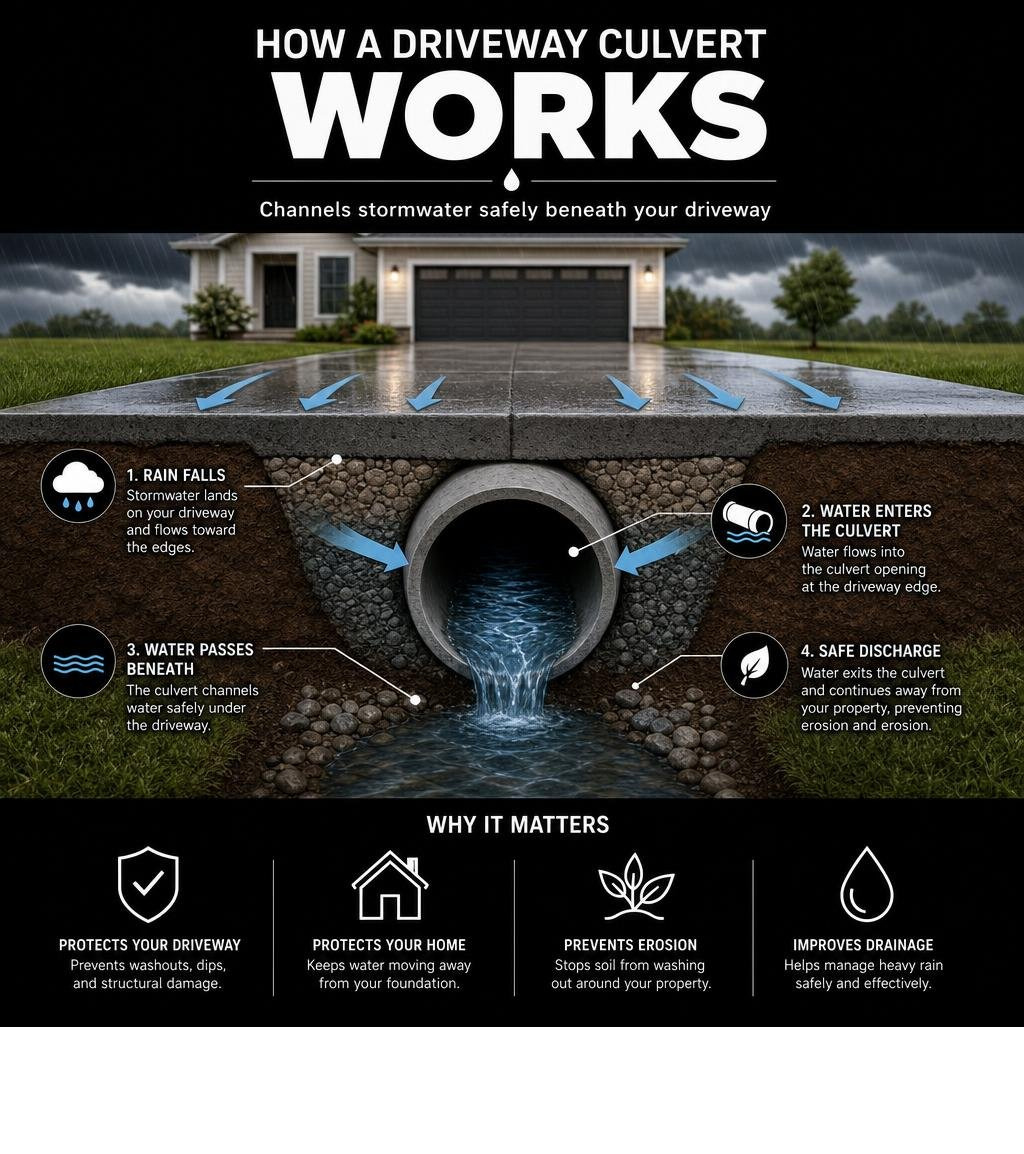
A residential driveway culvert is typically a pipe that carries stormwater beneath the driveway so drainage can continue through the roadside swale or channel.
When that pipe deteriorates, shifts, becomes obstructed, or loses surrounding soil support, the driveway above can begin to settle. That loss of support can contribute to cracking, erosion, or voids beneath the pavement.
A qualified culvert contractor should be able to:
- Evaluate the condition and alignment of the existing pipe
- Identify signs of washout or lost soil support
- Review how the driveway, swale, and culvert work together
- Determine whether repair or replacement should be considered
- Explain applicable permitting or right-of-way requirements
- Provide a written scope covering excavation, drainage work, restoration, and concrete work where applicable
Why Driveway Culverts Matter in Brevard County
Driveway culverts allow stormwater to continue moving through roadside swales or drainage channels while maintaining vehicle access to the property.
In Brevard County, sandy soils, seasonal rainfall, low-lying areas, and high water tables in some locations can make drainage and soil support especially important. If water escapes around a damaged pipe or repeatedly erodes the surrounding soil, the driveway above may lose support and begin to settle.
The goal is not simply to replace a pipe. A successful project should account for the existing drainage path, surrounding grades, soil support, driveway connection, and applicable right-of-way requirements.
When replacement is needed, proper culvert installation, surrounding soil preparation, driveway restoration, and drainage planning all contribute to long-term performance. Learn more about JCD Concrete Inc.’s concrete culvert services.
Signs a Driveway Culvert Should Be Inspected
Culvert problems are not always obvious from the driveway surface. In some cases, earlier signs such as slow drainage, erosion, settlement, visible pipe deterioration, or sediment movement can indicate that the culvert and surrounding support should be inspected.
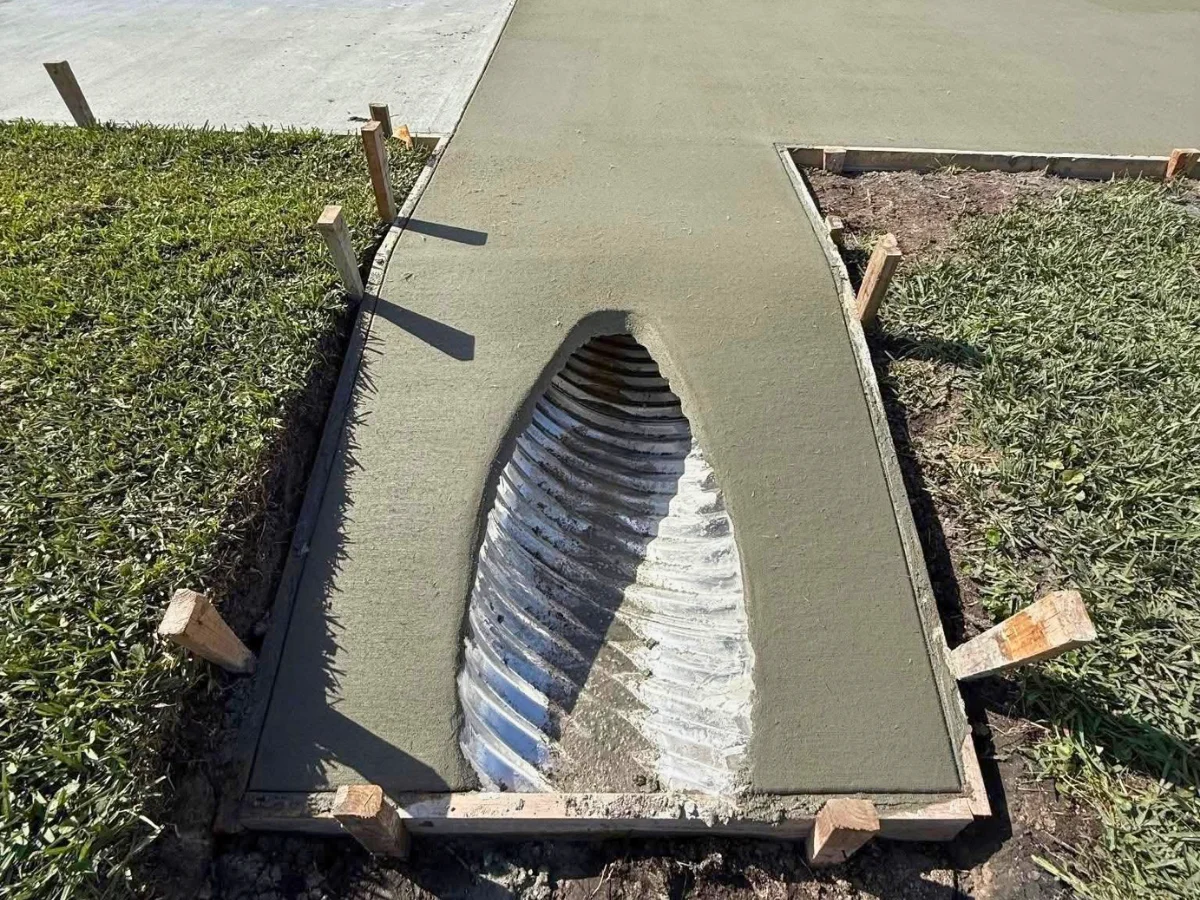
- Recurring standing water: Water that drains unusually slowly may indicate a blockage, grading problem, restricted culvert, or another drainage issue.
- Settlement above or beside the pipe: Dips, cracking, or erosion near the driveway apron can indicate loss of support and should be evaluated.
- Visible corrosion or pipe deterioration: Rust, holes, cracking, joint separation, deformation, or exposed damaged material may indicate that the culvert is nearing the end of its usable condition.
- Sediment or soil movement: Sand or soil collecting inside or around the pipe may indicate erosion, runoff, or a damaged connection.
- Erosion around the end treatments: Soil loss around pipe ends can affect the surrounding swale, driveway edge, and culvert support.
These signs do not automatically mean the entire culvert needs replacement. A contractor should inspect the pipe and surrounding conditions before recommending the corrective approach.
If the pipe collapses or loses support, the concrete above it may crack, settle, or break into the void. Depending on the extent of the damage, the affected driveway section or apron may also need repair or replacement. Our guide to concrete driveway replacement explains the broader factors involved when more extensive driveway work is needed.
Culvert Repair vs. Replacement: What Should a Contractor Evaluate?
A damaged driveway culvert does not automatically require the same solution on every property. The condition of the pipe, surrounding soil, drainage performance, driveway settlement, accessibility, and local requirements should all be considered.
| Condition | What It May Mean | What to Evaluate |
|---|---|---|
| Minor obstruction with otherwise sound pipe | Maintenance or localized correction may be enough | Cause of blockage and whether the pipe remains structurally usable |
| Localized erosion or soil loss | Drainage/support correction may be needed | Where water is escaping and whether support can be restored |
| Separated or damaged pipe section | Repair or replacement should be evaluated | Extent of damage, pipe material, access and surrounding soil condition |
| Extensive corrosion, crushing or deterioration | Replacement may be the more practical option | Remaining pipe condition, driveway support and drainage requirements |
| Driveway settlement above the culvert | Pipe and surrounding support both need evaluation | Washout, voids, pipe condition, base support and driveway damage |
Replacement may be more practical when the pipe is extensively deteriorated, deformed, separated, or no longer providing reliable drainage, especially when the driveway above also needs to be rebuilt. We explain the full swap-out in our driveway culvert replacement process.
How Culvert Pipe Material Is Selected
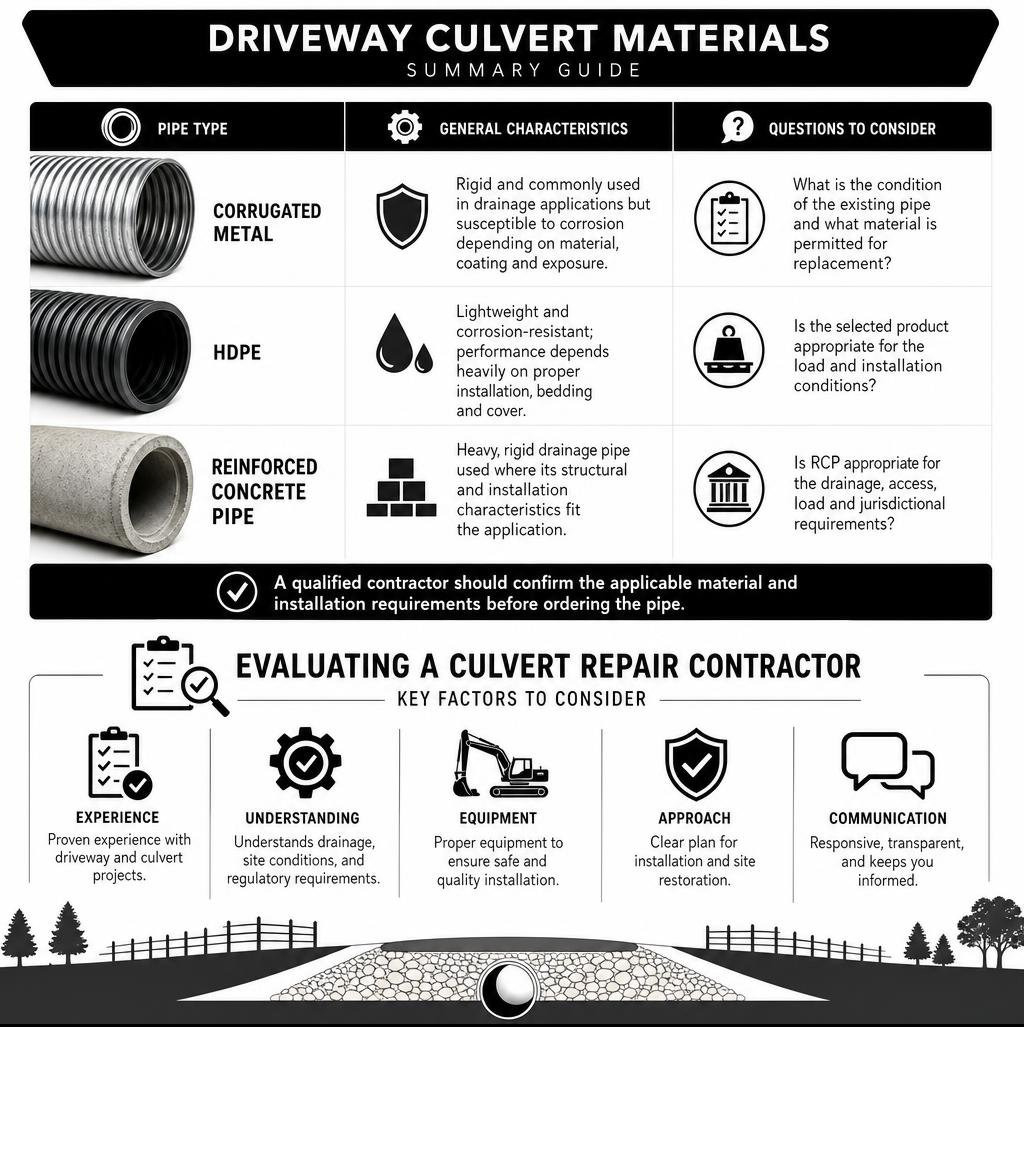
Pipe material should not be selected from a generic online lifespan chart. The appropriate material and size can depend on the drainage system, property conditions, expected loads, right-of-way standards, and requirements of the governing jurisdiction.
| Pipe Type | General Characteristics | Questions to Consider |
|---|---|---|
| Corrugated metal | Rigid and commonly used in drainage applications but susceptible to corrosion depending on material, coating and exposure | What is the condition of the existing pipe and what material is permitted for replacement? |
| HDPE | Lightweight and corrosion-resistant; performance depends heavily on proper installation, bedding and cover | Is the selected product appropriate for the load and installation conditions? |
| Reinforced concrete pipe | Heavy, rigid drainage pipe used where its structural and installation characteristics fit the application | Is RCP appropriate for the drainage, access, load and jurisdictional requirements? |
A qualified contractor should confirm the applicable material and installation requirements before ordering the pipe.
How to Compare Culvert Repair Contractors
When comparing culvert repair contractors, focus on whether each company is evaluating the complete drainage and driveway problem rather than quoting only the pipe itself.
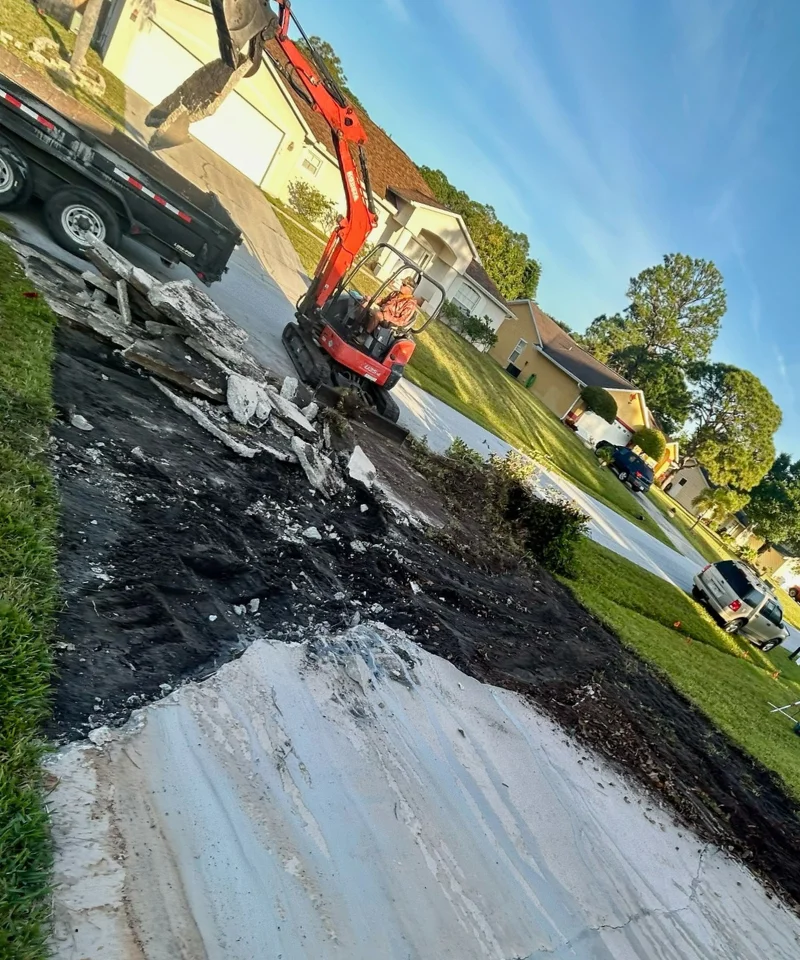
Ask whether the proposal explains:
- Existing culvert condition: What is damaged, blocked, displaced, or deteriorated?
- Cause of the problem: Is washout, drainage, erosion, or settlement contributing?
- Recommended direction: Why is repair or replacement being recommended?
- Pipe requirements: What material and size are being proposed, and what requirement supports that selection?
- Excavation and backfill: What site preparation and restoration are included?
- Driveway restoration: What concrete or pavement will need to be removed and replaced?
- Permitting: Who will determine the applicable right-of-way or municipal requirements?
- Project access: How long will driveway access be interrupted?
Right-of-Way and Culvert Requirements
Requirements depend on the property’s jurisdiction. For properties within Brevard County’s jurisdiction, Public Works reviews residential driveway culvert installations within County rights-of-way as part of its permitting process. Properties inside incorporated municipalities may follow different requirements, so the applicable jurisdiction should be confirmed before work begins.
Because culvert work involves excavation, underground utilities also need to be addressed before digging begins. The contractor performing the excavation is responsible for following Sunshine 811 safe-digging requirements before work starts.
What Should the Contractor Handle Before Excavation?
Before excavation begins, the contractor should identify applicable permitting requirements, coordinate underground utility locating, review access and drainage conditions, and confirm the proposed pipe and restoration scope.
These details should be settled before the existing driveway or culvert is removed so the project does not stall after excavation begins.
Questions to Ask Culvert Repair Contractors Before Hiring
- What do you believe caused the culvert problem?
- Do you recommend repair or replacement, and why?
- What pipe material and size are you proposing, and what requirements apply?
- Who is responsible for permits and inspections if required?
- How will the soil around the pipe and driveway be restored?
- Will any portion of the driveway need to be removed and replaced?
- How long should I expect driveway access to be restricted?
- Is a workmanship warranty offered, and if so, what does it cover?
What Affects Culvert Repair or Replacement Cost?
The cost of a driveway culvert project depends on the condition of the existing pipe, amount of excavation, pipe material and dimensions, site access, soil conditions, driveway restoration, drainage corrections, and any permitting or right-of-way requirements.
Removal can also reveal erosion or lost soil support that was not visible before excavation. When comparing estimates, make sure each contractor is pricing the same scope, including restoration of the driveway and surrounding swale where applicable.
If driveway concrete also needs replacement, our driveway replacement cost guide explains the separate factors that influence that portion of the work.
Frequently Asked Questions About Culvert Repair
How long does a driveway culvert last?
There is no single lifespan that applies to every culvert. Service life depends on pipe material, product specifications, installation, bedding and cover, drainage conditions, loading, corrosion exposure, maintenance, and surrounding soil conditions.
When an existing culvert is being replaced, the contractor should use materials and installation requirements appropriate to the property and governing jurisdiction rather than selecting a pipe based on a generic lifespan estimate.
Do I need a permit to repair or replace a driveway culvert?
Permit requirements depend on the property’s jurisdiction, the location of the culvert, and the scope of work. Culverts located within a public right-of-way may be subject to County or municipal review, inspection, and design requirements.
Brevard County Public Works reviews residential driveway culvert installations within County rights-of-way. Properties inside incorporated municipalities may follow different processes, so the applicable jurisdiction should be confirmed before excavation begins. Homeowners can review Brevard County residential right-of-way requirements as a starting point.
When can I drive over a newly replaced concrete driveway apron?
If culvert work includes new concrete, homeowners should follow the project-specific access instructions provided for the replacement area. Light foot traffic is often possible after roughly 24–48 hours, while concrete continues gaining strength through the first week.
Concrete generally reaches its specified design strength around day 28 under standard curing assumptions. Vehicle access should follow the contractor’s guidance for the specific slab, vehicle loads, and project conditions.
Choosing a Culvert Repair Contractor in Brevard County
A failing driveway culvert can affect drainage, soil support, and the driveway above it. The right solution starts with determining the condition of the existing pipe, why the problem developed, and whether repair or replacement is the more practical approach.
After more than 40 years installing concrete throughout Brevard County, JCD Concrete Inc. understands how sandy soil, stormwater, roadside swales, and driveway construction interact around residential culverts.
If you’re experiencing drainage problems, erosion, or settlement around a driveway culvert, explore JCD Concrete Inc.’s concrete culvert services or contact us to schedule an evaluation.