Popular Stamped Concrete Pattern Families
Stamped concrete can give a poured concrete surface the appearance of materials such as slate, natural stone, brick, cobblestone or wood by imprinting texture into the surface while the concrete is workable. Choosing a pattern is mainly a design decision. The pattern should fit the size and shape of the concrete area, surrounding architecture, expected use and the finish options appropriate to the project.
Homeowners researching patterns for stamped concrete may see several terms used for the same general design concept, including concrete stamp patterns and concrete stamping patterns. The terminology varies, but the important decision is the visual family, texture, scale and color direction that fit the project.
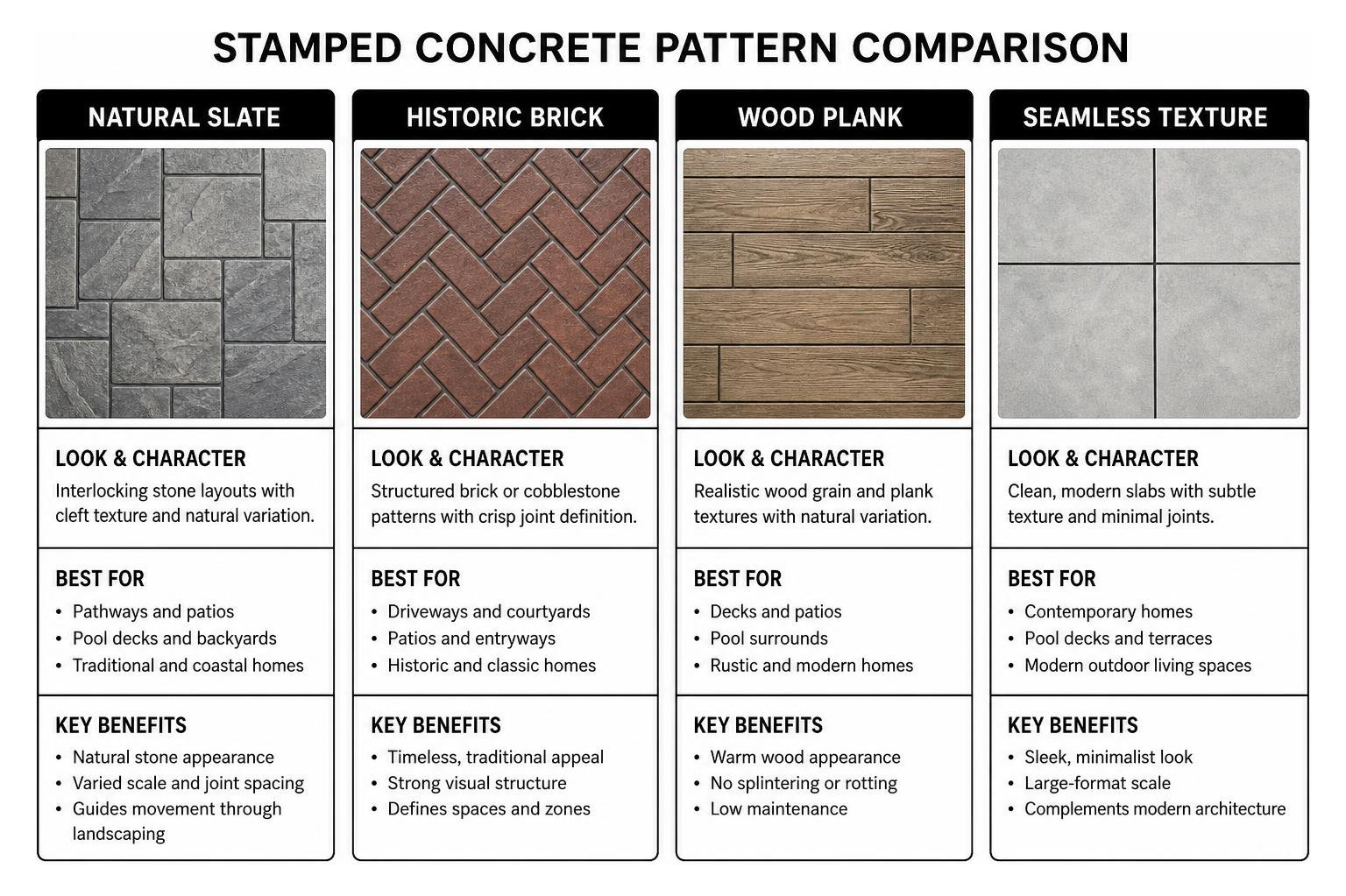
Stone and Slate Patterns
Stone and slate-inspired patterns are popular because they can create either an orderly architectural appearance or a more irregular natural-stone look.
Ashlar-style patterns generally use repeating rectangular and square shapes. Their structured geometry can work well with both traditional and contemporary architecture.
Flagstone and fieldstone-style patterns use more irregular shapes and joint lines, creating a less formal appearance. Larger-format patterns can visually suit broader areas, while smaller or less pronounced patterns may work better where the concrete area is compact or has numerous edges and transitions. For a specific walkway application, see our guide to stamped concrete walkways.
Traditional Brick and Cobblestone Styles
Brick and cobblestone patterns can bring a classic, structured look to patios, walkways, and entry areas. The visual layout helps set the tone for the space and can complement surrounding architecture.
Common brick and cobblestone layouts include:
- Running bond: A horizontal offset layout that creates a familiar brick-inspired appearance.
- Herringbone: An interlocking diagonal or right-angle layout that adds visual movement.
- Basketweave: A paired, alternating layout with a traditional brick look.
- Fan-style cobblestone: A curved, radial layout that can create a more decorative focal point.
These patterns can be used across the main field or as borders and accent areas to frame a larger stamped-concrete design.
Wood Plank and Modern Stamped Concrete Patterns
Wood-plank-style stamping reproduces the appearance and texture of wood in a poured concrete surface.
How to Choose a Stamped Concrete Pattern
The most attractive pattern is not automatically the best choice for every project. Consider how the concrete will be used and how the finished surface will relate to the surrounding property.
- Overall scale: Larger concrete areas can accommodate broader patterns without appearing visually crowded. Smaller areas may benefit from simpler layouts or more restrained textures.
- Furniture and everyday use: Where tables, chairs or other furniture will sit, flatter textures and less pronounced joints may provide a more practical surface.
- Architecture: Consider the lines, materials and style of the home. Structured brick or ashlar-inspired patterns create a different visual effect than irregular stone or wood-plank textures.
- Surrounding materials: Roof colors, exterior paint, masonry, landscaping and adjoining concrete can all influence which pattern and color direction feels cohesive.
- Drainage and project layout: Pattern selection should not interfere with the grades, joints, drainage considerations or other construction requirements of the concrete project.
Borders and Pattern Transitions
A stamped surface does not have to use one pattern from edge to edge. Depending on the project design, a contrasting border or band can visually frame the main stamped area or create separation between adjoining spaces. A structured brick-style border, for example, may be paired with a stone or slate-inspired field. A simpler broom-finished or lightly textured perimeter can also create visual contrast around a decorative center area. Pattern transitions should be planned with the overall layout, joints, drainage and surrounding concrete in mind.
How Pattern, Color and Installation Work Together
Stamping is performed while the concrete is still workable so the selected texture can be impressed into the surface. The timing and finishing approach depend on the concrete, weather, project size, pattern and other site-specific conditions. JCD uses 5000 PSI concrete on residential projects. Concrete strength is one part of the installation; preparation, drainage, base support, reinforcement where appropriate, placement, finishing, joints and curing also affect the completed work.
Pattern Tools and Texture
Stamping systems can use patterned mats or texture skins to create different levels of joint definition and surface texture. Some designs reproduce individual stone, brick or plank shapes, while seamless textures create a more continuous surface appearance. The tools and pattern system used depend on the selected design, project layout and installation conditions.
Choosing a Color Direction
When comparing stamped concrete patterns and colors, pattern and color should be considered together because each changes how strongly the finished surface reads. Deeper textures naturally create more shadow and visual variation, while flatter textures generally produce a more restrained appearance. Common design directions include:
- Warm neutrals: sand, tan, taupe and brown-inspired tones can complement warm masonry, stone and natural landscaping.
- Cool neutrals: gray and charcoal-inspired tones can pair well with contemporary exteriors, cooler roof colors and modern hardscape materials.
- Muted earth tones: understated colors can help a decorative surface blend with surrounding landscaping rather than become the dominant visual feature.
- Contrasting accents: darker or lighter accents can make stamped joints and texture more visually pronounced.
Color should also be considered alongside the home’s exterior paint, roof, masonry, landscaping, adjoining concrete and other hardscape materials. A color that looks subtle in a small sample may read differently across a larger outdoor surface or under changing sunlight and shade. Exact color options and coloring systems vary by product and project. JCD reviews applicable decorative options during project planning rather than promising a particular manufacturer palette or coloring system in advance.
What Affects the Complexity of a Stamped Concrete Project?
Stamped-concrete projects can vary considerably in scope. A simple pattern over an uncomplicated layout may require less detailing than a project with multiple textures, borders, color changes, curves or difficult site access. Factors that can affect the project include:
- Pattern complexity: Repeating geometric layouts, irregular textures and pattern transitions can involve different levels of layout and detailing.
- Color and finish choices: Additional colors or decorative transitions can add design and installation steps.
- Borders and bands: Contrasting perimeter treatments require additional planning and detailing.
- Project size and shape: Curves, edges, steps, adjoining surfaces and interruptions can affect how a pattern is laid out.
- Access and site preparation: Equipment access, existing concrete, grades, drainage and base preparation remain important regardless of the decorative finish.
Joints, Curing and Maintenance Considerations
Decorative stamping does not eliminate the normal construction considerations that apply to concrete. Site preparation, drainage, base support, reinforcement where appropriate, placement, finishing, planned joints and curing all remain important. Control joints are used to help manage where shrinkage-related cracking may occur. Their location and layout should be planned for the specific slab rather than assigned one universal spacing or depth in a homeowner design guide.
Curing
A stamped surface still requires appropriate curing after placement:
- First 24–48 hours: Protect the concrete; light foot traffic may be appropriate depending on the project.
- Days 2–7: Curing continues and the surface should be protected from unnecessary loading or damage.
- Around 28 days: Concrete commonly reaches its specified or design strength under typical assumptions.
JCD provides project-specific guidance because weather, placement conditions, finish and intended use can affect the appropriate timeline.
Ongoing Care
Maintenance depends on the decorative system, exposure, use and any products applied to the surface. Routine cleaning should follow the guidance appropriate to the finish. If a sealer is used, reapplication timing should follow the specific product manufacturer’s instructions and the actual condition of the surface rather than a universal schedule.
Stamped Concrete Pattern FAQs
Which stamped concrete pattern is best for a patio?
There is no single best pattern. The right choice depends on the patio’s size, architecture, furniture layout, surrounding materials and the amount of texture the homeowner prefers. Flatter patterns or less pronounced joints may be more practical in areas where tables and chairs will be used frequently.
Can the same stamped pattern be used on patios, walkways and driveways?
Some pattern families can be adapted to several types of horizontal concrete, but the project requirements are not identical. Layout, expected use, drainage, joints and other installation considerations should be evaluated for the specific application.
Are cement stamp patterns different from stamped concrete designs?
Not necessarily. Cement stamp patterns is a common search phrase, but the decorative stamping process is performed on concrete. Stamped concrete designs can refer more broadly to the combination of pattern, texture, borders and color direction used for the finished surface.
Does stamped concrete need to be sealed?
That depends on the decorative system and products used for the project. If a sealer is part of the selected system, maintenance and reapplication should follow the specific product guidance and the condition of the surface rather than one universal schedule.
Planning a Stamped Concrete Design
A successful stamped-concrete design starts with more than choosing the most attractive pattern. Scale, surrounding architecture, project use, color direction, drainage, preparation, joints and the overall concrete scope should work together. JCD Concrete is owner-operated by John DomBek, who brings more than 40 years of concrete experience and personally oversees projects. JCD uses 5000 PSI concrete on residential projects while also accounting for preparation, drainage, reinforcement where appropriate, placement, finishing, joints and curing. If you are considering decorative concrete for a patio or another horizontal concrete project, explore JCD’s concrete flatwork services or concrete patio services and request a free estimate.