Stamped Concrete Driveway Designs: Ideas to Consider
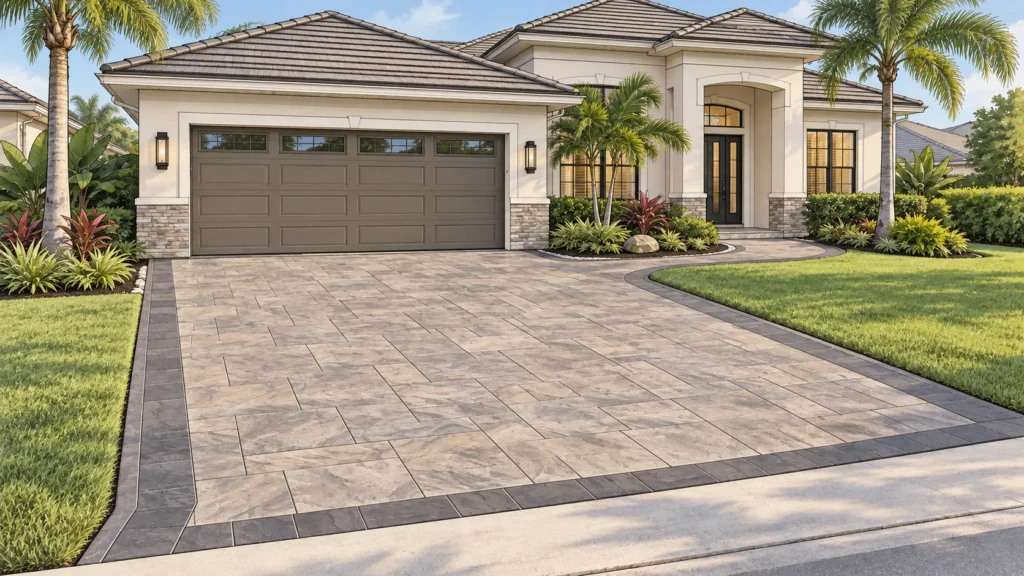
Stamped concrete driveway designs can use pattern, color, borders and layout to give a driveway a more decorative appearance while coordinating with the home and surrounding hardscape. The design should account for the scale and shape of the driveway, the architecture of the home, nearby walkways or patios, and how much visual contrast the homeowner wants.
Common stamped concrete driveway ideas include stone-inspired, brick-inspired, cobblestone-inspired and slate-inspired looks, along with contrasting borders, bands or accent areas near the driveway entrance. A restrained combination of pattern and color can create definition without making a large driveway feel overly busy.
The best stamped driveway designs are not one-size-fits-all. They should fit the property’s architecture, the size and shape of the driveway, and the homeowner’s overall design goals.
JCD Concrete Inc. is owner-operated by John DomBek, who brings more than 40 years of concrete experience. This guide focuses specifically on design and planning considerations for homeowners exploring decorative driveway options.
Ways to Combine Pattern, Color and Borders
A stamped driveway does not need every decorative option at once. Pattern, color and border choices can be combined in different ways depending on how much contrast the homeowner wants and how prominent the driveway is in the front landscape.
| Design Direction | Pattern Approach | Color / Border Approach |
|---|---|---|
| Simple and restrained | Use one main stone-, slate- or brick-inspired pattern across the driveway. | Keep the color palette limited and use little or no contrasting border. |
| Defined perimeter | Use one primary pattern for the main field. | Add a contrasting border around the driveway edge to create definition. |
| Entrance accent | Keep most of the driveway visually simple. | Use a second pattern or contrasting color near the apron or entrance area. |
| More decorative | Combine a primary pattern with a secondary accent pattern. | Use coordinated colors and borders while keeping the overall design consistent with the home. |
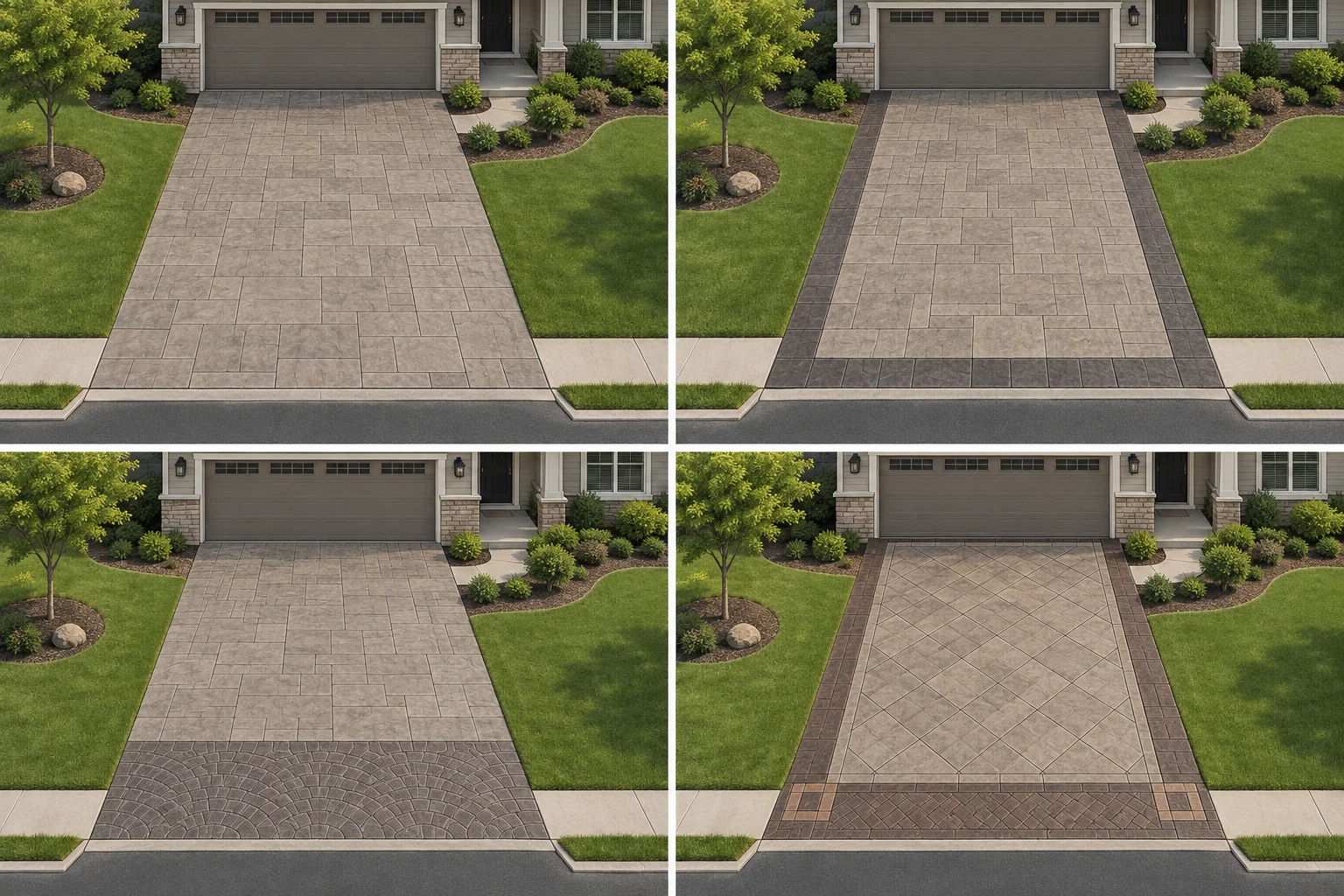
The right combination depends on driveway size, shape and visibility. A detail that works well on a small entrance area may feel too busy if repeated across a very large driveway.
How to Choose a Pattern for a Driveway
Pattern choice affects how a stamped driveway reads across a large area. Instead of choosing a pattern in isolation, consider how its scale, direction and level of detail work with the driveway and the home.
- Pattern scale: Larger-format stone or slate-inspired designs can create a different visual effect than smaller brick or cobblestone-inspired layouts, especially across a wide driveway.
- Driveway shape: Straight, curved and circular driveways can emphasize pattern direction differently. The layout should feel intentional rather than forced into the available space.
- Home architecture: Stone-inspired, brick-inspired, cobblestone-inspired and slate-inspired looks can each create a different character. The goal is coordination, not matching every exterior material exactly.
- Surrounding hardscape: Consider nearby walkways, patios, entry areas and existing concrete so the driveway does not feel visually disconnected.
- Repetition: A highly detailed pattern can become visually busy across a large driveway. Simpler textures or restrained accent areas may be preferable when the driveway already occupies a large part of the front landscape.
Choosing Colors for a Stamped Driveway
Driveway color should coordinate with the home and surrounding surfaces without requiring an exact match. Homeowners may choose tones that complement exterior paint, roofing, masonry, landscaping or nearby concrete.
A more uniform color palette can create a quieter appearance, while a contrasting border or accent can add definition. On a large driveway, limiting the number of competing colors can help keep the finished design cohesive.
For broader inspiration beyond driveway-specific layouts, see our stamped concrete patterns and colors guide.
Borders, Bands and Accent Areas
Borders and bands can help visually organize a stamped driveway without requiring the entire surface to use multiple patterns or colors. A contrasting perimeter can frame the driveway, while an accent near the entrance or apron can create a focal point.
Bands can also be used at transitions or to break up a large visual field. The pattern, width and color of an accent should be chosen in relation to the driveway’s overall scale rather than applied as a universal detail.
Homeowners can also use stamped concrete selectively, such as in an entrance area or border, while keeping the main driveway design more restrained.
How to Narrow Down Your Driveway Design Choices
Homeowners often have several patterns and colors they like at first. Narrowing those choices is easier when the driveway is considered as part of the property rather than as a standalone surface.
- Start with the home. Look at exterior paint, roofing, masonry, trim and other permanent materials. The driveway does not need to match them exactly, but the design should feel intentional next to them.
- Consider the driveway’s size and shape. A pattern with a lot of visual detail may read differently across a wide driveway than it does in a small sample. Curves, aprons and transitions can also affect how the pattern is perceived.
- Decide where contrast matters most. Some properties benefit from a consistent main field with one border or entrance accent rather than multiple competing decorative elements.
- Look at nearby hardscape. Walkways, patios, porches and other concrete areas can influence whether a new driveway should coordinate closely or provide a subtle visual contrast.
- Keep the overall composition in mind. The goal is not to use the most decorative option available. It is to choose a combination of pattern, color and accents that works with the home and the scale of the property.
Planning Beyond Appearance
Decorative choices are only one part of driveway planning. Site preparation, drainage, intended vehicle use, reinforcement where appropriate, placement, finishing, joints and curing also need to be considered for the specific property and project.
JCD Concrete Inc. exclusively uses 5000 PSI concrete on residential projects, but concrete strength is only one part of performance. Site preparation, drainage, reinforcement where appropriate, placement, finishing, joints and curing also matter.
Pattern, borders, colors and accent areas should be coordinated with those project requirements rather than treated as separate from them. The final layout should work with the driveway’s shape, grades, surrounding surfaces and intended use.
Stamped vs. Broom-Finish Driveway Design
A broom-finish driveway has a simpler, more uniform appearance, while stamped concrete provides more opportunities to customize pattern, color, borders and accent areas.
Neither finish changes the need to plan the driveway around the property, drainage, intended use and project conditions. The choice between a stamped and broom-finished appearance should be based on the homeowner’s design goals and the specific project rather than a universal claim that one finish is better for every driveway.
Frequently Asked Questions
Can a stamped concrete driveway use more than one pattern?
Yes, multiple patterns can be used as part of a coordinated design, but they do not need to cover the entire driveway. A second pattern may work well as a border, entrance accent or transition when it complements the main design.
Can a border be added to a stamped driveway?
Yes. Borders can visually define the driveway edge, entrance or another section of the layout. The border’s pattern, width and color should be chosen in proportion to the driveway and surrounding property.
How should driveway colors coordinate with a house?
Start with the home’s exterior materials and overall color palette. A driveway can use complementary tones for a more cohesive appearance or a restrained contrasting color for borders and accent areas.
Can stamped concrete be used for an entire driveway or just accent areas?
Either approach can be considered. Some homeowners prefer one stamped design across the main driveway, while others use decorative concrete selectively at borders, aprons or entrance areas. The appropriate layout depends on the design goals and project conditions.
What should be planned before choosing a decorative driveway finish?
Consider the driveway’s size and shape, home architecture, surrounding hardscape, intended use, drainage and overall project requirements. Decorative choices should be coordinated with the functional planning for the driveway rather than selected separately.
Conclusion
Stamped concrete driveway designs work best when pattern, color, borders and layout are planned as part of the overall property rather than chosen in isolation. A design that fits the home, driveway scale and surrounding hardscape can create a more cohesive finished appearance while functional project requirements remain part of the planning process. If you’re planning a new or replacement driveway, learn more about JCD’s concrete driveway services and request a free estimate for your property in central and southern Brevard County and the Space Coast.