Concrete vs Pavers: Quick Comparison for Homeowners
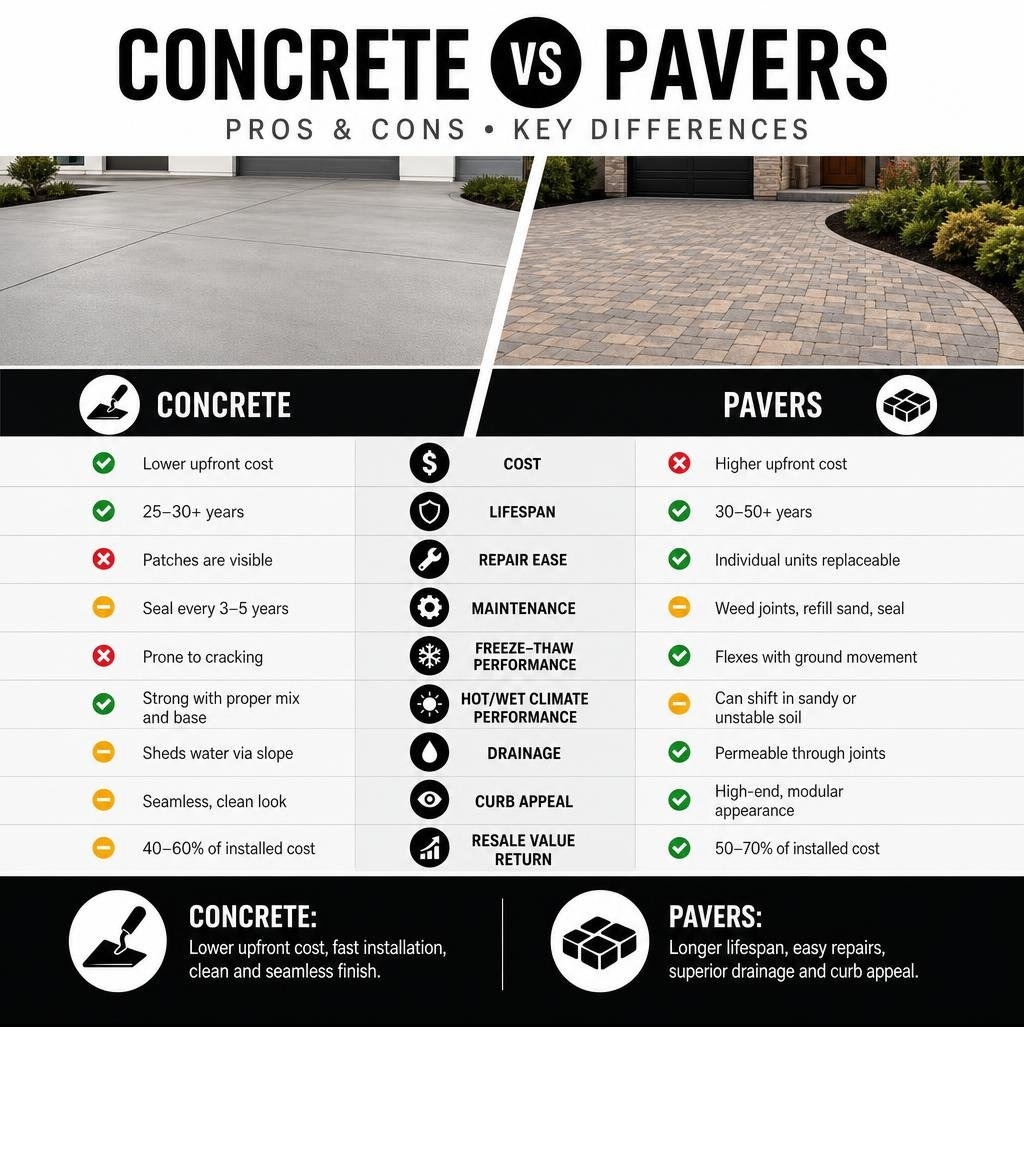
When homeowners compare concrete vs pavers pros and cons, the decision usually comes down to upfront cost, long-term durability, repairability, maintenance, and how each surface fits the conditions of the property.
Here is a quick side-by-side to answer the most common questions right away:
| Factor | Concrete | Pavers |
|---|---|---|
| Upfront cost | Standard poured concrete is often lower | Often higher because of material and installation labor |
| Long-term service | Can provide decades of service with proper installation and maintenance | Can also provide decades of service when the base and paver system are properly installed |
| Repairability | Repairs may remain visible | Individual units can often be removed and reinstalled |
| Maintenance | Cleaning, joint/crack monitoring and sealing when appropriate | May require joint maintenance, weed control, re-leveling or sealing depending on the system |
| Ground movement | Rigid slab; base support and control joints are important | Modular units can accommodate some minor movement and can be re-leveled |
| Florida conditions | Performance depends heavily on base preparation and drainage | Performance also depends heavily on base preparation, edge restraint and drainage |
| Drainage | Conventional concrete generally sheds runoff according to surface grading | Standard pavers are not automatically permeable; permeable paver systems are specifically designed for infiltration |
| Design | Broom, colored, decorative and stamped options | Wide range of modular shapes, colors and patterns |
| Spot repairs | New concrete may differ visually from aged concrete | Individual pavers can often be replaced with less visible disruption |
Neither material is universally better. The right choice depends on your budget, your climate, and how much ongoing maintenance you want to take on.
In Brevard County, sandy soil, high water tables in some areas, heavy seasonal rainfall, and coastal exposure make base preparation, drainage, material selection, and installation quality especially important for either surface.
One thing we’ve learned after more than 40 years installing concrete throughout Brevard County is that installation quality can matter just as much as material choice. A well-designed surface can still develop problems if the supporting base or drainage is inadequate.
I’m John DomBek, owner of JCD Concrete Inc., and after more than 40 years installing residential concrete throughout Brevard County, I’ve seen both sides of the concrete and paver debate play out on real driveways and patios. In this guide, I’ll walk you through what actually matters when making this decision for your home.
Concrete vs Pavers at a Glance
If you only remember one thing from this guide, remember this: neither material is automatically better. The right choice depends on your budget, maintenance expectations, and how well the project is installed.
Choose concrete if…
- You want lower upfront cost
- You prefer fewer individual joints and generally lower routine joint maintenance
- You want a continuous surface for regular vehicle traffic
- You want fewer weeds
- You prefer a continuous poured-concrete appearance
Choose pavers if…
- Appearance is your top priority
- You do not mind periodic maintenance
- You want easier spot repairs
- You like modular patterns
Concrete vs Pavers Cost: Comparing Upfront and Long-Term Expenses
Standard poured concrete generally has a lower upfront installation cost than a comparable paver surface because individual pavers require additional material handling and installation labor. Decorative concrete can narrow that gap because stamping, coloring, borders, and other finish options add labor and material costs.
When comparing the cost of pavers vs concrete, homeowners should also consider maintenance and repairs. Pavers may make isolated repairs easier because individual units can be removed and reinstalled, while concrete usually requires less routine joint maintenance but may leave a more visible repair when a section is patched or replaced.
Pavers vs concrete cost ultimately depends on project size, site preparation, drainage, finish selection, access, demolition requirements, material choice, and the condition of the underlying base.
Concrete vs pavers cost can also change when the project includes an existing surface that must be removed, difficult access, drainage corrections, decorative borders, or premium material selections. When evaluating the cost of pavers vs concrete, make sure competing estimates include a comparable scope of site preparation and drainage work.
Which Should You Choose?
For homeowners comparing pavers vs concrete for a driveway, patio, or walkway, the better option depends on which tradeoffs matter most for the property. This quick decision table makes the differences easier to see:
| If you want… | Choose… | Why |
|---|---|---|
| Lowest upfront cost | Concrete | Standard poured concrete is usually the more budget-friendly option to install. |
| Generally lower joint maintenance | Concrete | A poured slab eliminates the numerous individual joints found between pavers, although concrete joints and cracks still require attention. |
| Modular, patterned appearance | Pavers | Pavers offer many combinations of individual shapes, colors and laying patterns. |
| Less visually disruptive spot repairs | Pavers | Individual pavers can often be removed, re-leveled and reinstalled without creating the same type of patch associated with replacing part of a concrete slab. |
| Florida durability | Both | Either material can perform well when the base, drainage, and installation are done correctly. |
| A continuous surface for vehicle traffic | Concrete | A properly designed concrete driveway provides a continuous driving surface without individual paver joints. |
| Easy localized re-leveling or unit replacement | Pavers | Individual units can often be removed and reset when localized problems occur. |
| A continuous poured surface | Concrete | Poured concrete avoids the numerous individual unit joints found in paver installations, although properly placed concrete still includes control joints. |
| Better flexibility on minor ground movement | Pavers | Individual units can accommodate some minor movement and can be re-leveled when the base is built correctly. |
For many Brevard County homeowners, the practical answer is this: choose pavers if modular design and localized repair flexibility are your top priorities, or choose concrete if you prefer a continuous poured surface with fewer individual joints and generally lower routine joint maintenance.
_compressed.webp?alt=media&token=f624912c-99de-4700-8cbb-81b8538ea213 "newly poured concrete patio beside a screened-in Florida home")
Many homeowners ask whether concrete or pavers cost less over time. The answer depends on installation costs, maintenance, repairs, and expected service conditions. For homeowners who want a lower-maintenance surface, professionally installed concrete driveways and patios are often a practical long-term investment.
JCD Concrete Inc. exclusively installs 5000 PSI concrete on residential projects. We consider concrete strength one part of a durable installation, alongside proper base preparation, drainage, reinforcement where appropriate, placement, finishing, control joints, and curing.
Concrete strength alone does not eliminate the possibility of cracking, settlement, moisture exposure, or surface wear, which is why the complete installation matters.
Concrete vs Pavers Durability in Florida Conditions
Your driveway or patio has to withstand years of traffic, rain, heat, and shifting soil. How each material performs depends largely on the environment it’s installed in.
Concrete vs Pavers in Shifting or Settling Soil
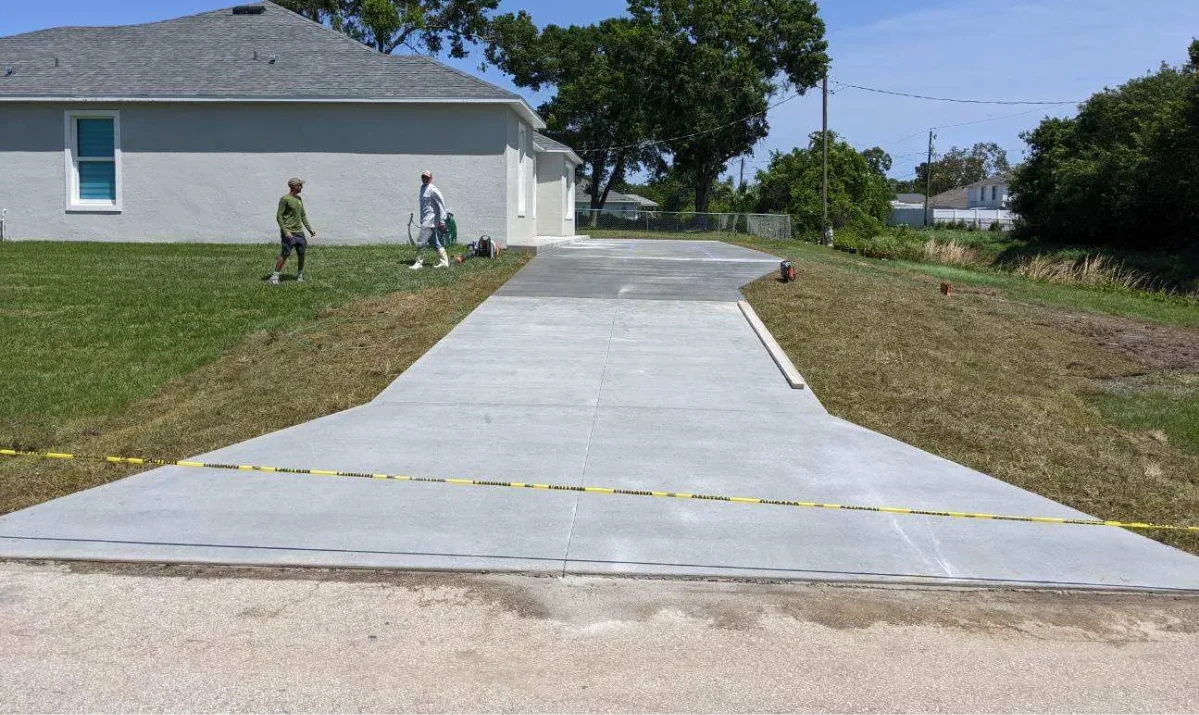
Concrete and pavers respond differently when the supporting soil moves. A poured concrete slab is rigid, so inadequate support, erosion, or settlement beneath the slab can contribute to cracking or uneven sections.
Pavers are modular, which can allow individual units to accommodate minor movement differently than a continuous slab. If settlement occurs, affected pavers can sometimes be removed and re-leveled. However, paver installations still depend on proper excavation, base preparation, compaction, edge restraint, and drainage.
Concrete vs Pavers in Brevard County Conditions
In Brevard County, both materials depend heavily on the conditions beneath the finished surface. Sandy soil, seasonal rainfall, drainage, and areas with high water tables can contribute to settlement or erosion when the base is not properly prepared.
One issue we frequently encounter is water moving through or along poorly supported areas and carrying sandy soil away from the base. Whether you choose concrete or pavers, controlling water and creating consistent support beneath the surface are critical parts of the installation. UF/IFAS guidance on Florida urban soils notes that sandy soil conditions and compaction can affect stormwater behavior, which is another reason base support and drainage planning matter for hardscape projects in Brevard County.
For a deeper look specifically at local climate and soil conditions, read our guide to concrete vs pavers in Florida.
Maintenance, Repairs, and Drainage Management
How much time and money are you willing to spend keeping your driveway or patio looking brand new? The answer to this question is often the deciding factor for busy homeowners.

Maintenance and Repair Comparison
Paver maintenance depends on the system and site conditions. Over time, some installations may require weed control, joint-sand replenishment, re-leveling of individual units, cleaning, or sealing.
Concrete generally requires less routine joint maintenance because it does not have the numerous individual joints found between pavers. Homeowners should still monitor control joints and cracks, keep the surface clean, and maintain decorative or sealed finishes according to the product and exposure conditions.
When localized settlement occurs, pavers can often be removed and reset after the underlying issue is corrected. Concrete repairs may involve crack repair, resurfacing, or removal and replacement of a damaged section depending on the extent of the problem.
If your concrete driveway has suffered extensive structural damage over the years, a full concrete driveway replacement is often the most cohesive and aesthetically pleasing solution.
Drainage and Water Management
Neither concrete nor pavers eliminate the need for proper drainage planning. Conventional poured concrete generally sheds water according to the slope and grading of the finished surface. Standard paver installations also rely on proper grading, base construction, edge restraint, and drainage.
Permeable interlocking paver systems are a separate type of pavement specifically designed to allow stormwater to move through permeable joints into engineered aggregate layers below. Homeowners should not assume that every paver installation provides this type of infiltration.
This is why grading, base preparation, and drainage planning are just as important as concrete strength. When we install concrete flatwork, we plan slope and grading around the property’s drainage conditions so runoff moves away from the home and toward appropriate drainage areas where applicable.
Design Flexibility, Aesthetics, and Curb Appeal
Your driveway and front walkway represent the first impression your home makes, so the right material should fit the home’s architecture, landscape, budget, and maintenance expectations.
Design and Curb Appeal
Both materials offer different visual advantages. Pavers provide a modular appearance with a wide range of shapes, patterns, and colors. Concrete can provide a clean continuous surface and can also be customized through color, texture, borders, or stamped finishes.
The better design choice depends on the home’s architecture, surrounding landscaping, budget, and the homeowner’s preferred level of maintenance.
For homeowners who want a decorative poured surface, concrete patios can incorporate color, texture, borders, or stamped finishes without using individual modular pavers.
Frequently Asked Questions About Concrete and Pavers
Is concrete or pavers cheaper to install in 2026?
Generally, standard poured concrete is cheaper to install than pavers because it requires less labor than placing each individual paver by hand. Paver installation also requires excavation, a multi-layered gravel and sand base, edge restraints, and joint sand. Stamped concrete occupies a middle ground, offering a high-end look at a price point that is competitive with mid-range pavers.
Which lasts longer: concrete or pavers?
There is no universal winner. Both concrete and pavers can provide decades of service when they are properly installed and maintained. Long-term performance depends on base preparation, drainage, material quality, vehicle loads, installation details, maintenance, and site conditions.
The main difference is how problems are addressed. Individual pavers can often be removed and reset when localized settlement occurs, while a concrete slab provides a continuous surface but may require a more visible repair if a section becomes damaged.
Can cracked concrete be repaired without the repair showing?
Concrete repairs may remain visible because new repair material can differ in color and texture from the surrounding aged surface. How noticeable the repair is depends on the type of damage, repair method, finish, age, and exposure of the existing concrete.
Proper site preparation, drainage, concrete placement, reinforcement where appropriate, curing, and control-joint planning can reduce avoidable problems, but no concrete installation can guarantee that cracking will occur only within control joints.
What affects the price of pavers vs concrete?
The price of pavers vs concrete is affected by project size, access, demolition, base preparation, drainage needs, material selection, finish level, and labor. Standard poured concrete is often the lower-cost option upfront, while decorative stamped concrete and premium paver systems can be closer in price depending on the design and site conditions.
Pavers vs concrete cost should be compared based on the complete installed system rather than material price alone.
Choosing Between Concrete and Pavers for Your Home
The best choice between concrete and pavers depends on your budget, design preferences, maintenance expectations, repair priorities, and the conditions of the property. Pavers offer modular design flexibility and easier localized repairs, while poured concrete provides a continuous surface with fewer individual joints and generally lower routine joint maintenance.
After more than 40 years installing concrete throughout Brevard County, JCD Concrete Inc. understands how site preparation, sandy soil, drainage, vehicle loads, and coastal conditions affect residential flatwork. We exclusively install 5000 PSI concrete on residential projects and focus on the complete installation rather than concrete strength alone.
If concrete is the right fit for your driveway, patio, walkway, or slab project, explore JCD Concrete Inc.’s concrete services or contact us to request an estimate.
Related Homeowner Resources
If you are planning an upcoming home improvement project in Brevard County, we have put together these educational guides to help you make informed decisions before you hire a contractor:
- Concrete Driveway Installation: Learn what affects driveway installation cost, durability, and long-term performance in Brevard County.
- Concrete Driveway Replacement: See when replacement makes more sense than repairs and what homeowners should consider before rebuilding a driveway.
- Concrete Patios: Explore patio and decorative concrete options for homeowners who want a continuous outdoor surface.
- Concrete Pads & Slabs: Discover what goes into pouring a solid, long-lasting concrete base for sheds, hot tubs, RV parking and other residential projects.