When Should You Replace a Concrete Driveway?
Homeowners usually begin considering whether to replace a concrete driveway after cracks, settlement, surface deterioration, drainage problems, or uneven sections become difficult to ignore.
Not every damaged driveway needs a complete tear-out. Some localized cracks or surface problems may be repairable, while widespread deterioration, recurring settlement, major elevation changes, or underlying drainage and support problems may make replacement more practical.
The right decision depends on the condition of the existing concrete and, just as importantly, why the damage developed.
I’m John DomBek, owner of JCD Concrete Inc., and after more than 40 years installing residential concrete throughout Brevard County, we’ve seen how drainage, sandy soil, washout, site preparation, and changing loads can affect driveway performance.
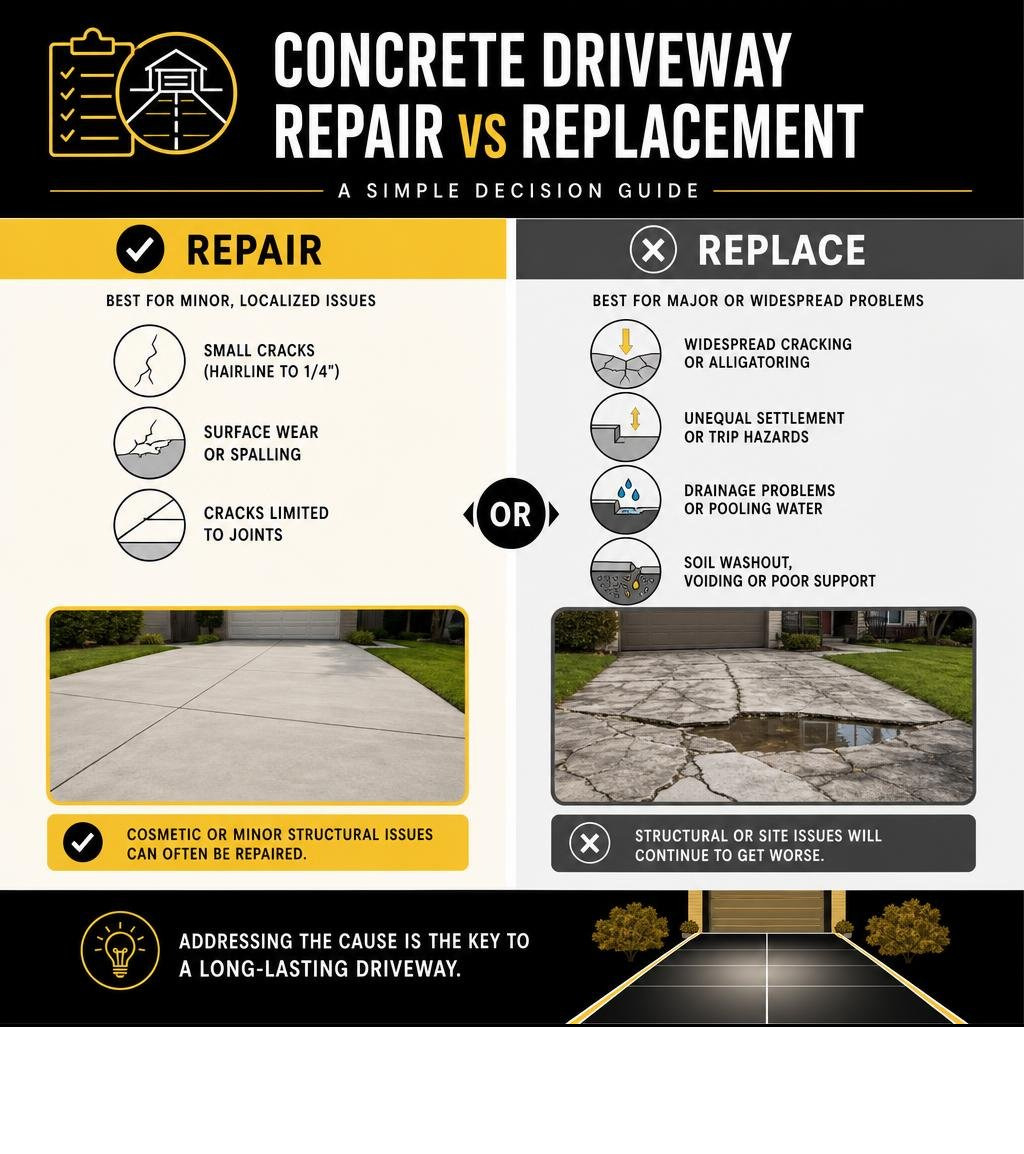
Signs It May Be Time to Replace a Concrete Driveway
Concrete is remarkably durable, but it does not last indefinitely. When driveways begin to fail, homeowners often struggle to decide whether a simple patch will buy a few more years or if a full tear-out is necessary. After more than 40 years installing residential concrete throughout Brevard County, we know that looking past surface aesthetics to examine the ground below is what really matters.
One issue we frequently encounter throughout Brevard County is loss of support beneath concrete when water moves through or along sandy soil. Seasonal rainfall, drainage problems, washout, and high water tables in some areas can all affect the conditions beneath an existing driveway.
Widespread cracking, multiple settled sections, recurring drainage problems, or deterioration across several areas of the driveway can make continued spot repairs less practical. A contractor should evaluate whether the existing concrete can reasonably be preserved and whether underlying support or drainage problems need to be corrected.
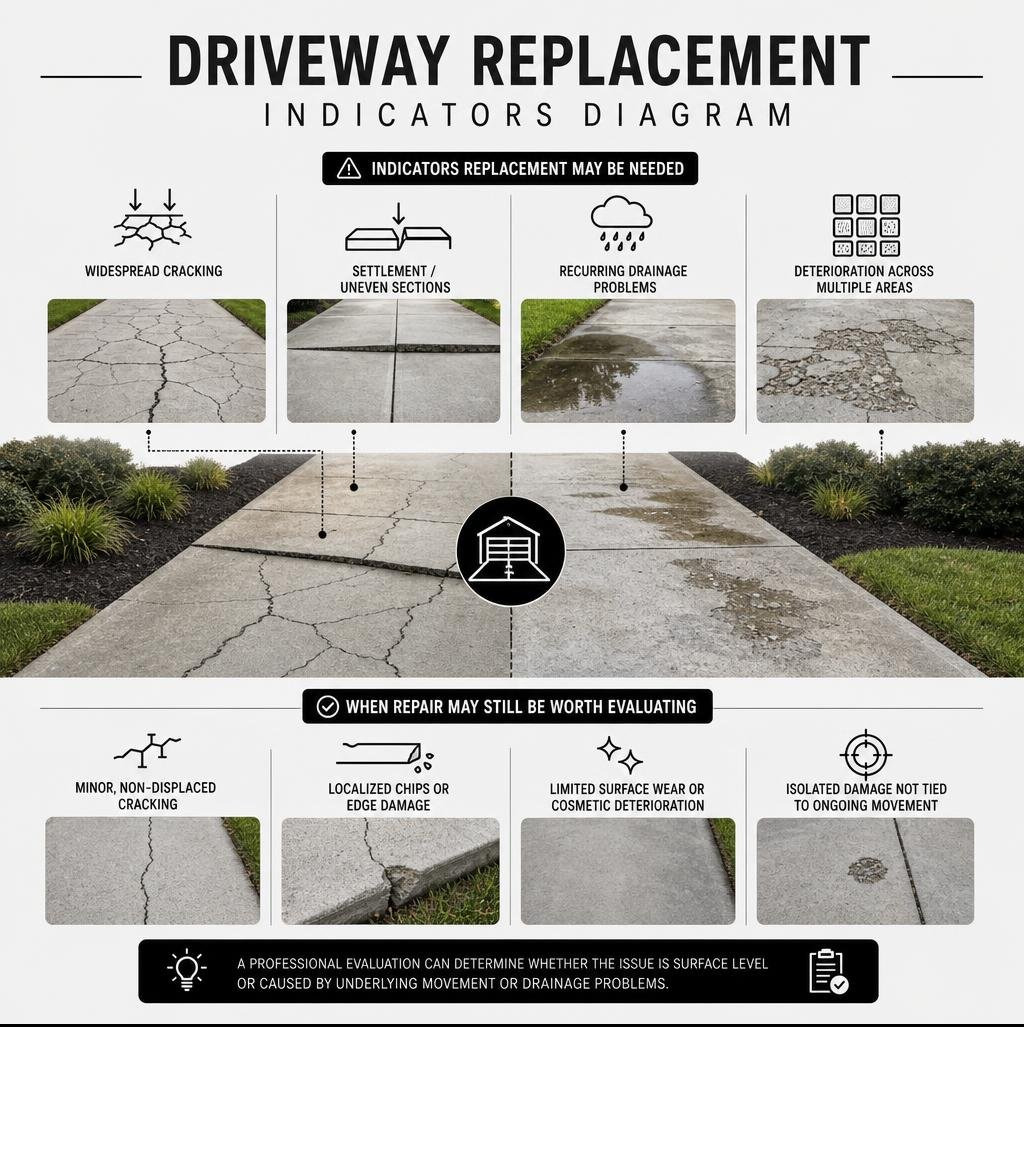
When Widespread or Displaced Cracks May Point Toward Replacement
Cracks should be evaluated in context. Wide or displaced cracks, multiple damaged sections, settlement between slabs, or recurring movement can indicate that the problem extends beyond a cosmetic surface defect.
Several underlying issues may contribute to driveway damage:
- Loss of soil support: Erosion, washout, settlement, or inadequate compaction can leave sections of the driveway unevenly supported.
- Roots and site changes: Growing roots, landscaping changes, utility work, or nearby excavation can affect the soil beneath or beside existing concrete.
- Vehicle and concentrated loads: Loads that exceed what the existing slab and supporting conditions can handle may contribute to cracking or settlement.
- Joint and movement issues: Concrete naturally expands, contracts, and shrinks. Joint layout, placement, curing, support, and other installation details all affect how that movement is managed.
When movement or support problems continue beneath the slab, a surface repair may not address the cause of the damage. Repeated vehicle loads can also place additional stress on repairs when the surrounding concrete continues to move.
When Repair May Still Be Worth Evaluating
Replacement is not automatically necessary when the underlying slab remains stable and the damage is limited.
- Minor, non-displaced cracking
- Localized chips or edge damage
- Limited surface wear or cosmetic deterioration
- Isolated damage that is not tied to ongoing settlement or washout
The contractor should determine whether the damage is primarily at the surface or whether it reflects movement beneath the slab. Repairing the visible symptom without addressing ongoing settlement or drainage may allow the problem to return.
Concrete Driveway Repair vs. Replacement: How to Decide
Choosing between repair and replacement comes down to whether the existing driveway can still be preserved in a practical way. A surface repair may be reasonable when damage is isolated and the slab remains stable, while replacement may be worth evaluating when several conditions point to deeper support, drainage, or layout problems.
| Factor | Repair May Make Sense When… | Replacement May Make Sense When… |
|---|---|---|
| Extent of damage | Damage is localized | Damage affects multiple sections |
| Settlement | Slab elevation is stable | Several areas have settled or shifted |
| Underlying support | Base appears stable | Washout, erosion, or poor support needs correction |
| Drainage | Existing drainage is functioning | Grading or runoff problems contribute to damage |
| Surface condition | Concrete remains largely sound | Deterioration is widespread |
| Project goals | Existing size and layout still work | Homeowner wants new dimensions, grade, or layout |
| Repair history | Problem is isolated | The same areas require repeated repair |
The goal is not to choose replacement simply because it is more extensive. It is to determine whether preserving the existing concrete is still practical once the condition of the slab and underlying support are considered.
What Happens When a Concrete Driveway Is Replaced?
If replacement is the better option, the existing concrete is removed so the contractor can inspect and prepare the area beneath it. This creates an opportunity to address support, grading, drainage, or elevation problems that could not be corrected through a surface repair.
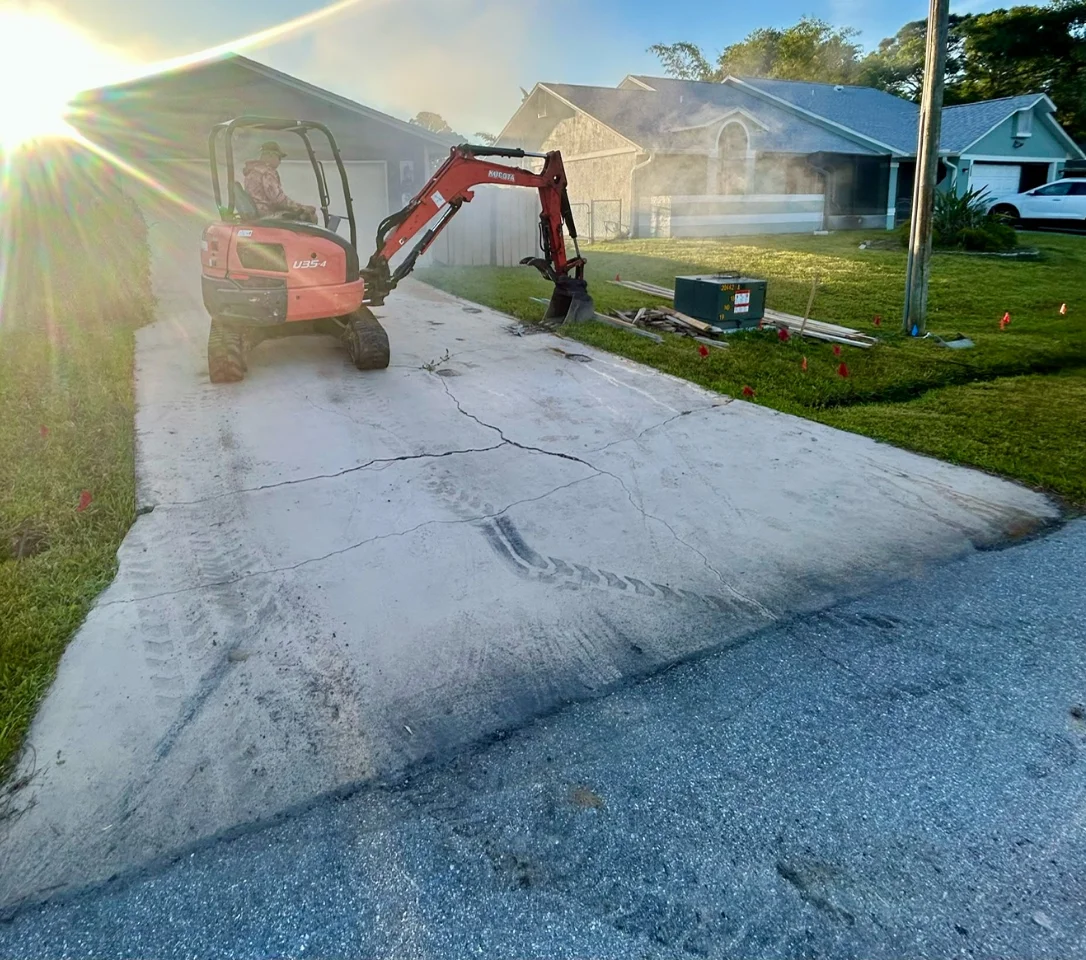
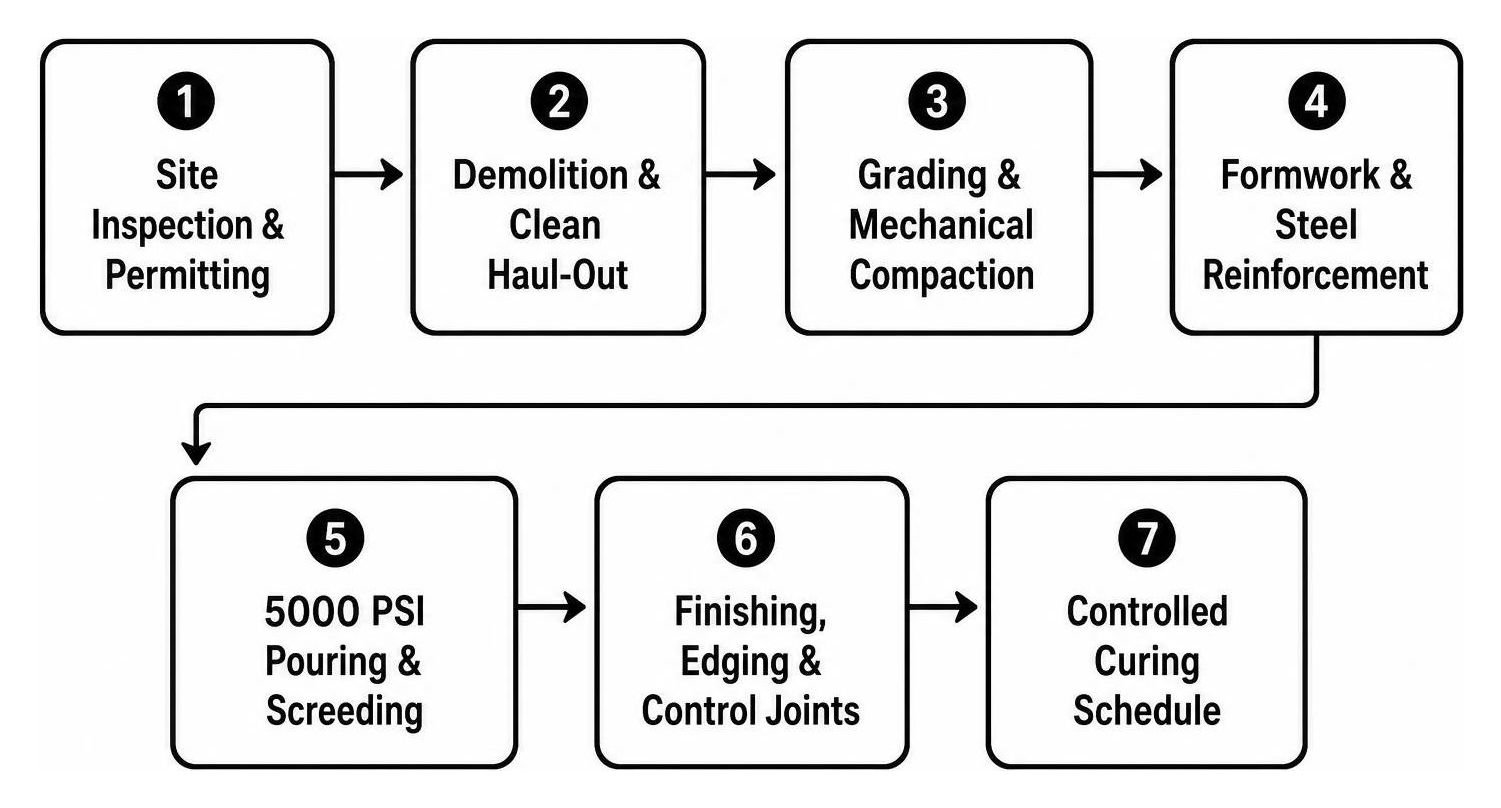
A typical replacement project may include:
- Site evaluation and planning: Review access, drainage, adjoining surfaces, utilities, and any applicable permitting requirements.
- Demolition and removal: Remove the damaged driveway concrete and expose the underlying area.
- Base evaluation and preparation: Correct unsuitable or poorly supported areas and prepare the site for the new slab.
- Drainage and grading: Plan the finished elevation around the property’s drainage conditions.
- Concrete placement: Install the new driveway using reinforcement where appropriate and concrete specifications suited to the project.
- Finishing, joints, and curing: Finish the surface, provide appropriate jointing, and protect the concrete as it gains strength.
Placement, Finishing, Joints, and Curing
After placement, the driveway is finished according to the selected surface and project requirements. Control joints are planned to help manage shrinkage and provide intentional locations for movement as the concrete cures.
Joint spacing and layout should be appropriate to the slab geometry and installation rather than applied as one universal dimension.
For the complete process, read our guide to concrete driveway removal and replacement.
What Affects the Cost to Replace Driveway Concrete?
The cost of replacing driveway concrete depends on the size of the affected area, demolition requirements, access, existing base condition, drainage corrections, driveway layout, concrete specifications, finish, and any work required within a public right-of-way.
Additional factors can include:
- Amount of concrete that must be removed
- Condition of the soil or base exposed after demolition
- Drainage or grading corrections
- Vehicle loads and intended use
- Selected finish or decorative features
- Apron, culvert, or right-of-way work where applicable
For detailed budgeting information, read our driveway replacement cost guide.
What to Ask Before You Replace a Concrete Driveway
Before choosing a contractor, make sure competing proposals are describing the same scope of work.
- Why are you recommending replacement instead of repair?
- What do you believe caused the existing driveway damage?
- What demolition and removal are included?
- How will the exposed soil and base be evaluated?
- How will drainage and grading be addressed?
- What concrete specifications and reinforcement are included?
- Who is responsible for permits or right-of-way requirements if applicable?
- What curing and vehicle-access instructions will be provided?
- Is a workmanship warranty offered, and if so, what does it cover?
Before excavation begins, the contractor should follow Sunshine 811 safe-digging requirements so underground utilities are identified before demolition or site preparation.
If replacement work extends into a public right-of-way, driveway apron, culvert, or County-controlled connection, additional requirements may apply. Homeowners should review Brevard County right-of-way requirements or check with the applicable municipality before work begins.
A lower estimate may reflect a different scope rather than the same project at a lower price, so compare preparation, drainage, demolition, concrete work, restoration and exclusions carefully.
Frequently Asked Questions About Driveway Replacement
How long does concrete driveway replacement take?
The project timeline depends on driveway size, demolition, access, base or drainage corrections, weather, concrete placement, and curing requirements.
After new concrete is placed, light foot traffic is often possible after roughly 24–48 hours, but vehicle access should follow the project-specific instructions provided by the contractor. Concrete continues gaining strength through the first week and generally reaches its specified design strength around day 28 under standard curing assumptions.
How thick should a replacement concrete driveway be?
Driveway thickness should be planned around site conditions, expected vehicle loads, supporting base conditions, and applicable project requirements. A driveway used only by passenger vehicles may have different needs from one regularly supporting RVs, trailers, or heavier work vehicles.
Those uses should be discussed before construction so the slab and reinforcement can be planned appropriately for the project.
Can new concrete be placed over an existing driveway?
Whether an existing driveway can be covered or resurfaced depends on its condition, elevation, drainage, and the type of system being considered. If the old slab is moving, badly cracked, poorly supported, or already creating elevation problems, covering it does not correct those underlying conditions.
When full replacement is recommended, removing the existing concrete allows the contractor to inspect and prepare the area beneath it before installing the new driveway.
Deciding When to Replace a Concrete Driveway in Brevard County
The decision to repair or replace a driveway should be based on more than appearance. Widespread deterioration, settlement, recurring drainage problems, damaged support, and changing project needs can all influence whether preserving the existing concrete is still practical.
After more than 40 years installing residential concrete throughout Brevard County, JCD Concrete Inc. understands how sandy soil, rainfall, drainage, vehicle use and site preparation can affect driveway performance. We exclusively install 5000 PSI concrete on residential projects while treating concrete strength as one part of the complete installation. For more detail on that residential standard, read our guide to a 5000 PSI concrete driveway.
If you’re evaluating damaged driveway concrete, explore JCD Concrete Inc.’s concrete driveway services or contact us to request an estimate.