What to Know Before Planning a Stamped Concrete Patio in Satellite Beach

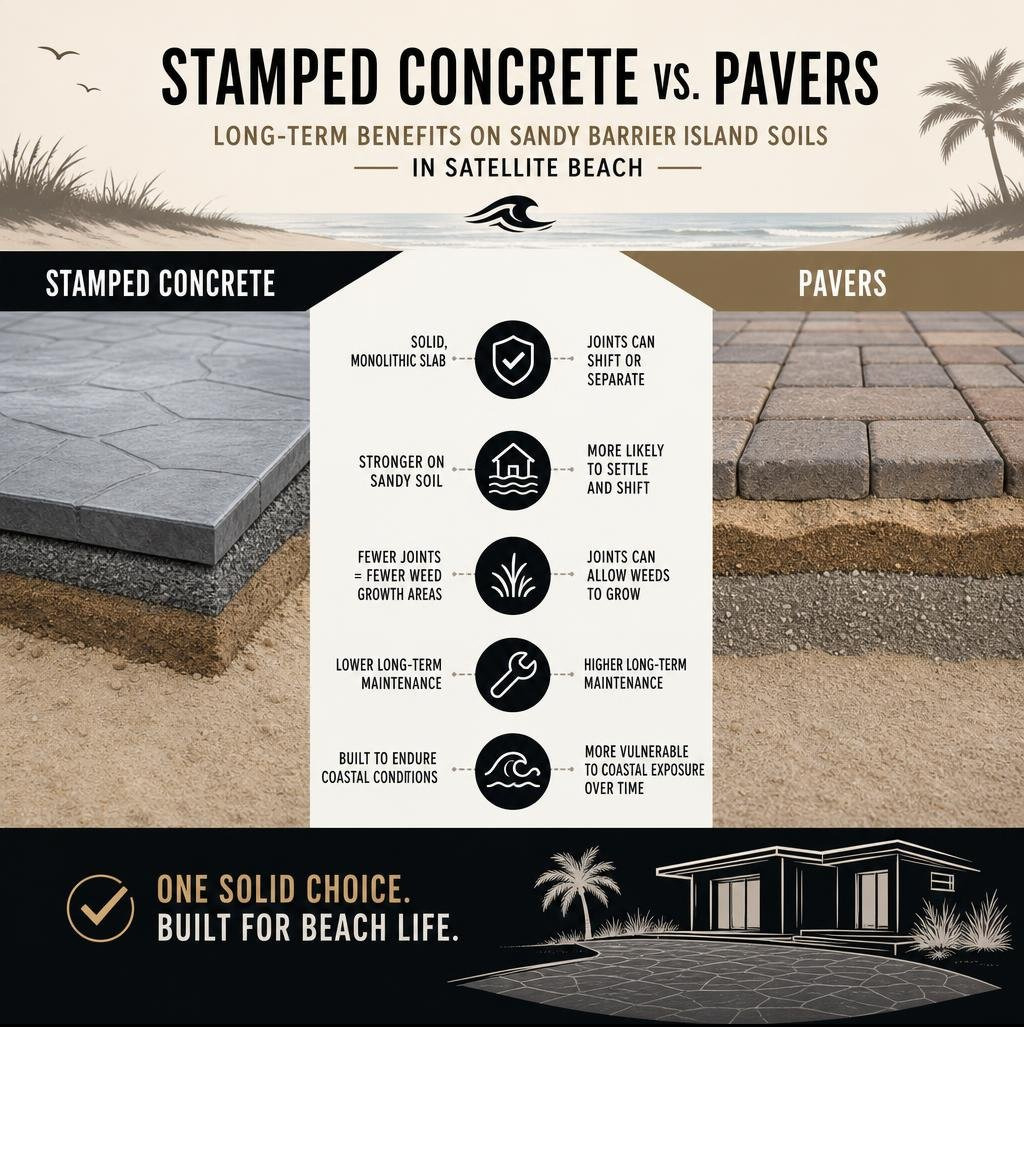
A stamped concrete patio in Satellite Beach gives you the look of natural stone or brick on a single solid slab, without the joints where weeds grow or pavers shift in sandy soil. Here is a quick overview of what most homeowners want to know before getting started:
- What it is: Freshly poured concrete pressed with textured molds to mimic stone, brick, slate, or wood before it sets.
- Why it works here: Satellite Beach sits between the Atlantic Ocean and the Indian River Lagoon. Salt air affects every property. A properly sealed stamped slab holds up far better than loose paver systems over sandy coastal soil.
- Cost range: Decorative concrete in Brevard County typically runs $7 to $15 per square foot installed, with barrier island projects often running higher due to marine-grade materials and site access.
- Maintenance: Resealing every one to two years near the coast keeps the surface protected and looking sharp.
- Permits: Most patio projects in Satellite Beach require a permit through Brevard County Building Services before work begins.
- Cure time: Most patios can handle light foot traffic within 24–48 hours, but concrete continues curing for approximately 28 days before reaching its full design strength.
Satellite Beach is a compact barrier island community, with most homes sitting on lots of 6,000 to 8,000 square feet and housing stock that dates back to the Space Race era of the 1960s and 1970s. That combination of small yards, aging infrastructure, and relentless coastal exposure means your patio needs proper installation from the ground up, not just a finish that looks good on day one.
I’m John DomBek, owner of JCD Concrete Inc., and over my 40 years of experience installing residential concrete throughout Brevard County, I’ve completed many stamped concrete patio projects in Satellite Beach, FL where proper base preparation and coastal-grade sealing made the difference between a surface that lasts and one that degrades in a few seasons. This guide walks you through everything you need to plan your project with confidence.
Planning and Contractor Selection for Your Stamped Concrete Patio in Satellite Beach
_compressed.webp?alt=media&token=09cec949-46a5-4a78-b47a-af64924bbf30 "stamped concrete patio Satellite Beach with gray slate-style stamped concrete finish")
Planning a new outdoor living space on a barrier island requires a different approach than planning one on the mainland. Because homes in Satellite Beach are nestled closely together, accessing backyards with heavy machinery and concrete trucks takes careful coordination. Before you begin choosing patterns or colors, finding the right partner to execute your vision is the most critical step. If you are looking for guidance on finding local help, you can read more about how to choose concrete patio installers in Brevard County to see how we approach local projects.
Choosing a Licensed and Insured Contractor
One mistake we regularly see homeowners make is hiring a contractor based solely on the lowest bid, only to find out the crew subcontracts the entire project to workers who do not understand coastal conditions. At JCD Concrete Inc., we believe in owner-operated oversight. I am on-site for our jobs to make sure our high standards are met at every phase, from the initial excavation to the final decorative seal.
When you are comparing estimates from local professionals, always verify that they are licensed and insured to work in Brevard County. A reputable contractor will provide a detailed, written proposal that outlines:
- Demolition and removal of any existing structures or old slabs
- Ground preparation, soil stabilization, and sub-base compaction
- Concrete mix specifications and reinforcement details
- Decorative pattern, coloring methods, and sealer types
- A realistic timeline and permit handling responsibilities
One of the most important technical details to look for is the concrete mix design. To withstand the unique stresses of our coastal environment, JCD Concrete Inc. installs 5000 PSI concrete as a premium standard on our residential projects. While standard 4000 PSI concrete is a legitimate industry baseline, it is more susceptible to salt-air intrusion, surface spalling, and cracking over time in harsh marine environments. By utilizing 5000 PSI concrete, we ensure your patio has the density and strength required to resist the elements for decades.
Permitting and HOA Regulations in Brevard County
Before a single shovel touches your yard, you must secure the proper municipal permissions. For homes in Satellite Beach, FL, permitting is processed through Brevard County Building Services or the local city building department, depending on your exact address. Building codes on the barrier island are strict, particularly regarding impervious surface ratios (the amount of your lot covered by structures or concrete that prevents rainwater from soaking into the ground).
In addition to municipal permits, you must navigate your Homeowners Association (HOA) rules if you live in a deed-restricted community. Most HOAs require an Architectural Review Committee (ARC) application before you can install a new patio. This application usually requires a copy of your property survey showing the proposed patio footprint, details on the stamped pattern and color palette, border choices, finished elevations, and proof that your contractor is fully licensed and insured. We regularly help our clients prepare this documentation to ensure a smooth, hassle-free approval process.
Why Stamped Concrete Outperforms Pavers in Coastal Climates
When deciding on a material for your new patio, pool deck, or lanai, you will likely compare stamped concrete to traditional interlocking pavers or natural stone. To help you evaluate your options, let us look at how these materials perform over time in our unique coastal environment. If you want a broader breakdown of the tradeoffs between slab concrete and paver systems, read our guide to the pros and cons of concrete vs. pavers. You can also explore our resources on concrete patios in Brevard County, FL for more general patio style ideas.
| Metric | Stamped Concrete (5000 PSI) | Traditional Interlocking Pavers | Natural Stone (Travertine/Slate) |
|---|---|---|---|
| Structural Stability | Exceptional; single monolithic slab reinforced with steel. | Moderate; prone to shifting, settling, and washouts in sand. | Moderate; individual pieces can loosen or crack over sandy soil. |
| Weed & Pest Prevention | Eliminates joints where weeds commonly grow. | Low; joints commonly collect sand, seeds, weeds, and ants. | Moderate; requires regular joint maintenance or mortar repairs. |
| Salt Air Resistance | High when properly sealed and maintained. | Moderate; salt can cause erosion and surface crumbling. | High, but highly porous stones require frequent sealing. |
| Stormwater Drainage | Predictable when properly graded to shed water away from walls. | Variable; water can erode the sub-base sand beneath joints. | Variable; relies heavily on the quality of the underlying base. |
| Maintenance | Minimal; basic wash and reseal every 1 to 2 years. | High; requires weeding, pressure washing, and re-sanding. | Moderate; periodic deep cleaning and sealing required. |
Coastal Climate Resilience Against Salt Air and Humidity
Satellite Beach properties are subject to dual salt exposure, receiving ocean spray from the Atlantic Ocean on the east and brackish moisture from the Indian River Lagoon on the west. This constant salt air, combined with intense subtropical humidity and UV exposure, accelerates the wear and tear on outdoor surfaces.
Over time, salt and moisture can work into outdoor surfaces, especially when those surfaces are not sealed or maintained. Lower-strength or unsealed concrete may be more likely to flake, scale, or wear down in harsh coastal conditions. Paver systems generally require more ongoing maintenance because weeds, ants, and joint sand loss are common over time. A solid, monolithic slab of 5000 PSI stamped concrete, protected by a specialized, UV-resistant sealer, creates a durable protective barrier that helps reduce moisture and salt intrusion when properly maintained.
Managing Florida’s Wet Season and Stormwater Drainage
Our local rainy season runs from June through September, bringing heavy daily afternoon thunderstorms. During these intense downpours, millions of gallons of water fall across the barrier island. If your patio is not installed correctly, this water can pool against your home’s foundation, erode your landscaping, or wash out the soil supporting your outdoor structures.
One mistake we frequently see on barrier island projects is homeowners focusing entirely on the stamped pattern while overlooking drainage. In our experience, a beautiful patio will not stay beautiful if water is not directed away from the home.
One issue we frequently encounter with older paver patios is base erosion. When heavy rainwater flows across a paver surface, it can seep into the joints, washing away the joint sand and eventually undermining the underlying bedding sand. This leads to sunken areas, trip hazards, and uneven surfaces.
Because stamped concrete is a single, continuous slab, rainwater flows evenly across its surface without penetrating the base. During the planning phase, we carefully calculate the positive grading of your patio, ensuring a subtle slope that directs all stormwater runoff safely away from your home and toward designated drainage areas or swales.
Design Options: Patterns, Colors, and Finishes for Barrier Island Homes
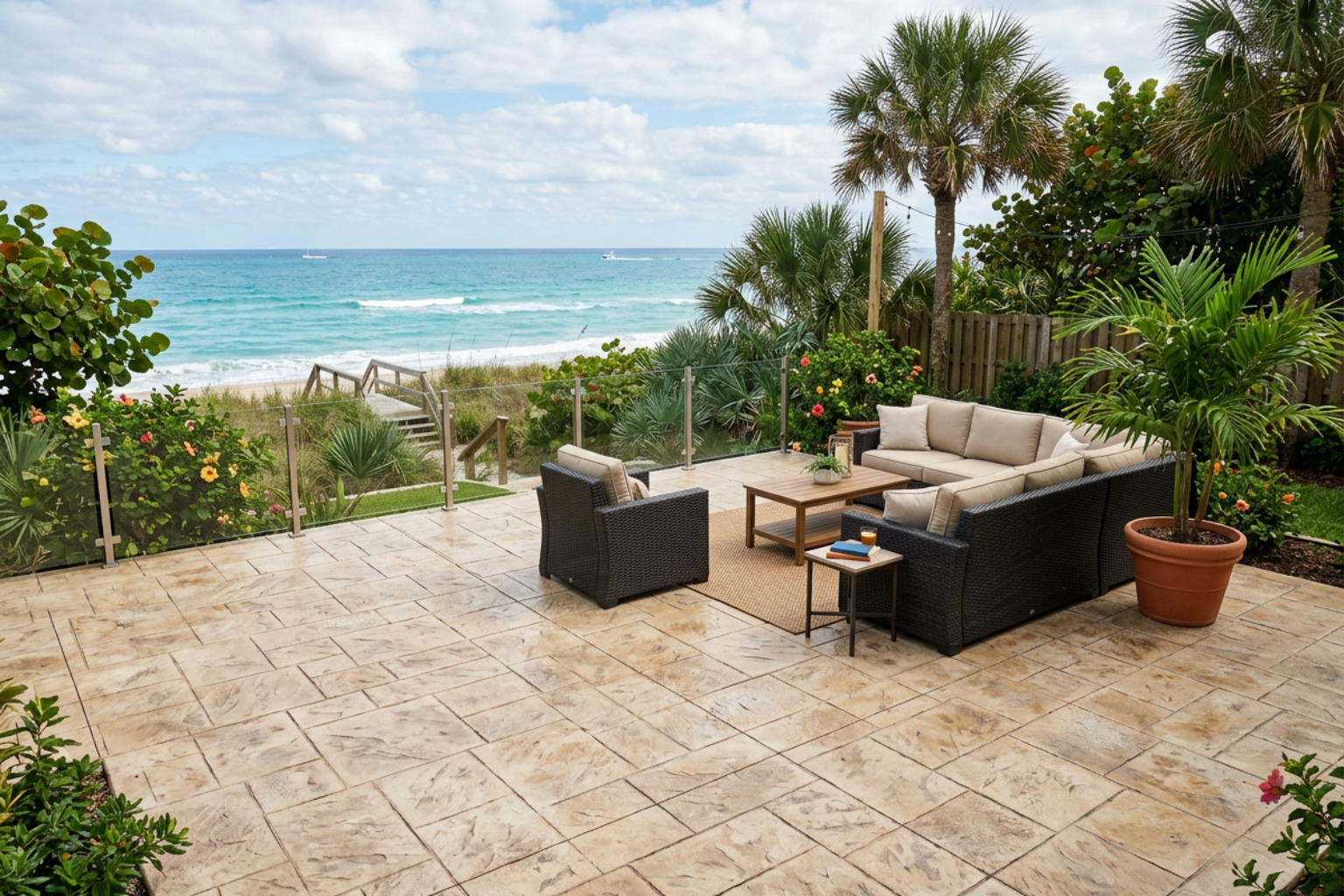
One of the biggest advantages of choosing a stamped concrete patio in Satellite Beach is that you are not locked into one basic look. The pattern, color, border, and finish can all be tailored to the style of your home, the size of your yard, and how you actually plan to use the space. For a broader overview of decorative options, see our main stamped concrete service page.
Instead of asking only, “What does stamped concrete look like?” a better question is, “Which patio would look natural with my home?” That is where a good contractor can help you compare patterns, color samples, borders, and long-term maintenance before the slab is poured.
Which Stamped Concrete Pattern Fits Your Home?
Different stamped concrete patterns create very different impressions. A beach cottage patio should usually feel relaxed and natural, while a modern coastal home may call for cleaner lines and a more subtle texture.
| Home Style | Recommended Pattern | Why It Works |
|---|---|---|
| Beach Cottage | Ashlar Slate | Gives the patio a natural stone look without feeling too formal. |
| Coastal Contemporary | Seamless Slate | Creates a cleaner, less busy surface that works well with modern exterior lines. |
| Mediterranean | Roman Slate | Pairs well with stucco, arched details, tile roofs, and warmer color palettes. |
| Traditional | Brick | Fits classic homes, walkways, borders, and more structured patio layouts. |
| Modern | Wood Plank | Adds warmth and texture while avoiding the maintenance problems of real wood in coastal humidity. |
Ashlar slate remains one of the most popular choices in Brevard County because it gives homeowners the look of natural stone while still working with many different architectural styles. Seamless slate is a strong option when you want the patio to feel more understated. Brick and cobblestone patterns can work well for borders, walkways, and more traditional homes, while wood plank stamping is often a good fit for homeowners who like the look of a deck but do not want wood rot, splinters, or constant refinishing.
For patios near pools, outdoor showers, or wet areas, pattern selection should also consider traction. We typically recommend textures that provide a more natural grip and can be paired with a slip-resistant additive in the sealer when appropriate.
Color Guide for Satellite Beach Homes
Color has just as much impact as the stamp pattern. In Satellite Beach, lighter colors are usually more comfortable underfoot and tend to blend better with coastal architecture. Dark colors can look dramatic, but they absorb more heat and may feel too heavy for smaller barrier island yards.
| Current Siding or Exterior Color | Recommended Concrete Color | Roof Color | Border Color |
|---|---|---|---|
| White or Off-White | Light gray, coquina, or soft beige | Gray, metal, or light shingle roof | Charcoal, medium gray, or tan border |
| Light Blue or Coastal Blue | Sandy beige or light gray | Gray or silver roof | Slate gray or muted charcoal border |
| Tan, Cream, or Stucco | Warm beige, limestone, or light terra cotta | Brown, tan, or tile roof | Dark tan, walnut, or soft brown border |
| Gray Exterior | Soft gray, limestone, or pale sand | Charcoal or gray roof | Charcoal, slate, or contrasting light border |
| Coral, Peach, or Warm Coastal Colors | Coquina, cream, or muted terra cotta | Brown, tan, or tile roof | Medium brown or warm gray border |
The goal is not to match every surface exactly. A patio usually looks better when the main slab color complements the home and the border adds just enough contrast to frame the space. For many Satellite Beach homes, a lighter field color with a slightly darker border gives the patio definition without making the yard feel smaller.
To achieve a realistic, multi-dimensional look, we may use a combination of integral color, surface color, release agents, and sealers. Integral color is mixed into the concrete before the pour, while release agents and surface coloring can add depth to the texture lines so the stamped pattern looks more like real stone, brick, or wood.
The Installation Process: Proper Site Preparation for Sandy Soils and High Humidity
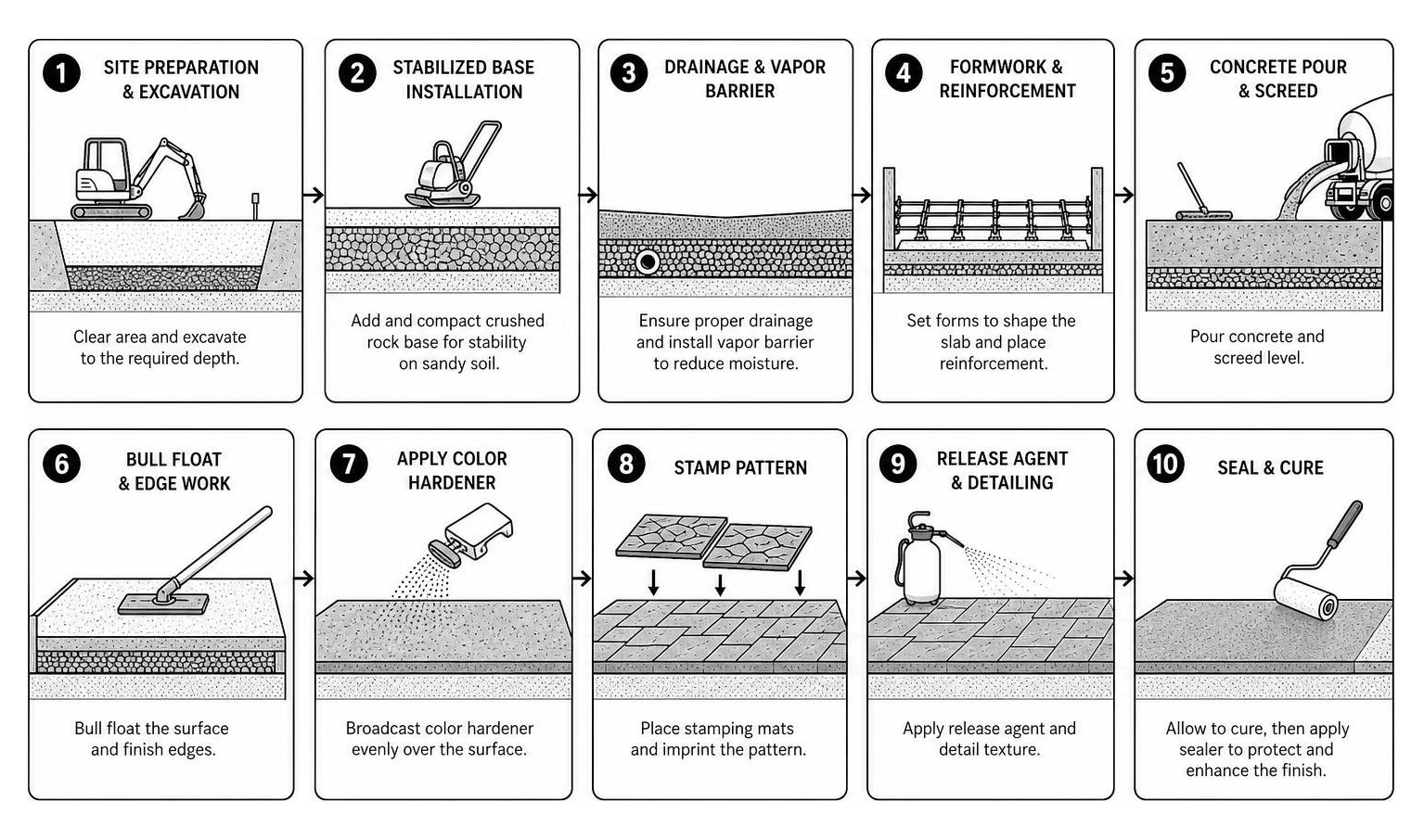
A beautiful stamped finish is only as reliable as the preparation underneath it. In Satellite Beach, patios have to deal with sandy ground, coastal moisture, tight access, and Florida heat. That is why the work before the pour matters just as much as the pattern and color you choose.
Proper Construction for Sandy Coastal Soils
Sandy soil drains quickly, but it can also move and settle if the patio base is not prepared correctly. If concrete is poured over loose or uneven ground, the slab may look fine at first and then develop cracks, low spots, or drainage problems later.
Our installation process starts with removing unsuitable material, checking the patio layout, and preparing the area for a stable pour. We build on a properly prepared and compacted base, then reinforce the slab based on the project needs. This helps the patio perform as one solid surface instead of shifting in isolated areas over time.
Curing and Sealing in High Heat and Humidity
The climate in Satellite Beach also affects how the concrete is poured and finished. Hot, humid weather can make timing more important, especially when a stamped pattern and color release are involved. If the crew is rushed or the surface is not managed properly, the final texture and finish can suffer.
To avoid those problems, we plan pours carefully and often schedule work during the cooler part of the day when conditions call for it. Once the concrete is poured, leveled, and stamped, we monitor the surface, clean off excess release agent after the concrete has cured enough, and cut control joints in the right locations. Whenever possible, those joints are worked into the stamped pattern so they are less noticeable.
Finally, we apply a premium, UV-resistant, marine-grade sealer. This step is crucial on the barrier island, as it helps lock out moisture, reduce salt-air wear, and protect the rich color pigments from fading under the Florida sun.
Cost Breakdown, Maintenance, and FAQs for Satellite Beach Patios
Investing in a stamped concrete patio in Satellite Beach is a smart way to add long-term value, curb appeal, and functionality to your property. To help you budget and plan for your upcoming project, you can review our guides to concrete patio costs in Brevard County, FL and concrete patio installation costs in Brevard County, FL for a detailed look at financial planning. If your project also includes front-yard access, parking, or a larger exterior upgrade, our concrete driveway installation service page can help you compare related concrete improvements.
While standard concrete pads in the region might have a lower initial cost per square foot, a decorative stamped finish is a premium architectural upgrade. Because barrier island projects require specialized sealers, precise base preparation in sandy soil, and careful access planning, they represent a long-term investment in your home’s outdoor living potential.
Patio Features Worth Adding During Construction
The best time to think about future patio features is before the concrete is poured. Once the slab is installed, adding utilities, footings, drainage routes, or built-in features can become more expensive and disruptive. Even if you are not ready to build everything at once, planning ahead can make the patio more useful for years.
Common upgrades worth discussing during the planning phase include:
| Feature | Why Plan for It Before the Pour? |
|---|---|
| Fire pits | Helps determine safe placement, seating clearance, and whether a separate pad or gas line planning is needed. |
| Seating walls | May require layout adjustments, edge support, or coordination with landscaping. |
| Outdoor kitchens | Should be planned around appliance clearances, weight, access, and possible utility routes. |
| Lighting conduit | Conduit can often be planned before the slab is finished so future lighting is easier to install. |
| Drainage | Proper grading, swales, and runoff paths should be considered before the patio footprint is finalized. |
| Pergolas | Post locations and attachment points should be discussed early so the patio layout supports the structure. |
| Future hot tubs | Hot tubs are heavy, so the slab area, thickness, reinforcement, access, and electrical planning should be evaluated before construction. |
After more than 40 years installing concrete throughout Brevard County, one of the most valuable lessons we have learned is that homeowners rarely regret planning for future use. They are much more likely to regret pouring a patio that looks good, but does not have the right space, drainage, utilities, or layout for how they want to live outside.
Is stamped concrete slippery around pool decks?
This is one of the most common questions we hear from homeowners. While a highly glossy, sealed concrete surface can be slick when wet, we reduce that risk by choosing patterns with inherent surface texture, like slate or stone, and mixing a specialized polymer slip-resistant additive directly into our sealers when appropriate. This can help improve traction around pool areas when the surface is properly maintained.
How do you prevent stamped concrete from cracking in Florida’s heat?
All concrete expands and contracts with temperature changes. To manage this natural movement without unsightly cracks, we take four critical steps:
- We use 5000 PSI concrete because it provides greater compressive strength and long-term durability, but proper site preparation, reinforcement, joint placement, and drainage remain just as important for minimizing cracking.
- We install steel reinforcement to help hold the slab together.
- We cut deep control joints at precise intervals, hiding them within the stamped pattern lines so the concrete can expand and contract safely.
- We grade the patio correctly so stormwater moves away from the home and does not undermine the slab.
Can you stamp an overlay on an existing patio slab?
If you have an existing concrete patio that is structurally sound but looks tired, faded, or dated, we can often apply a stamped acrylic overlay. This involves thoroughly cleaning and prepping your old slab, applying a thin, high-strength polymer concrete overlay, and stamping it with your chosen pattern. However, if your existing slab is severely cracked, settling, or has major drainage issues, a full replacement is always the better, more durable long-term investment.
Conclusion
A custom stamped concrete patio in Satellite Beach is more than just a place to put your grill; it is an extension of your indoor living space designed to withstand the unique challenges of barrier island living. From the constant salt air and intense humidity to shifting sandy soils and heavy summer downpours, your outdoor surfaces need proper construction to last.
With JCD Concrete Inc., you get the peace of mind that comes with over 40 years of local, owner-operated experience. By using premium 5000 PSI concrete, stabilizing our bases for coastal sand, and applying marine-grade protective sealers, we build beautiful patios designed to perform well in Satellite Beach’s coastal conditions.
Ready to start planning your outdoor transformation?
- Explore our concrete patio services to see the various styles and options we offer.
- View our full range of residential solutions, including driveways, sidewalks, and slabs, on our main concrete services page.
- When you are ready for a professional, on-site estimate tailored to your property, contact JCD Concrete Inc. today. Let’s build a space you will love for years to come.