How to Evaluate Concrete Lifting Contractors Near You
Homeowners often start searching for concrete lifting contractors near me after noticing a driveway, sidewalk, patio, or other concrete surface that has settled or become uneven.
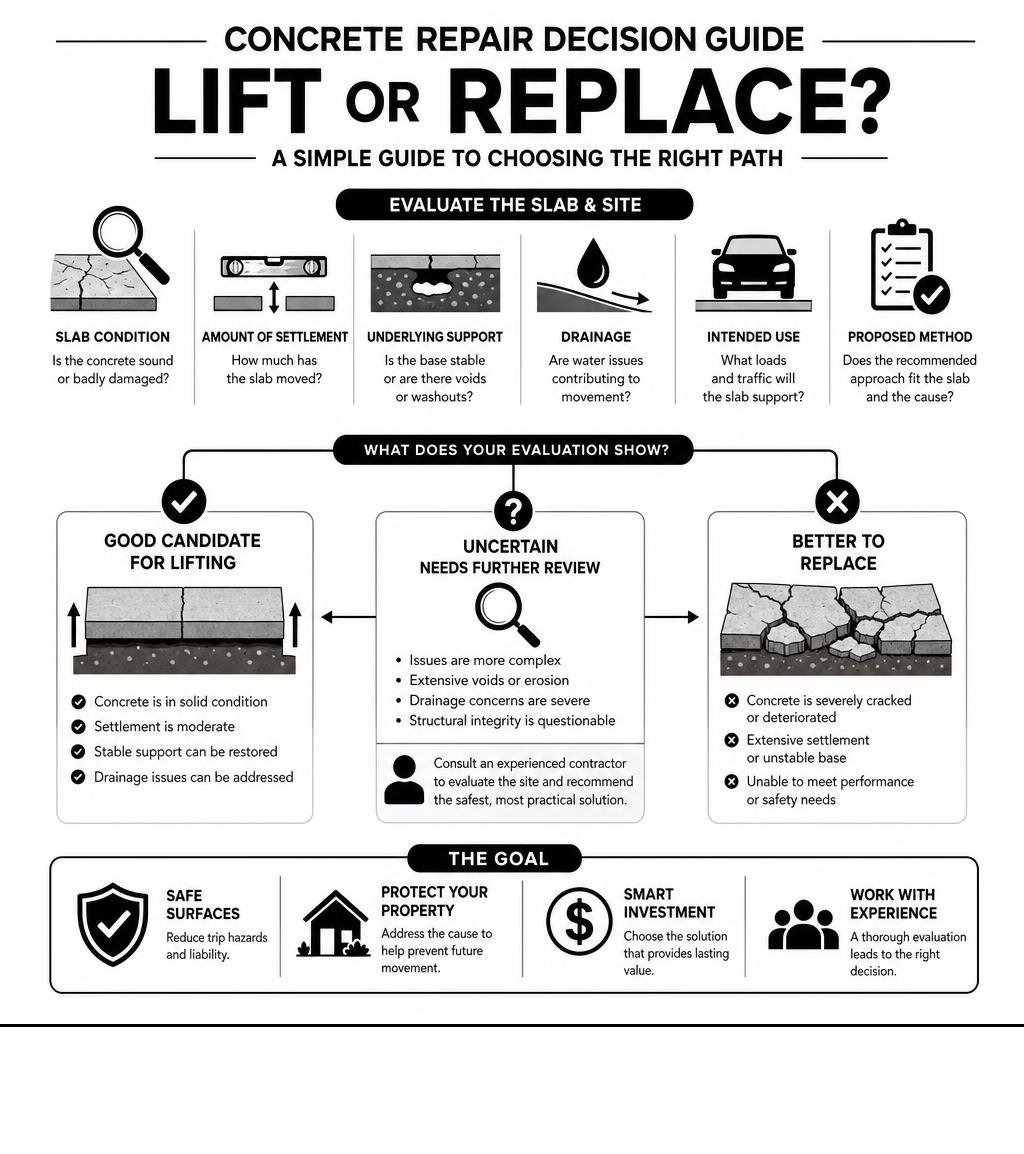
The first question should not be which lifting method is fastest. A contractor should first determine why the concrete moved, whether the existing slab is still in suitable condition to preserve, and whether drainage, erosion, or loss of soil support needs to be addressed as part of the repair.
I’m John DomBek, owner of JCD Concrete Inc., and after more than 40 years installing residential concrete throughout Brevard County, we’ve seen how sandy soil, stormwater, drainage problems, and inadequate support can contribute to settlement around driveways and other flatwork.
The right decision depends on the condition of the existing concrete and the reason it moved.
| What to Check | Why It Matters |
|---|---|
| Slab condition | Heavily fractured or deteriorated concrete may not be practical to lift. |
| Amount of settlement | Helps determine whether correction is feasible. |
| Underlying support | Washout or voids can allow movement to recur. |
| Drainage | Water problems may need correction in addition to the slab. |
| Intended use | Vehicle loads, pedestrian traffic, and concentrated loads matter. |
| Proposed method | The contractor should explain why the recommended approach fits the slab. |
A sunken driveway or settled patio is more than an aesthetic issue. In Brevard County, FL, where seasonal rainfall, sandy soils, drainage patterns, and site preparation all affect slab performance, an uneven surface can become a trip hazard and a sign that support beneath the concrete has changed. Concrete lifting may be appropriate for some settled slabs, while concrete replacement may be the better choice when the concrete is badly fractured, deteriorated, or no longer practical to preserve. This guide explains how to evaluate the slab, the site conditions, and the concrete lifting contractor before choosing a repair path.
Why Concrete Slabs Settle in Brevard County
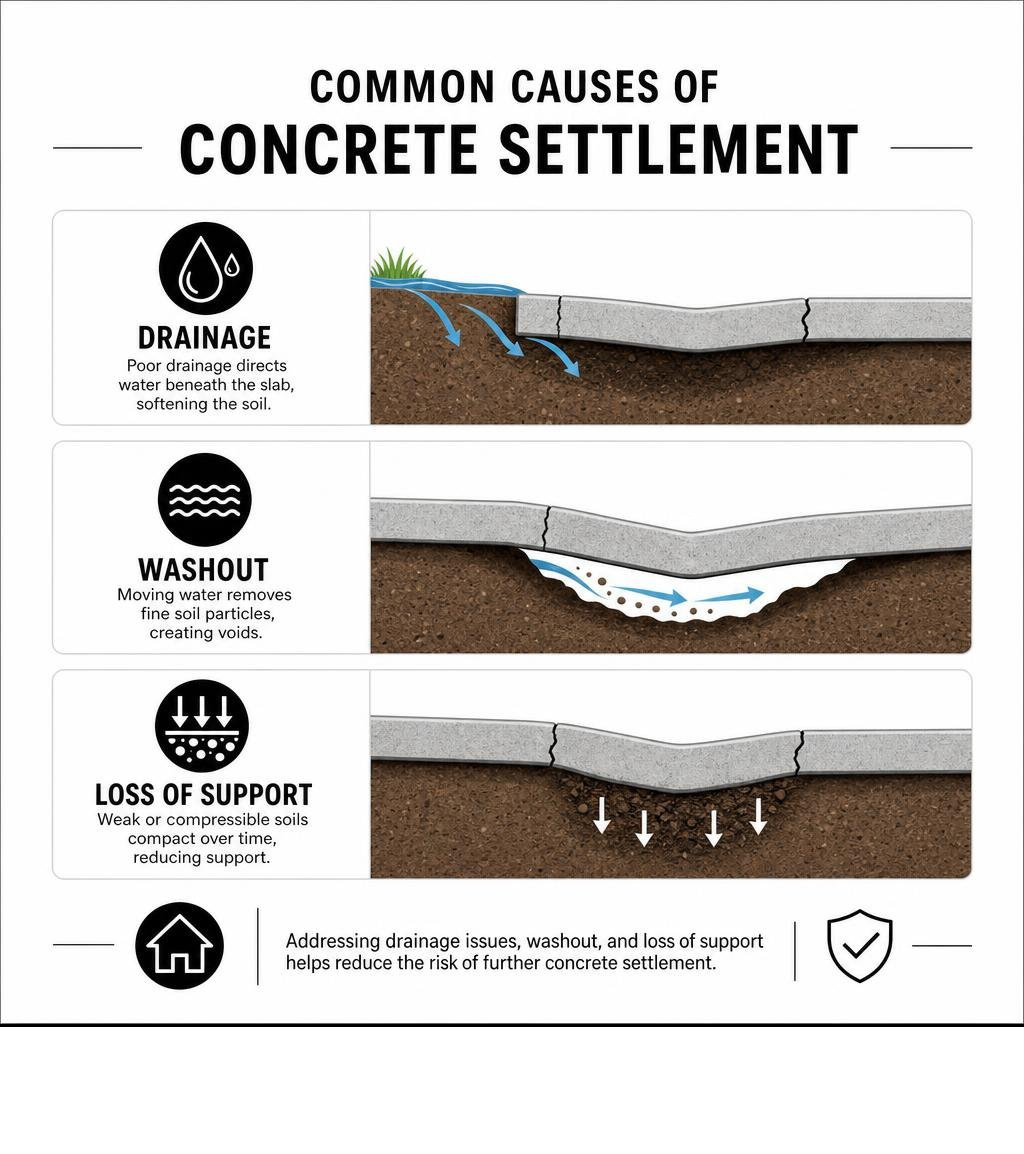
Concrete depends on consistent support beneath the slab. When supporting soil settles, erodes or washes away, part of the concrete can lose support and begin to move. UF/IFAS guidance on Florida urban soils discusses sandy soil conditions, compaction and drainage, which is another reason site conditions should be evaluated before deciding how to correct settled concrete.
In Brevard County, sandy soil, seasonal rainfall, drainage conditions, and high water tables in some areas can contribute to settlement or erosion when water is not properly managed. Other site conditions, including inadequate compaction, leaking drainage infrastructure, roots, or previous excavation, can also affect support beneath existing concrete.
One issue we frequently encounter is water moving along the edge of a slab or through poorly supported areas and carrying sandy soil away. That is why the source of settlement should be evaluated before deciding whether lifting, another repair, or replacement is appropriate.
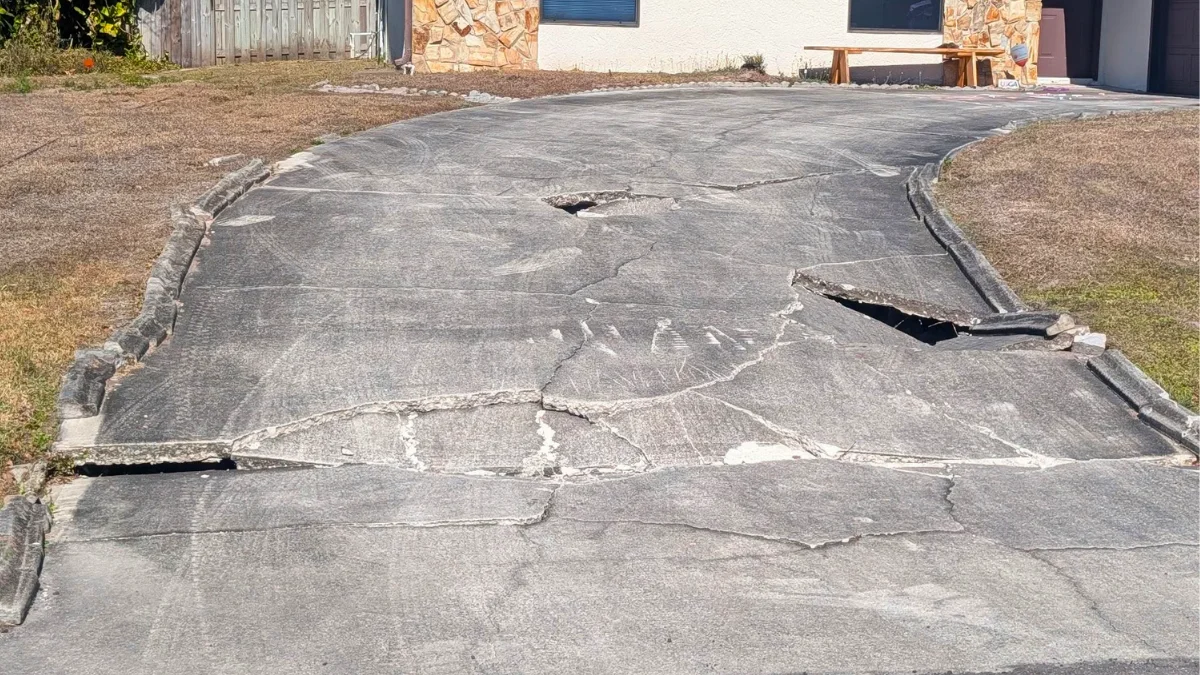
Once a void or weak area forms, the concrete slab may lose uniform support. Under vehicle loads, pedestrian traffic, or its own weight, a settled slab can become uneven, cracked, or sunken.
What Does Concrete Lifting Mean?
Concrete lifting or leveling generally refers to correcting the elevation of an existing slab rather than removing and replacing the entire section. The specific corrective method can vary by contractor, slab condition, site conditions, and the reason the concrete settled.
A qualified contractor should explain the method being recommended, what problem it is intended to correct, and whether additional drainage or support work is needed to reduce the risk of recurring movement.
What Should a Concrete Lifting Contractor Evaluate?
| Condition | Why It Matters |
|---|---|
| Cracking and surface deterioration | Determines whether the slab has enough remaining integrity to preserve |
| Settlement pattern | Helps distinguish localized movement from a broader support problem |
| Voids or lost support | Underlying instability may need correction before elevation can be restored |
| Drainage and runoff | Recurring water movement can contribute to future settlement |
| Adjacent concrete | The repaired elevation needs to work with adjoining slabs, entrances, curbs, or structures |
| Intended use | Vehicle traffic, pedestrian use, and concentrated loads can affect the recommended solution |
What Types of Uneven Concrete May Be Evaluated for Lifting?
Whether a slab can be lifted depends on its condition, support, use, and the cause of settlement. Common residential areas that may warrant evaluation include:
- Driveways: Settled sections can create uneven transitions or drainage problems.
- Sidewalks and walkways: Displaced slabs can create uneven walking surfaces.
- Patios: Settlement can affect surface drainage and transitions to adjoining areas.
- Concrete flatwork: Other mostly intact residential slabs may also be candidates depending on their condition and use.
Concrete that is extensively fractured, deteriorated, or affected by an underlying condition that cannot be corrected while the slab remains in place may be better suited for repair or replacement.
What Affects the Cost of Concrete Lifting?
The cost of correcting settled concrete depends on the size of the affected area, amount of movement, slab condition, site access, underlying support or drainage problems, and the corrective method recommended after evaluation.
When comparing lifting with replacement, compare the complete scope rather than the headline price. One proposal may include drainage or support corrections that another does not, and extensively damaged concrete may require a different approach altogether.
If replacement is being considered, our guide to concrete driveway installation explains the factors involved in rebuilding a driveway section.
Concrete Lifting vs. Replacement: What Should Be Considered?
| Condition | Possible Direction | What Needs Evaluation |
|---|---|---|
| Mostly intact slab with localized settlement | Lifting or targeted correction may be worth evaluating | Remaining slab integrity, amount of movement, support, and drainage |
| Localized cracking or edge damage | Repair may be possible | Whether damage is isolated or tied to ongoing settlement |
| Recurring washout or erosion | Underlying drainage/support problem needs attention | Water movement and whether support can be restored |
| Widespread cracking or deterioration | Replacement may be more practical | Whether the existing concrete can reasonably be preserved |
| Homeowner wants a different size, layout, or elevation | Replacement may better fit the new design | New use, grading, drainage, and project scope |
How to Compare Concrete Lifting Contractors Near Me
If you’re comparing concrete lifting contractors near me, focus on how each contractor diagnoses the problem and explains the recommended solution rather than choosing solely on price or repair speed.
A strong proposal should identify the affected concrete, explain the suspected cause of settlement, describe the corrective method being recommended, address drainage or support issues where relevant, and clarify what happens if the slab turns out not to be a good candidate for lifting.
Ask contractors for proof of the licensing and insurance coverage applicable to the work, and confirm any local requirements for your jurisdiction. A professional proposal should clearly describe the scope of work, the proposed corrective method and how drainage or lost support beneath the slab will be addressed where relevant.
Ask who will supervise the work and who your main point of contact will be throughout the project. JCD Concrete Inc. is owner-operated, giving homeowners a clear point of responsibility from evaluation through completion. A useful contractor conversation should focus on slab condition, drainage, the likely cause of settlement and why lifting, another repair or replacement is being recommended.
For more guidance on evaluating local professionals, read our guide to choosing a concrete contractor in Brevard County.
What to Look For in a Local Concrete Lifting Contractor
Local experience can be useful because Brevard County properties may involve sandy soil, seasonal rainfall, swales, culverts, high water tables in some areas, and other drainage conditions that can affect support beneath concrete.
The contractor should evaluate how water moves around the affected slab and whether drainage or erosion contributed to the settlement before recommending a corrective approach.
For more information about the preparation and installation of new concrete, read our guide to concrete slab installation.
Questions to Ask a Concrete Lifting Contractor
- What do you believe caused the concrete to settle?
- Is the existing slab a good candidate for lifting, and why?
- What corrective method are you recommending?
- Why does that method fit this slab and site?
- How will drainage, washout, or lost soil support be addressed if those conditions contributed to the settlement?
- What areas and repairs are included in the written proposal?
- How long will access to the area be restricted?
- Is a workmanship warranty offered, and if so, what does it cover?
Why Drainage and Support Matter Before Concrete Is Corrected
One mistake we regularly see is focusing only on the visible low spot without considering why the slab moved. If erosion, washout, drainage, or inadequate support contributed to settlement, those conditions should be part of the evaluation.
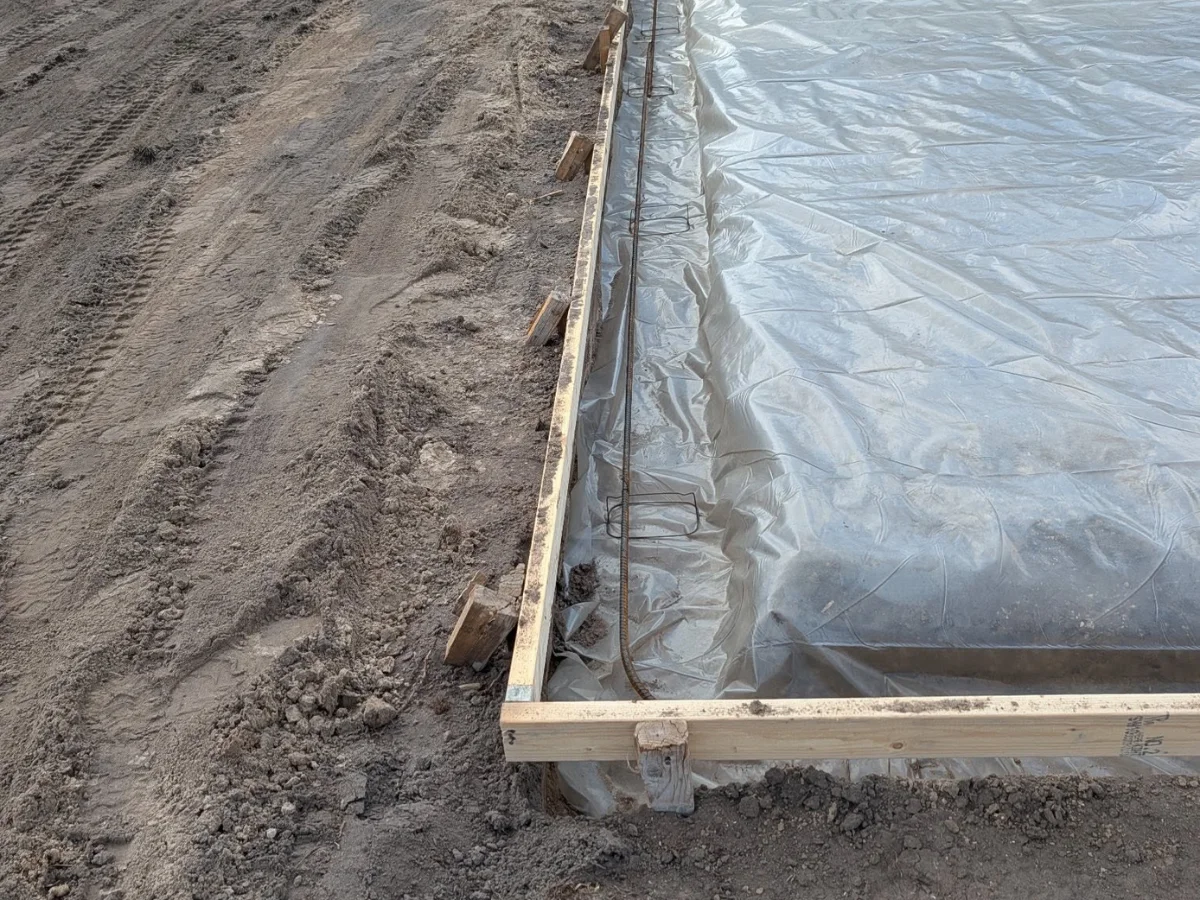
When JCD Concrete Inc. installs new residential concrete, we exclusively use 5000 PSI concrete. We consider concrete strength one part of a durable installation alongside site preparation, drainage, reinforcement where appropriate, placement, finishing, control-joint planning, and curing.
Concrete strength alone does not prevent settlement when support beneath the slab is lost, which is why correcting drainage and base conditions is important whether an existing slab is being evaluated for repair or new concrete is being installed.
Frequently Asked Questions About Concrete Lifting
How long does concrete lifting take?
The timeline depends on the size and condition of the affected area, amount of settlement, site access, corrective method, and whether drainage or support problems need to be addressed as part of the work.
The contractor should provide project-specific guidance for when the repaired area can be used again. If replacement with new concrete is required instead, light foot traffic is often possible after roughly 24–48 hours, with continued strength gain through the first week and specified design strength generally reached around day 28 under standard curing assumptions.
What causes concrete to sink or settle in Brevard County?
Concrete settlement can have more than one cause. Common factors include inadequate soil compaction, erosion or washout, poorly directed runoff, drainage problems, leaking infrastructure, roots, previous excavation, and other changes that reduce support beneath the slab.
In Brevard County, sandy soil and seasonal rainfall can make water management especially important because moving water can carry supporting soil away when drainage conditions allow it.
Does concrete lifting fix the drainage problem that caused settlement?
Not necessarily. Correcting the elevation of a slab does not automatically correct erosion, runoff, washout, or another underlying drainage issue.
If water movement contributed to the settlement, the contractor should evaluate how that condition will be addressed as part of the overall repair plan to reduce the risk of recurring movement.
Choosing a Concrete Lifting Contractor in Brevard County
Uneven concrete should be evaluated based on more than the visible difference in elevation. The condition of the slab, amount of settlement, support beneath the concrete, drainage, and intended use all help determine whether lifting, targeted repair, or replacement is the more practical solution.
After more than 40 years installing residential concrete throughout Brevard County, JCD Concrete Inc. understands how sandy soil, stormwater, drainage, and base support can affect concrete performance.
For a broader look at hiring and evaluating local leveling professionals, read our guide to choosing concrete leveling contractors in Brevard County.
If you’re dealing with settled or uneven concrete, explore JCD Concrete Inc.’s concrete services or contact us to schedule an evaluation.