Finding a Reliable Concrete Driveway Contractor in Brevard County, FL
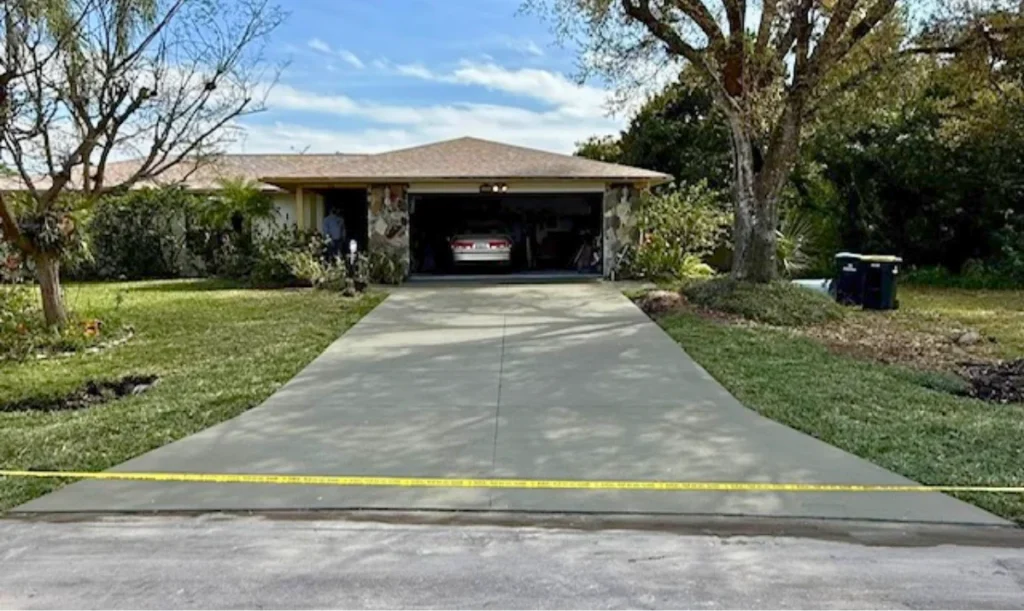
When you start looking for concrete driveway contractors near me, the options can feel overwhelming fast. Homeowners often discover that experience, drainage planning, site preparation, and material quality matter far more than the lowest bid.
To find a reliable team, look for a contractor with proven Brevard County experience, strong local references, detailed project galleries, and clear customer feedback. Licensing and insurance still matter, and JCD Concrete Inc. proudly meets those Florida standards, but the real difference shows in how a contractor prepares the base, manages drainage, chooses the concrete mix, and stands behind long-term driveway performance. A dependable concrete driveway company near me should also handle permits, explain the installation process clearly, and leave the site clean when the work is complete.
What to expect from the process:
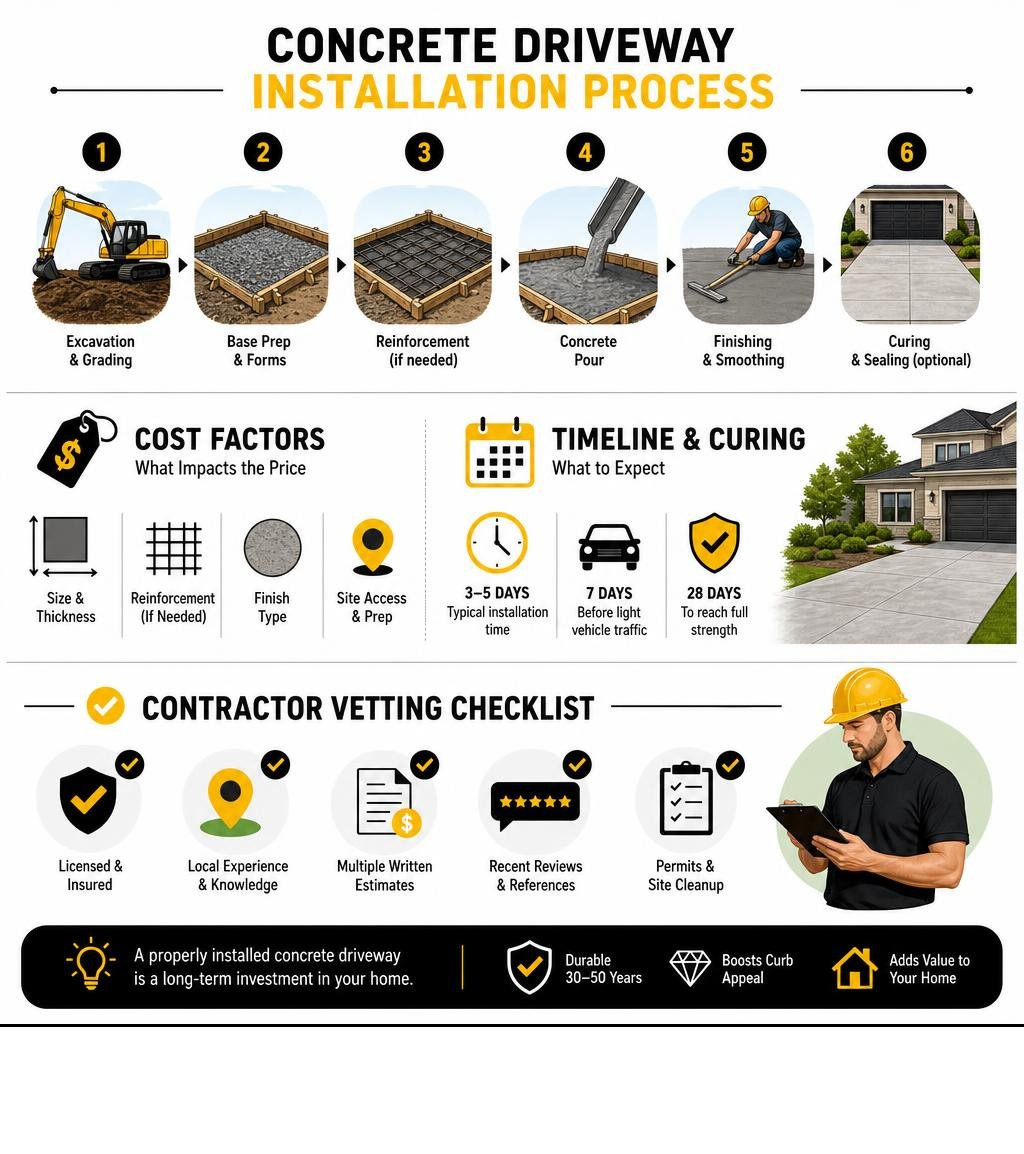
- Most residential driveway installations take 3 to 5 days from start to finish
- Concrete needs 7 days before light vehicle traffic and 28 days to reach full strength
- Properly installed concrete driveways often last 30 years or longer with routine maintenance
- Cost varies based on size, thickness, reinforcement, site preparation, drainage needs, and finish type
Your driveway is one of the first things people notice about your home. A poorly installed one, whether from skipped base prep, weak concrete, poor drainage, or a contractor who cut corners on reinforcement, can start showing problems within a few years. Getting this decision right from the start saves you money and headaches down the road.
I’m John DomBek, owner of JCD Concrete Inc., and with over 40 years of hands-on experience pouring concrete across Brevard County, we know what it takes to evaluate concrete driveway contractors near me in Florida’s demanding climate. If you are considering a new project, it helps to understand the process of concrete driveway installation and to research how much does it cost to replace a driveway before making your final decision.
Key Steps to Vet Concrete Driveway Contractors
Finding a local tradesperson who knows how to handle Brevard County conditions requires looking past the first page of a search engine. Contractors unfamiliar with Brevard County’s sandy soils, high water tables, heavy rainfall, and drainage challenges may overlook details that affect long-term driveway performance.
First, confirm that the contractor is properly licensed and insured for residential concrete work in Florida. This protects your property and gives you confidence that the company is operating professionally. We always encourage homeowners to verify credentials before signing a contract, but licensing should be viewed as the starting point, not the only quality indicator.
Second, study the contractor’s workmanship. Look for straight control joints, clean edges, consistent broom texture, proper slope away from the home, and finished transitions at the garage, sidewalk, apron, and street. Strong residential concrete driveway contractors should be able to explain how thick the slab will be, what reinforcement will be used, how the base will be compacted, and how water will move off the driveway during heavy rain.
Third, look for deep local experience and owner-operator oversight. When the business owner is actually on the job site directing the crew, the quality of work remains consistently high. We have found that having an owner on-site prevents communication breakdowns that lead to a driveway being poured too thin, finished poorly, or sloped in a way that creates standing water. You can read more about how we manage these details in our guide on 5 tips for concrete driveway installation replacement.
Homeowners should review local project galleries, customer testimonials, and completed projects before selecting a contractor. Ask to see recent driveway installations in nearby communities such as Melbourne, Palm Bay, Viera, Rockledge, Cocoa, or Merritt Island. Photos and references can reveal whether a contractor consistently delivers clean finishing, proper site cleanup, durable edges, and driveways that still look good after Florida weather has tested them.
Red Flags When Searching for Concrete Driveway Contractors Near Me
As you search for concrete driveway contractors near me, you will likely run into some warning signs that should make you pause. One common concern in our industry is excessive reliance on unsupervised subcontractors. Many high-volume companies send a polished salesperson to your home to win the job, only to hire a cheap, unsupervised third-party crew to do the actual work. This often results in a crew that does not feel accountable for the long-term performance of your concrete. At JCD Concrete Inc., we use our own trained team, meaning the people who pour your driveway are the same people who stand behind our reputation.
Another warning sign is a lack of local references, project photos, or completed driveways you can review. If a contractor cannot point to recent work in West Melbourne, Rockledge, Palm Bay, or another Brevard County community, they might not have the local track record needed to prove consistent driveway quality.
Furthermore, be cautious of anyone who refuses to provide a detailed, written estimate or asks for a massive upfront deposit before any equipment arrives at your home. A professional contractor has the financial stability to secure materials and schedule the job with a reasonable deposit schedule. We protect our customers by providing comprehensive, clear contracts that outline exactly what is included, from the thickness of the pour and reinforcement method to drainage details and final cleanup.
Questions to Ask Local Concrete Driveway Contractors
Before you sign any contract, sit down with the company and ask direct, practical questions. Start with site preparation. Ask how they will remove organic material, compact the sandy subgrade, set forms, reinforce the slab, and prevent washout around edges, aprons, and culverts. The best concrete driveway installers near me should be able to describe these steps clearly instead of giving vague answers.
Next, ask about drainage planning and site cleanup. Removing an old concrete driveway involves heavy machinery, dump trucks, and a lot of debris. You want to know exactly how they plan to protect your lawn, where they will place their washout station, how they will direct stormwater away from the home, and whether they will rake and grade the dirt along the edges of the new concrete once the forms are pulled.
Finally, ask about concrete strength and warranty coverage. Do they use a written mix specification? Do they offer a written warranty that covers structural issues? A contractor who is confident in their subgrade preparation, reinforcement methods, drainage planning, and mix design will have no problem putting those details in writing. For a complete list of questions to ask during your consultation, take a look at our essential guide to concrete driveway installation replacement.
Understanding Driveway Replacement and Installation Costs
When homeowners search for concrete driveway contractors near me, the conversation naturally turns to cost. We prefer to keep pricing discussions focused on long-term value rather than just the lowest initial bid. A cheap driveway that cracks and settles within five years is never a bargain.
The overall cost of a driveway project is determined by several phases of labor and materials. First, there is the demolition and haul-off of your existing driveway. Whether you currently have cracked asphalt, broken concrete, or overgrown gravel, removing that old material and disposing of it at a local recycling facility requires specialized equipment and dump fees.
Next, local permit fees must be factored into the project. Each municipality in Brevard County charges its own fees for residential building permits and right-of-way access. Finally, the cost of the raw concrete, reinforcement steel, subgrade preparation, and labor to grade, form, pour, and finish the slab make up the remainder of the investment. When heavy-duty construction is needed for boats, RVs, or utility areas, proper concrete pads and slabs standards can help guide thickness, reinforcement, and base preparation decisions. To get a clearer picture of how these elements come together to form a final budget, you can explore our driveway replacement cost guide as well as our overview of concrete driveway replacement.
Factors That Drive Up Installation Costs
Several specific decisions and site conditions can influence the overall cost of your new driveway. The physical layout of your property plays a major role. If your home in Satellite Beach has a steep slope, poor drainage, unstable sandy soil, or a driveway apron that must connect to a swale, the extra dirt work will increase the labor required.
Thickness is another major factor. While a standard residential driveway is poured at a minimum of four inches thick, homeowners who park heavy commercial trucks, large boats, or dual-axle RVs often require a thicker five-inch or six-inch pour to handle that concentrated weight.
Reinforcement choices also affect the price. Incorporating steel rebar grids or fiber mesh reinforcement adds material costs but dramatically increases the structural integrity of the slab. Finally, decorative upgrades like stamped borders, integral color, or exposed aggregate finishes will require more specialized labor and materials than a standard utilitarian finish.
| Driveway Option | Base Thickness | Reinforcement Type | Relative Longevity & Value |
|---|---|---|---|
| Standard Broom Finish | 4 Inches | Steel Rebar or Fiber | Excellent utility, high slip resistance, best baseline value |
| Thickened Utility Slab | 5-6 Inches | Heavy Steel Rebar Grid | Designed for heavy RVs, boats, and dual-axle trucks |
| Decorative Stamped/Colored | 4 Inches | Steel Rebar + Fiber | Premium aesthetic appeal, custom patterns, requires sealing |
Why Base Preparation and Drainage Matter in Brevard County
If you take only one piece of advice from our decades in the trade, let it be this: a concrete driveway is only as good as the dirt beneath it. In places like Melbourne and Merritt Island, proper subgrade preparation and drainage planning are absolutely vital to the long-term performance of your slab. In fact, proper drainage and meticulous base preparation are just as vital to your driveway’s longevity as using a strong 5000 PSI concrete mix. You can read more about how we handle these local challenges in our article on concrete driveway installation in Melbourne, FL.
When we look at a failing driveway, the problem is rarely the concrete itself. Instead, it is almost always a failure of the base, drainage, or support system. If a contractor pours concrete directly over loose, uncompacted sandy soil, the weight of your vehicles is likely to cause the sand to shift. This shifting frequently leads to subbase settlement, leaving hollow spots under your driveway. Once a heavy vehicle parks over a hollow spot, the concrete is forced to bridge that gap without support, which frequently leads to deep structural cracking.
Managing Sandy Soil and High Water Tables
Brevard County is famous for its sandy soil and high water tables. In coastal areas like Cocoa Beach and Cape Canaveral, the water table can sit just a couple of feet below the surface of your lawn. This means the soil beneath your driveway is constantly absorbing and releasing moisture, which can cause the ground to expand and contract.
To prevent settlement issues, we start by removing all organic material, including grass, roots, and decaying topsoil, from the driveway footprint. Organic matter holds moisture and rots over time, creating empty pockets under the slab. Once the subgrade is cleared down to clean, stable sand, we use commercial compactors to dense-pack the base. If the soil is particularly loose, we may bring in a stable aggregate base material to build up and stabilize the foundation before we even think about placing our forms. This careful preparation is the only way to prevent washout and settlement over the years, whether we are building a driveway, walkway, or heavy-duty concrete pad or slab.
Solving Culvert and Washout Problems
Many homes in Palm Bay, Port St. John, and Mims rely on roadside swales and ditches to manage stormwater runoff. If your property has a ditch running along the front yard, your driveway must cross over a culvert pipe to allow water to flow freely.
A failing or improperly installed culvert pipe is a common cause of driveway washout. If the pipe is cracked, rusted, undersized, or set at the wrong elevation for the volume of water your neighborhood receives during a heavy summer storm, water can back up and erode the soil surrounding the pipe. This erosion frequently undermines the concrete driveway apron, which can cause it to crack and collapse into the ditch. Our concrete culverts service is designed to address these drainage and access problems before they damage the driveway structure.
We solve these problems by installing heavy-duty concrete culverts with mitered ends. The mitered ends match the slope of the ditch, which improves water flow, prevents soil erosion, and ensures that heavy rainfall does not wash away the critical support structure of your driveway apron.
Selecting the Right Concrete Strength and Finish for Florida Weather
Florida’s climate is incredibly tough on building materials. Between the intense, constant UV exposure, high humidity, and salt air along our beaches, standard materials can degrade quickly. Concrete is the preferred choice for local driveways because of its natural heat resistance and low maintenance requirements. Unlike asphalt, which softens and deforms under the blistering summer sun, concrete remains solid and cool to the touch.
While interlocking pavers look nice initially, they often struggle with shifting sands and weed growth in our coastal climate. We focus on solid concrete slabs because they provide a continuous, stable surface that resists shifting and sinking over time. To see how these materials compare, you can read our brief summary comparing concrete vs pavers in Florida.
The Difference Between 4000 PSI and 5000 PSI Concrete
When comparing estimates from different local concrete driveway contractors, pay close attention to the concrete strength specified in the contract. Concrete strength is measured in PSI (Pounds per Square Inch), and it has a direct impact on density, durability, and long-term performance.
A 4000 PSI mix is commonly used by many contractors for standard residential driveways. It can be suitable for ordinary cars, SUVs, and light trucks when the base preparation, reinforcement, and drainage are handled correctly.
At JCD Concrete Inc., 5000 PSI concrete is our standard residential mix. This exceeds the strength level many contractors specify for standard residential driveways. This higher-strength mix contains more cement and less water, resulting in a denser, less porous slab. This extra density helps the concrete resist the concentrated weight of heavy vehicles and helps reduce moisture and salt penetration, which is especially important if you live near the saltwater in Indialantic or Melbourne Beach. To dive deeper into which mix is right for your home, check out our guide on everything you need to know about 4000 PSI vs 5000 PSI concrete and our page on 5000 PSI concrete driveways in Brevard County, FL.
Practical Finishes for Wet Florida Weather
The finish you choose for your concrete driveway affects both its appearance and its safety. During our rainy season, we get sudden, torrential downpours that can make flat surfaces incredibly slick.
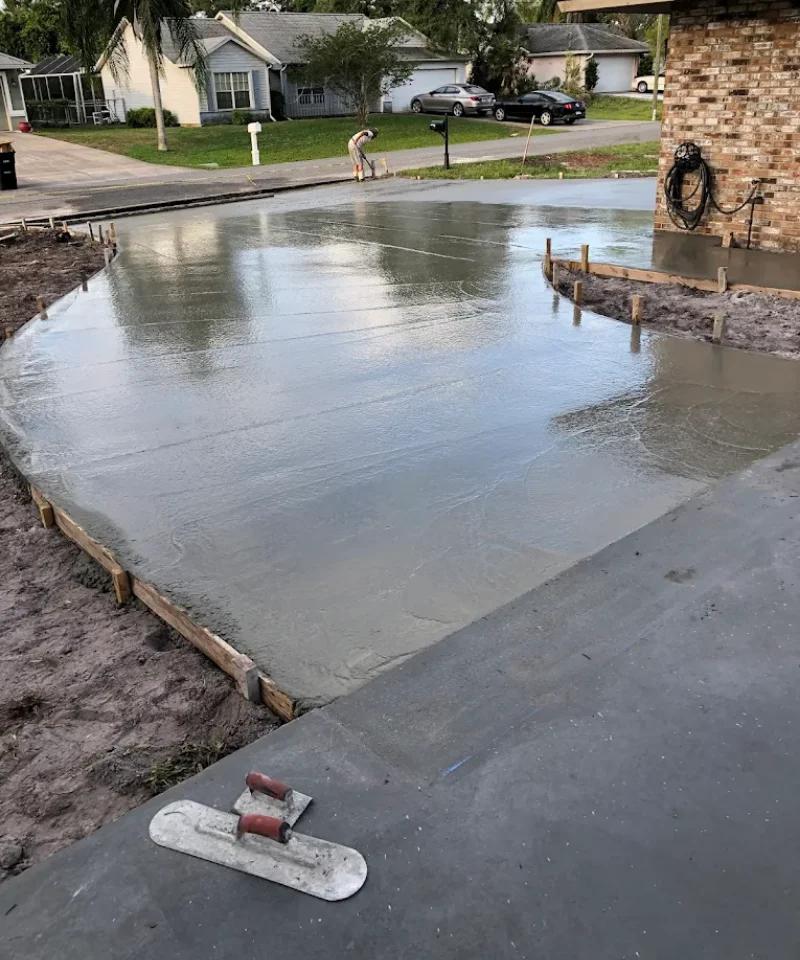
For this reason, we highly recommend a classic broom finish for residential driveways. After we pour, level, and float the concrete, we pull a specialized concrete broom across the surface while it is still damp. This leaves behind a texture of fine, parallel ridges. This texture provides vital traction on a wet Florida driveway, ensuring that your vehicles do not slip and you have a safe, non-skid surface to walk on when carrying groceries in the rain.
If you prefer a more decorative look, we can incorporate stamped concrete borders or exposed aggregate sections. These options add visual interest and texture while still maintaining the slip-resistant qualities needed to handle our coastal weather safely.
Frequently Asked Questions About Concrete Driveways
How long does it take to install and cure a new concrete driveway?
A standard residential concrete driveway installation typically takes 3 to 5 days from the start of demolition to the final finish. The first day or two are focused on tearing out the old driveway, grading the soil, compacting the subgrade, and setting up the wooden forms and steel reinforcement.
Once the prep work is complete and passes inspection, we pour and finish the concrete, which usually takes a single day. Immediately after finishing, we apply a high-quality liquid curing compound to help the concrete retain its moisture, which is critical for proper chemical hydration in our hot climate.
You can walk on your new driveway after 24 hours. However, you must wait at least 7 days before parking light passenger vehicles on it. The concrete will reach about 70% of its strength in the first week, and it will continue to cure until it reaches its full design strength at 28 days. We advise keeping heavy trucks or RVs off the slab until that full 28-day curing cycle is complete.
How do I know if my driveway requires a complete replacement?
Not every damaged driveway needs to be completely torn out. If your driveway has minor surface scaling, hairline cracks, or small stains, it can often be repaired or resurfaced to extend its life.
However, deep structural cracks, sinking slabs, and widespread base failure are signs that a full replacement is necessary. If you notice that one side of a concrete joint has sunk two inches lower than the other, or if water pools in large, deep puddles across the middle of your driveway after a storm, the soil base beneath the concrete has failed.
Temporary patches, mudjacking, or surface overlays will not solve these root problems. In these situations, the only way to get a driveway that performs the way it should for years is to tear out the old concrete, rebuild and compact the subgrade, and pour a new, properly reinforced slab.
What is the best time of year to pour concrete in Florida?
In Brevard County, we can pour concrete all year round, but each season brings its own challenges. The winter and spring dry seasons (typically November through April) offer the most predictable conditions. Temperatures are moderate, humidity is lower, and the threat of afternoon rainstorms is minimal, allowing the concrete to cure slowly and evenly.
If we pour during the summer months, we have to keep a close eye on the radar. The intense heat causes the concrete to set much faster, which requires a highly coordinated, experienced crew to finish the surface before it gets too hard to work with. We also schedule our summer pours early in the morning to ensure we are finished and the concrete has started to set before those classic 3:00 PM afternoon thunderstorms roll through.
Conclusion
If you’re searching for concrete driveway contractors near me, choose a contractor with proven local experience, strong references, and a track record of quality installations in Brevard County conditions. The right team should understand sandy soils, high water tables, culvert drainage, heavy rainfall, proper site preparation, concrete strength, and long-term driveway performance.
At JCD Concrete Inc., we have spent over 40 years of hands-on experience building our reputation across Brevard County, Florida. We do not use subcontractors, we pull all necessary permits, and we manage every phase of the project from the initial dirt work to the final cleanup. Whether you need a standard broom finish driveway, drainage improvements, or a heavy-duty slab designed to support your boat or RV, we have the local expertise and 5000 PSI standard residential mix to do the job right.
If you are comparing a concrete driveway company near me or researching concrete driveway installers near me, we invite you to explore our services for concrete driveways and learn more about our process for concrete driveway installation in Brevard County, FL. Reach out to us today to schedule your free on-site consultation.